
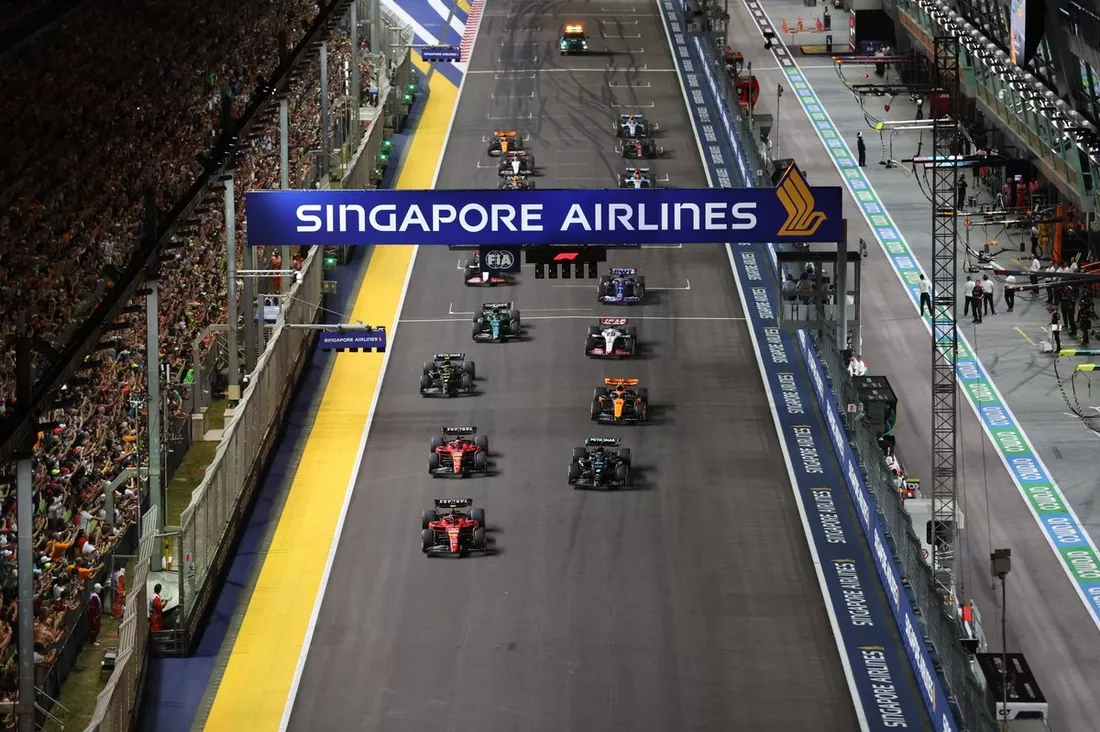
In an unprecedented move, the Fédération Internationale de l’Automobile (FIA) has declared the 2025 Singapore Grand Prix a “heat hazard” race—the first time in Formula 1 history that the governing body has invoked this classification. The decision comes amid forecasts predicting ambient and perceived temperatures so severe that the health and safety of drivers are under direct threat.
The rule change means that every car must be fitted with a Driver Cooling System, even if the driver elects not to wear the associated cooling vest during the Grand Prix itself. Any driver who opts out of wearing the vest must carry additional ballast to neutralize any weight advantage.
According to the regulation, the FIA made the call after receiving a weather forecast showing a heat index exceeding 31 °C at some point during race conditions. The “heat index” accounts for humidity and thus gives an estimate of how oppressive the conditions will feel, not just the raw air temperature.

In practical terms, this means cars will carry an extra 5 kg for the Grand Prix event, and 2 kg during practice and qualifying sessions. These weight increases are intended to offset the mass of cooling system hardware and fluid.
At the heart of the system is a vest woven with tubing through which cold liquid can circulate, drawing heat away from the driver’s torso. The system includes a pump, plumbing, and thermal store—components that now must be integrated into each team’s cars.
But the vest itself is optional—at least for this season. Drivers may choose not to wear it, in which case 0.5 kg of cockpit ballast must be added to compensate.
Drivers have reacted to the declaration with a mixture of apprehension and cautious optimism. Mercedes’ George Russell, who also serves as a director of the Grand Prix Drivers’ Association, has previously trialled driver cooling vests at other events and welcomed the formalization of the system.
He acknowledged discomfort arising from vest plumbing in high-G corners, but said those issues have been gradually mitigated. “We’ve used the driver cooling vest a few times already this season at hot races … this is the first time where [the Driver Cooling System] has become mandatory, which is good news,” Russell said. “When you’re racing in 90 percent humidity and cockpits are getting on for 60 C, it’s a bit of a sauna inside the car.”
Russell also admitted he remained “not 100 percent” after battling illness in the preceding race, adding, “If it was any other race, I wouldn’t have a single shred of concern Sunday won’t be a breeze.”
Williams driver Carlos Sainz, who has repeatedly raced in Singapore, offered a pragmatic view. He expressed confidence in coping even without the vest, but emphasized that the additional cooling would be welcome.
“Teams are managing to make it work better and better every time we run it,” Sainz told reporters. “At the beginning, we had it working more or less for half an hour. Hopefully now the whole system can work at least one hour. I’ve done Singapore ten times — if it breaks or it doesn’t work, I’m not worried: I’ll do the race and I’ll jump out fresh like I always do. But if it works, it’s better because then you suffer a bit less.”
Sainz noted that the vest his team used was still under development and might not last the entirety of the roughly two-hour race distance. “If it breaks or it doesn’t work … but if it works, even better, because then you suffer a bit less.”
Other drivers have voiced concerns over how durable or effective the cooling systems will be under real race conditions.
Haas’ Ollie Bearman cautioned that if the cooling medium (often ice or chilled liquid) melts too quickly, the system could become ineffective—or worse, circulate warmer fluid that adds to the driver’s heat gain. “The only issue is that if it melts too fast you’re just circulating hot water and then it’s probably heating you up more than just not wearing it. That’s the trade-off,” Bearman observed.
Aston Martin’s Fernando Alonso offered a more tempered view, noting that the system should hold for at least an hour under race-like conditions. Still, even that may be significantly less than the full stint under maximum stress.
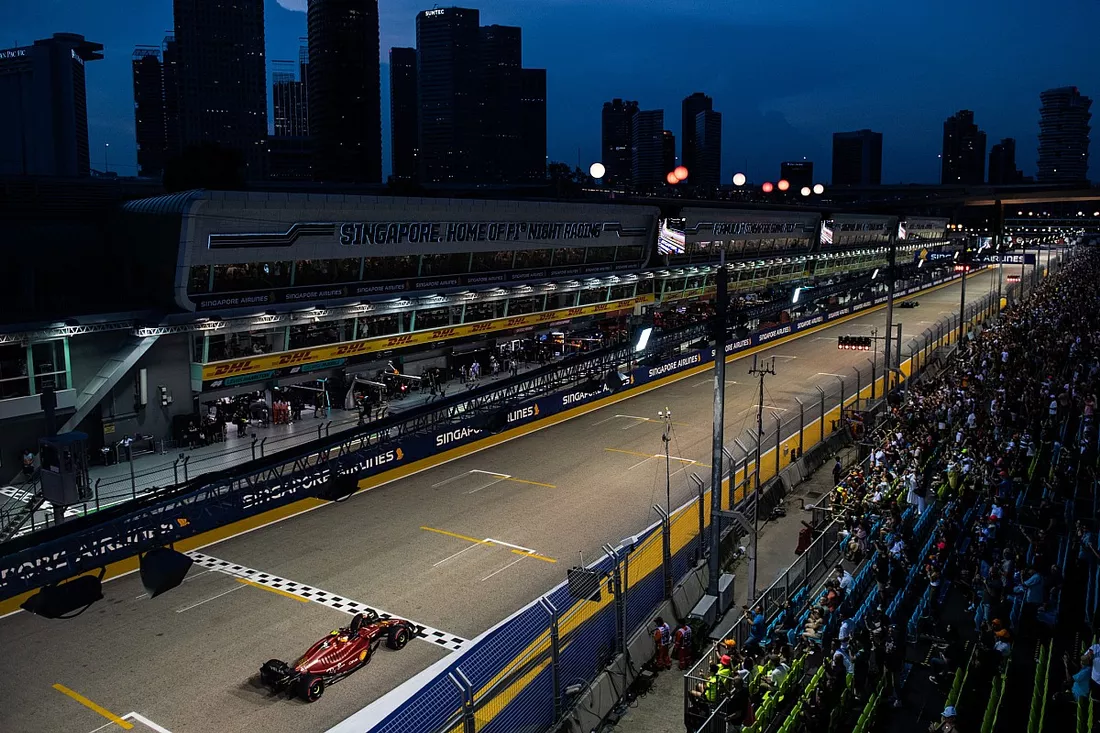
The Singapore Grand Prix has long been regarded as one of the most physically punishing on the calendar. Although it is run at night under floodlights, the combination of high humidity and dense tropical air ensures that cockpit conditions can become extreme.
In past editions, drivers have reported cockpit temperatures in excess of 50 °C, and significant body-mass losses from perspiration.
It was precisely after the 2023 Qatar Grand Prix—when multiple drivers reported symptoms of serious heat stress—that the FIA accelerated efforts to introduce driver cooling measures.
Charles Leclerc, of Ferrari, said he had yet to decide whether he would wear the vest in Singapore. He stressed that the 2024 race had been challenging but “doable.” “The vest is something we’ll consider and keep in our mind throughout free practice in case it’s way too warm,” he added.