
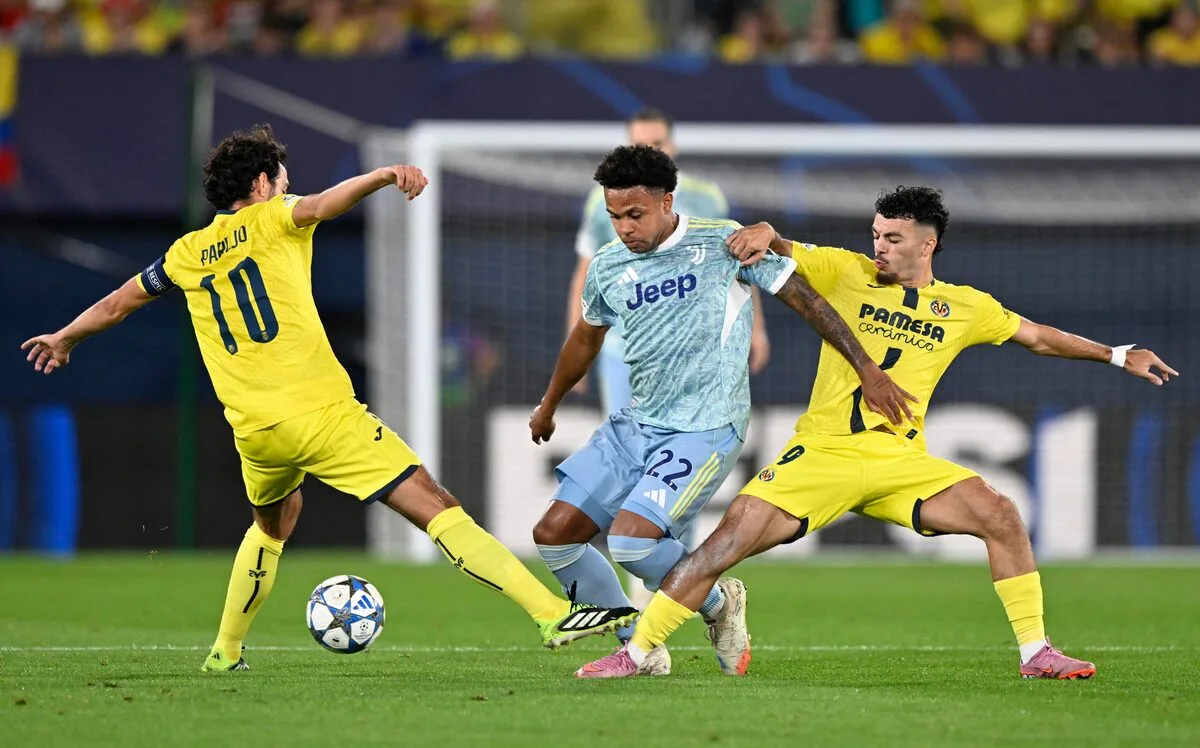
In a pulsating Champions League night at La Cerámica, Villarreal and Juventus played out a thrilling 2–2 draw that will be remembered as much for its dramatic late equaliser as for its contrasting narratives of momentum and resilience.
The hosts looked on course for a rare home victory until Renato Veiga rose to nod in a corner in the final minute, cancelling out Francisco Conceição’s earlier strike and leaving the Bianconeri to rue what might have been.
From the start, Villarreal adopted an aggressive posture, seeking to seize the initiative and unsettle their storied visitors. Nicolas Pépé showed glimpses of menace out wide, repeatedly committing Juventus defenders and probing for routes into the box.

Their reward arrived in the 18th minute, when Georges Mikautadze was released cleanly into the penalty area. He took a composed finish, placing the ball into the far corner after a clever layoff from Pépé. That goal forced Juventus into a reactive mindset, and for a spell the home side controlled the tempo.
Juventus’ response was muted in the first half. Their absence of Bremer and Khephren Thuram, both sidelined due to injury, appeared to strain their backline’s cohesion. They absorbed Villarreal’s pressure, with Mattia Perin producing several sharp saves — especially to deny Alfonso Pedraza when a curling cross threatened to sneak in at the far post.
At times Juventus looked laboured in possession, lacking fluidity in forward transitions. But as half-time approached, they sought to steady themselves, hoping to regroup and find pathways into the game.

The second half began as if Juventus had been injected with renewed confidence. Barely five minutes in, Federico Gatti unleashed a breathtaking bicycle kick from inside the area, following a flick-on from a long throw, to level matters. The audacity of the strike left both supporters and commentators gasping — it was the sort of moment that can swing the momentum of tight European matches.
Merely seven minutes later, Juventus struck again. A careless Villarreal turnover allowed Conceição to pounce. He collected possession in midfield, drove forward, then finished with composure one-on-one past Arnau Tenas. Suddenly, the visitors had turned the tie on its head, and Villarreal’s supporters saw their early advantage slipping away.
From that point, Juventus looked increasingly confident. They managed the ball better, limited Villarreal’s threatening spell, and seemed content to absorb pressure. The Italian side’s midfielders cleverly disrupted Villarreal’s build-up, while their backline tightened when called upon.
Juventus were well on course for what would have been a fully deserved win — their first of the group stage. Yet, in modern Champions League football, no lead is ever safe until the whistle.
Villarreal refused to wilt. As the clock ticked toward full time, the hosts pushed ever harder, chasing a lifeline. Their persistence finally paid off deep into stoppage time. From a corner, Ilias Akhomach swung in the cross, and Veiga — a recent signing who once moved from Juventus— rose highest to head home. The stadium erupted as Villarreal players and fans celebrated a crucial point snatched moments before defeat.
In the aftermath, Juventus head home with mixed emotions. The second half performance earned praise, especially the Gatti and Conceição goals demonstrating attacking intent. But conceding so late will sting.
For Villarreal, the draw feels almost like a victory — the fightback was emblematic of spirit, and the point offers redemption after a rocky start in the group. The result also hands Villarreal their first point of the campaign while denying Juventus a clean sweep.
Tactically, Marcelino’s side may reflect on a few lapses. The defensive breakdown that allowed Conceição to attack unchallenged remains a blot, and their dominance during stretches of the first half did not translate into larger margins.
Yet in scrappy games such as these, the late equaliser redeems much. Juventus, meanwhile, must re-evaluate their consistency: they entered this match on the back of draws in Europe, and now must confront the fact that even a strong recovery can be undone in the blink of an eye.
Statistically, Juventus held the upper hand in possession and shots, but Villarreal were more direct and dangerous when opportunities arose. Villarreal attempted 17 shots to Juventus’ 13, and corners were nearly equal — an indicator of the hosts’ attacking edge.
Juventus’ backline, missing key personnel, held firm for long stretches, and their midfield stifled Villarreal at crucial moments. Yet the costliest mistake came at the worst time. The psychological weight of a late conceded goal in a tightly poised Champions League match is heavy to bear.