
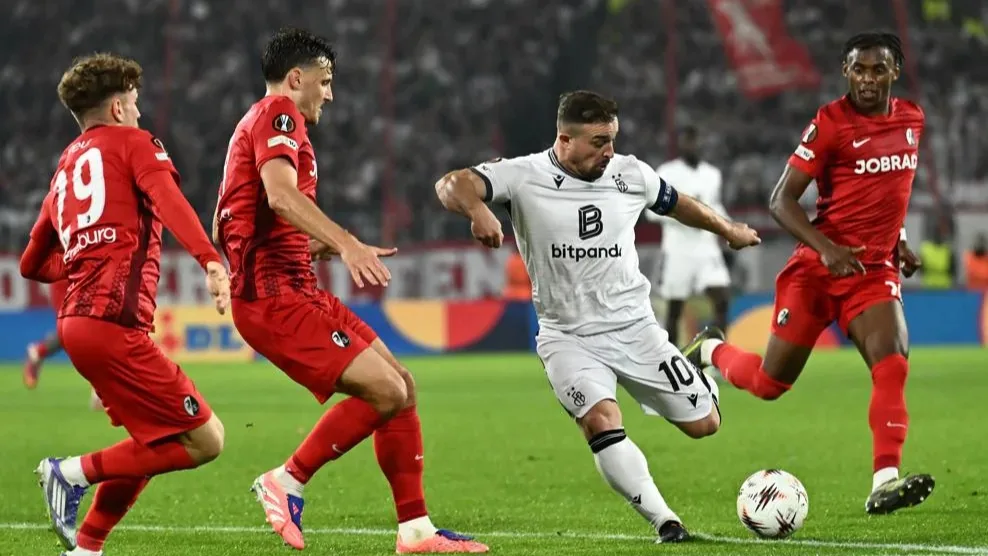
Freiburg kicked off their 2025–26 UEFA Europa League campaign in gripping fashion, holding on through waves of Basel pressure to claim a 2–1 victory at Europa-Park Stadion.
The Swiss side sprang to life in the final quarter only to be denied by Freiburg’s resilience and timely defending. What might have been a dominant night for the home side turned into a nervy finish, but in the end Freiburg walked away with all three points.
From the opening whistle, it was clear that both teams believed this would be a closely fought battle. Basel traveled across the Rhine determined not to merely make up the numbers, and for long stretches they succeeded in frustrating Freiburg’s forward momentum.

The German side, however, were not at their fluid best in the early phases, and it took until the 31st minute for them to carve an opening. That breakthrough came when Patrick Osterhage rose to meet a delivery in the box and guided a composed finish past Basel’s defense. The goal had the feel of inevitability after some sustained pressure, though Basel will rue allowing such a chance.
Once Freiburg held the lead, they settled into a more cautious posture. Basel probed, rotated the ball, and tried to engineer openings down the flanks, but Freiburg’s defensive lines held firm. The tightness of the duel was betrayed by occasional missteps and half-chances.
Noah Atubolu, Freiburg’s goalkeeper, remained alert to anything that crept inside the box — though he was not called upon to make spectacular stops in that first half, his mere presence and command of the area gave his backline added confidence.
⚽#FCBasel1893 #AlliZämme #imRotblaueRusch pic.twitter.com/eeSrz6H5F2
— FC Basel 1893 (@FCBasel1893) September 24, 2025
The second half saw Freiburg gradually regain control. Their midfield began to win more duels, and just before the hour mark the home side struck again. Maximilian Eggestein showed both composure and intelligence, drifting into space and lashing a low drive into the corner.
The strike was well-timed, giving Freiburg a 2–0 cushion and a semblance of breathing room. At that moment, the game looked to be heading toward a relatively routine night for the hosts.
Basel, however, were not done. With urgency and a sense of desperation, they shifted up a gear. Their buildup grew more purposeful, their attacks more incisive. In the 84th minute the Swiss side conjured a moment of brilliance to get themselves back into the match.
Philip Otele, after a smart combination with Léo Leroy, unleashed a powerful finish that found the back of the net. Leroy had teed up the moment with a subtle pass, and Otele’s velocity left no chance for Atubolu. Suddenly the deficit was halved, and Basel were smelling blood.
The final minutes were fraught with tension. Basel threw bodies forward, staging wave after wave of attacks. Freiburg dropped deeper, attempting to absorb pressure and control the tempo. In the 89th minute a shoving match erupted in the box after a cross from Derry Scherhant, and the visitors vociferously appealed for a penalty.
The referee, however, judged there was no sufficient contact. As stoppage time ticked on, Basel seemed poised to force at least a point. A Leroy left-footed shot into the box was blocked, and subsequent appeals for a second spot-kick were dismissed. Freiburg’s defense, though beleaguered, held firm.
In the aftermath, Freiburg players and fans exhaled. The victory was not pretty, but it was precious. It gave them a perfect start in Group stage play and sent a message about their resolve: even when not at their sharpest, they can dig in and see a game out.
Basel, by contrast, left feeling they had been undone by their own late hesitation. For long stretches they had kept their discipline and shown glimpses of promise, but lacked the finishing punch or ruthless decision-making to turn dominance into a win.
One recurring subplot of the night was Freiburg’s goalkeeper, Atubolu. Though not officially tested by penalty kicks this time, his presence between the sticks has become something of a talking point in recent weeks; he had previously saved a string of spot-kicks in league play, and this reputation often earns him extra respect from opponents.
Tactically, Freiburg’s approach combined discipline in defense with bursts of attacking intent. Their ability to switch between compact lines and sudden penetration — as shown in the goals by Osterhage and Eggestein — proved decisive.
Basel’s plan to build from wide areas and overload on the flanks almost paid dividends in the closing stages. The difference came down to timing, execution, and composure in the final third.