
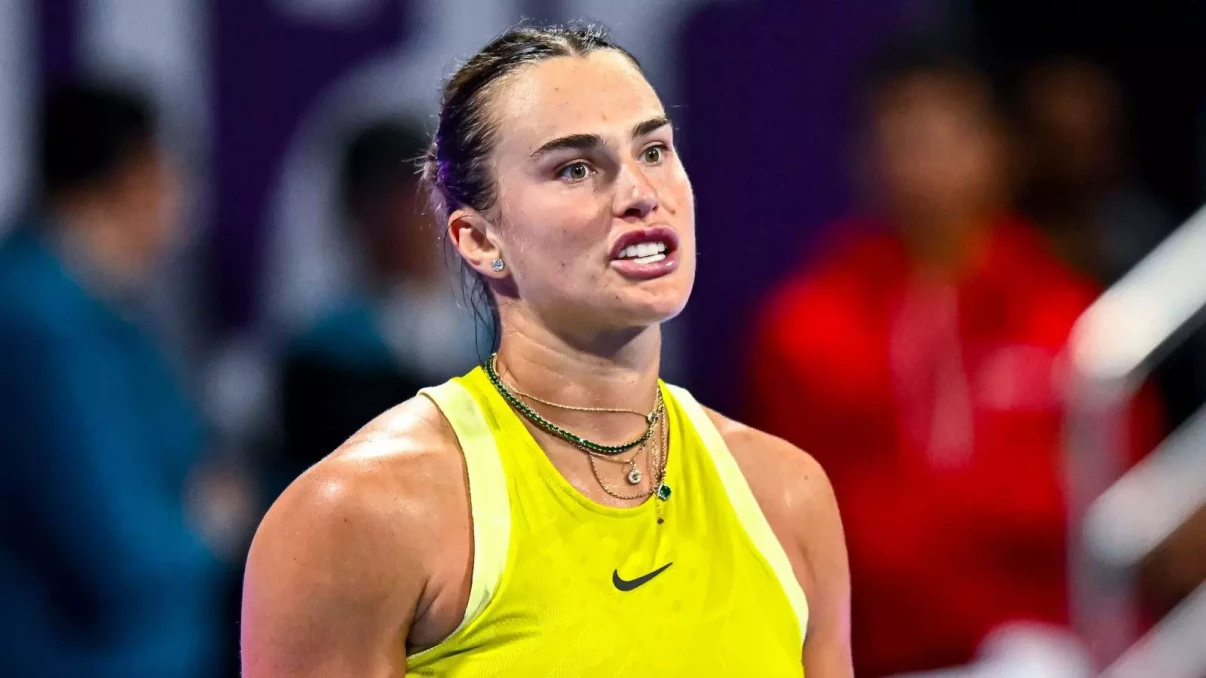
World No. 1 tennis star Aryna Sabalenka delivered a powerful message to overly critical coaches during a press conference at the French Open, telling them to “quit their jobs” and make way for more supportive mentors in the sport. The Belarusian, who has solidified her dominance with three Grand Slam titles, including back-to-back Australian Open victories in 2023 and 2024 and the 2024 US Open, spoke candidly about the harsh treatment she endured from coaches early in her career.
Sabalenka, now 26, reflected on the demoralizing comments she faced as a young player, with some coaches labeling her as “stupid” and claiming she would “never make it” to the top. Despite the negativity, she responded with resilience, laughing off their doubts and proving them wrong with her meteoric rise to the pinnacle of women’s tennis. “I was just laughing and saying ‘we’ll see,’” Sabalenka said, recounting her defiance in the face of such criticism. Her achievements, including 20 tour titles and career earnings of approximately $35 million, stand as a testament to her ability to overcome those early challenges.
The top seed, who has been a dominant force on the women’s tour, used her platform to call out the toxic coaching culture she believes has no place in tennis. “I guess I want to send a quick message to them to quit their job, because honestly, I think they know nothing and they better quit just to save other players,” she stated firmly. Sabalenka’s comments come as she continues to excel at Roland Garros, where she has advanced through the first three rounds, conceding only 10 games and setting up a fourth-round clash. While she has yet to reach the final at the French Open, her commanding performances signal her determination to add a clay-court major to her resume.
Sabalenka’s outspoken remarks have sparked discussions within the tennis community about the role of coaches and the impact of their methods on young athletes. Her experiences highlight a broader issue in the sport, particularly in environments where tough, critical approaches have historically been normalized. “The environment and in the history of European countries, we are much tougher,” Sabalenka noted, suggesting that cultural differences may contribute to the harsh coaching styles she encountered.