
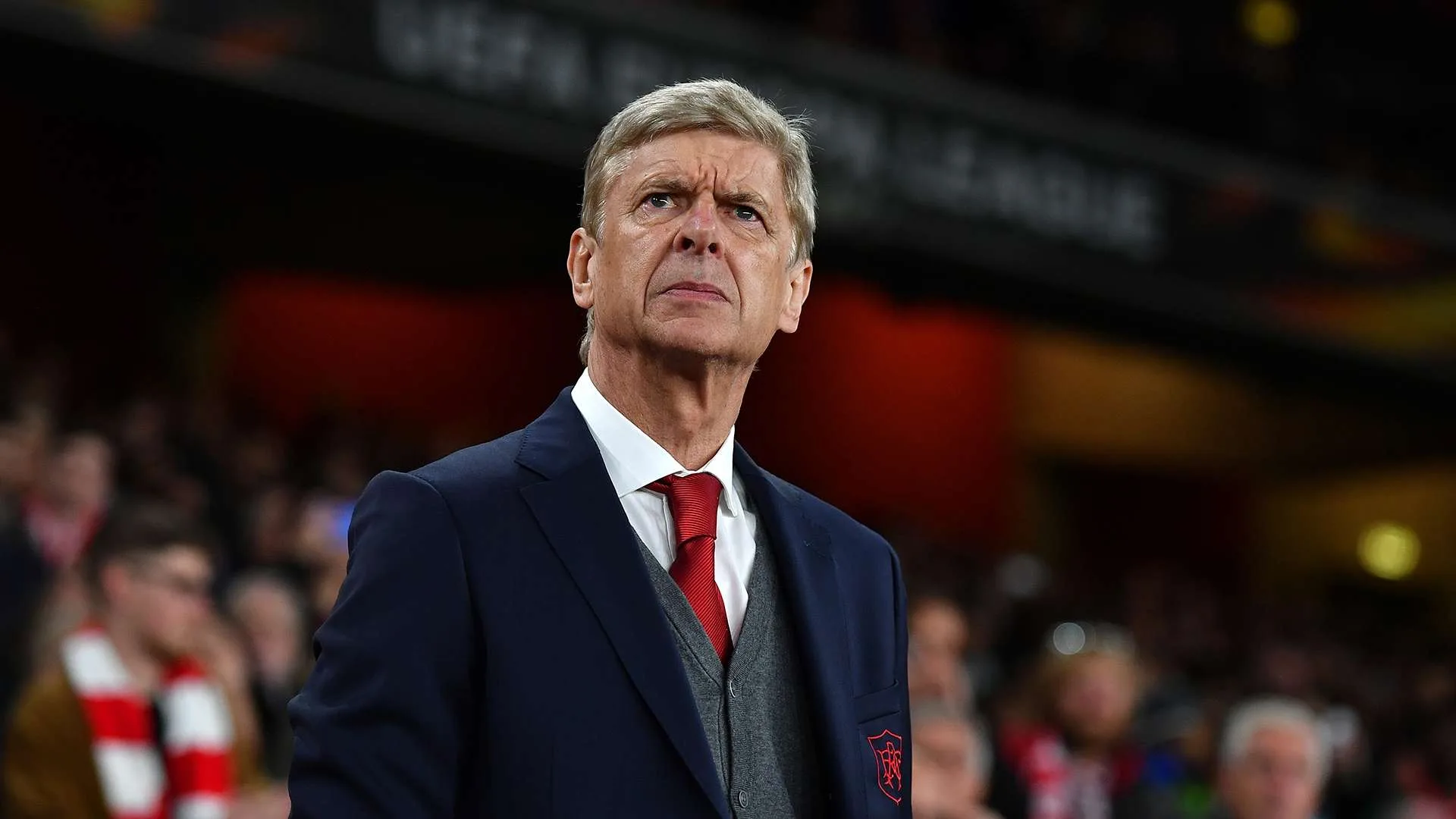
In a move that signals a major setback for one of football’s most prominent rule-change advocates, UEFA and the English Football Association (FA) are leading a coalition of powerful football bodies in opposition to Arsène Wenger’s radical proposal to overhaul the offside law.
The proposed “Wenger Law,” which seeks to favor attackers by requiring a player’s entire body to be beyond the last defender for an offside call, is now facing significant resistance from European lawmakers who argue it would damage the tactical fabric of the elite game.
The resistance, first reported by The Times and confirmed by multiple sources, centers on concerns that the change is “too drastic” and would fundamentally alter how football is played at the highest level.
UEFA and the British associations fear the rule would force defenders to position themselves much deeper to compensate for the attackers’ new advantage, effectively eliminating the high defensive line that is a cornerstone of modern, pressing football.
“It would force defenders to position themselves much further back, eliminating high defensive lines and altering the tactical essence of the modern game,” according to an analysis of UEFA’s position. This view is echoed by CONCACAF president and FIFA vice-president Victor Montagliani, who voiced concerns over the lack of comprehensive trial data, asking, “Are teams just going to bunker down because they can’t play a high line?”.
Wenger, serving as FIFA’s Director of Global Football Development, has championed the change as a necessary correction to restore the “benefit of the doubt” to strikers, which he argues was eroded by the millimeter precision of Video Assistant Referee (VAR) technology. He explained his rationale in an interview with beIN Sports, stating, “With VAR this advantage disappeared and for many people it’s frustrating. That’s why I proposed that as long as any part of your body is on the same line as the defender, you’re not offside.”.
Despite his advocacy and initial momentum, the pushback from key stakeholders has stalled the proposal’s progress.

A source critical of the plan bluntly warned FIFA to consider the unintended consequences, asking, “Is anyone saying there are not enough goals in football? We have to be very careful not to ruin the game.”. As a potential compromise, some governing bodies have suggested a modified approach where offside is judged solely on the attacker’s torso, disregarding the position of feet, legs, and head.
This alternative, however, has not gained official traction and critics argue it would simply shift contentious debates from one body part to another without resolving the core issues of interpretation.
The controversy over the offside law unfolds as FIFA is heavily investing in technological refinement rather than regulatory revolution. FIFA President Gianni Infantino recently unveiled a suite of AI-powered tools for the 2026 World Cup, including the creation of precise 3D avatars of every player to enhance the accuracy and presentation of semi-automated offside decisions.
This initiative underscores a clear strategic divergence: while Wenger seeks to change the rulebook, the governing body is prioritizing technological solutions to perfect the enforcement of the existing laws.
It has been confirmed that the 2026 World Cup will not feature the Wenger Law, with the International Football Association Board (IFAB) deeming it unfair to implement such a fundamental change without exhaustive testing and sufficient time for teams to adapt.
The political landscape within football’s rule-making bodies now presents a formidable hurdle. Any proposal to change the Laws of the Game requires six votes to pass at the IFAB’s annual general meeting.
FIFA holds four votes, while the four British associations (England, Scotland, Wales, and Northern Ireland) each hold one. With the FA and the other British bodies aligned with UEFA in their opposition, the path to approval for Wenger’s vision appears blocked unless a significantly revised proposal emerges.
The standoff highlights a deep philosophical rift in football governance between the desire for a more fluid, attacking spectacle and the preservation of the sport’s tactical integrity, leaving one of the game’s most debated rules in a state of limbo.