
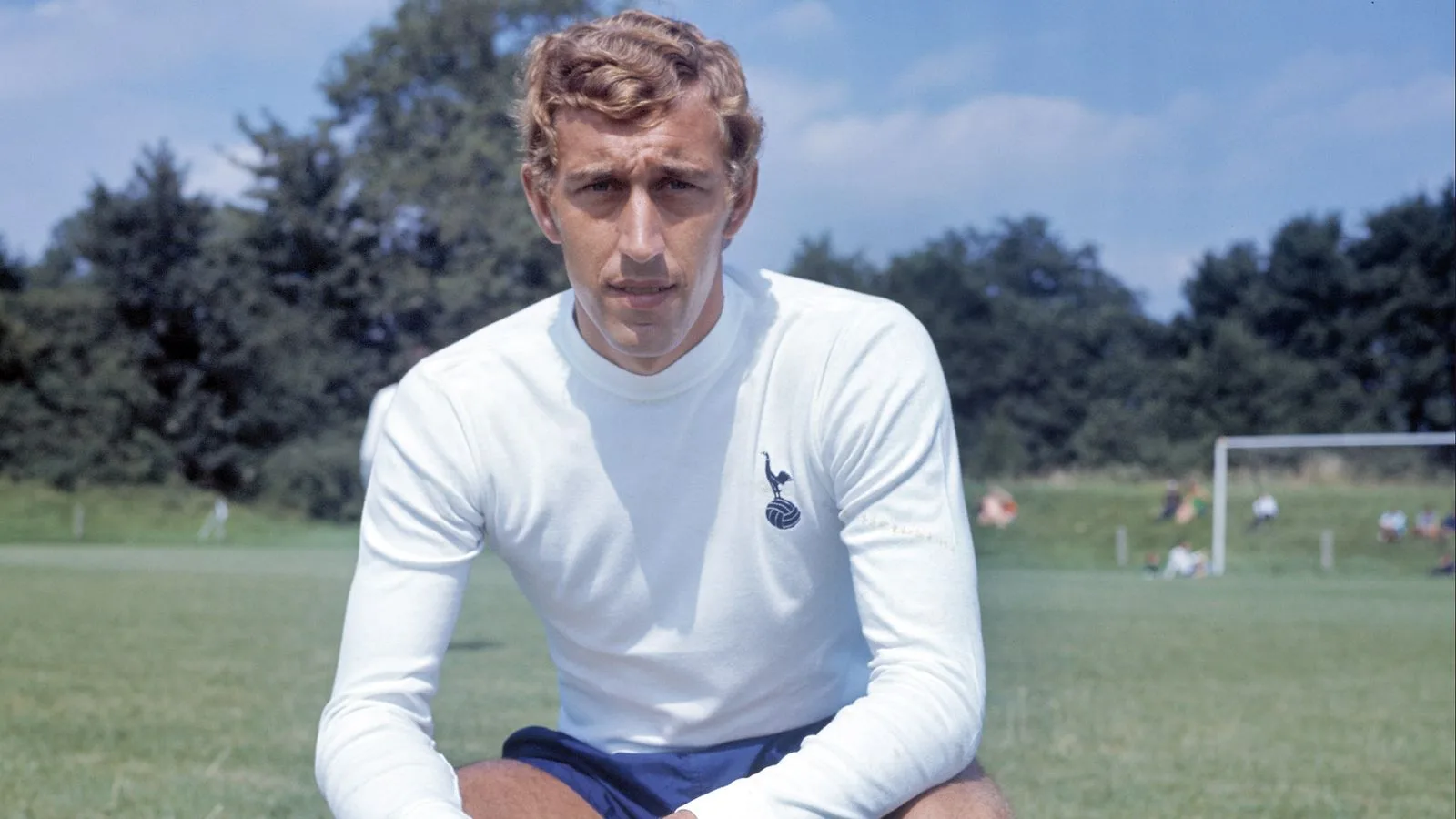
The football world is mourning the loss of Martin “Big Chiv” Chivers, the legendary Tottenham Hotspur and England striker who died on Wednesday, January 7, at the age of 80.
A powerful and prolific forward, Chivers scored 174 goals for Tottenham between 1968 and 1976, cementing his place as the club’s fourth-highest all-time scorer and a central figure in one of its most successful eras.
Chivers began his career with his hometown club, Southampton, where he first demonstrated his goalscoring prowess with 108 goals and helped secure the Saints’ promotion to the top flight in 1966. His performances attracted the attention of Tottenham manager Bill Nicholson, who signed him in January 1968 for a then British record fee of £125,000.
The move initially proved challenging. Chivers suffered a serious knee injury early in his Spurs career that sidelined him for nearly a year and led to tensions with the demanding Nicholson. He later recalled an incident where Nicholson gave him tickets to watch West Ham’s Geoff Hurst play, an instruction Chivers found insulting at the time. “I was quite insulted, to be honest,” he said in a 2016 interview, “but he wasn’t stupid — I learned a lot watching Geoff that night”.
Perseverance through injury and criticism defined his legacy. He fought his way back to full fitness and ultimately flourished, forming a formidable attack. His peak years from 1971 to 1974 were spectacular, as he powered Tottenham to four major finals in four seasons.
He scored both goals in the 1971 League Cup final victory over Aston Villa and delivered one of his most iconic performances the following year in the inaugural UEFA Cup final against Wolverhampton Wanderers.
In the first leg at Molineux, he headed Spurs ahead before sealing a 2-1 win with a stunning long-range strike. “I just unleashed the hardest shot I ever hit in my life,” Chivers told UEFA.com in 2015. “When you hit those old balls hard, it was like a missile”. He helped secure the trophy in the second leg and added another League Cup winner’s medal in 1973.
At the international level, Chivers earned 24 caps for England, scoring 13 goals between 1971 and 1973. His final appearance was in the infamous 1-1 draw with Poland at Wembley in October 1973, a result that denied England qualification for the 1974 World Cup.
Reflecting on that night, he wrote in his autobiography, “I was the top marksman in the country and rightly or wrongly people expected goals. That night I had been unable to deliver and it hurt”.
After leaving Tottenham in 1976 for Swiss side Servette, where he won a domestic cup, Chivers later played for Norwich City and Brighton & Hove Albion before retiring. His connection to Tottenham remained unbroken for decades.
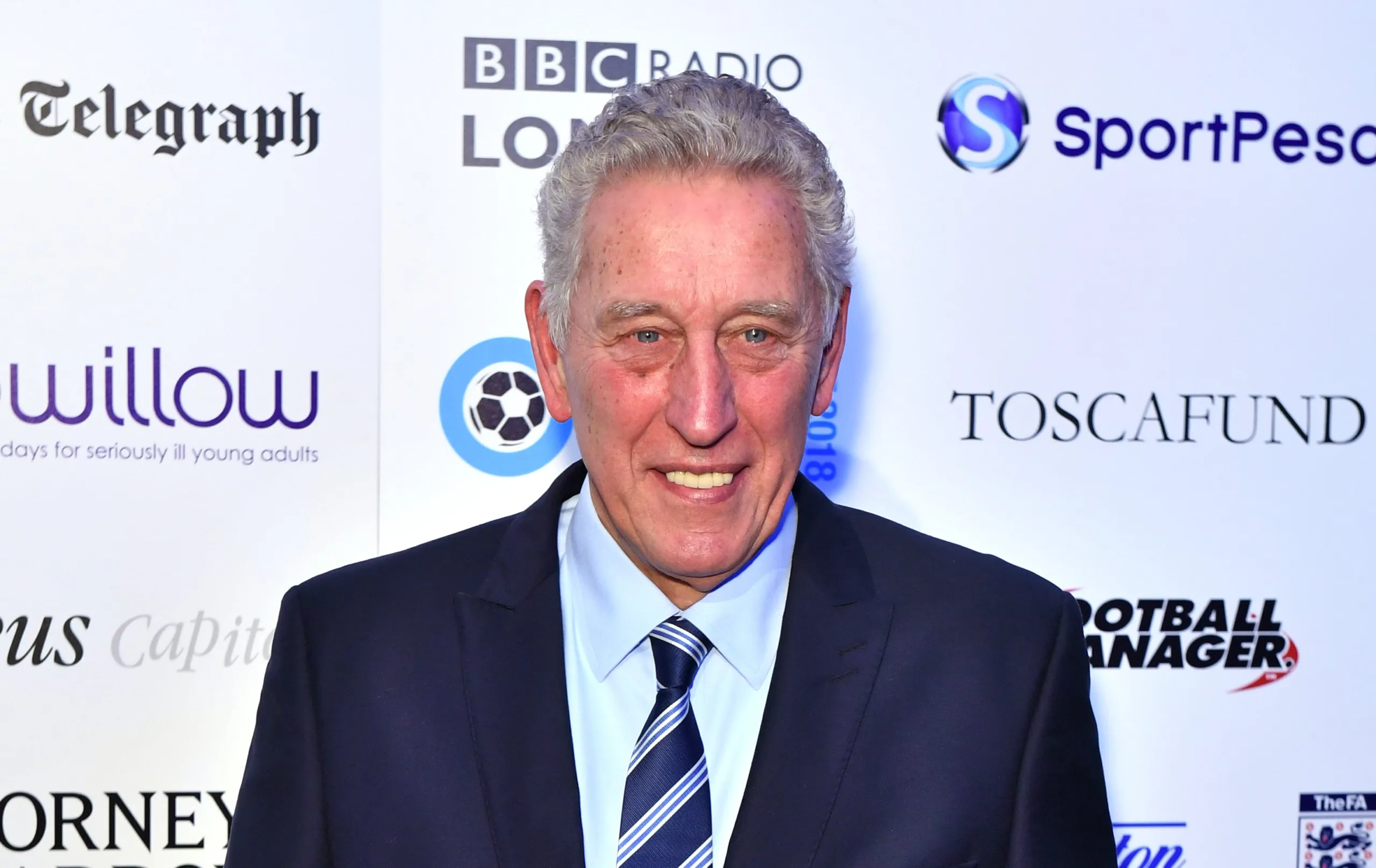
He became a beloved matchday host at White Hart Lane and later at the Tottenham Hotspur Stadium, serving as the club’s first “Hospitality Spurs Legend” and greeting generations of fans with his warm and friendly nature. “That team was like a family,” he once recalled of his playing days. “We loved the traveling and the club looked after us so well. They were such exciting times”.
News of his passing prompted an outpouring of respect and affection. Tottenham Hotspur stated it was “with immense sadness that we announce the passing of our legendary former striker,” describing him as “one of the all-time greats”.
Southampton FC, where his career began, said it was “deeply saddened”. The English Football Association extended condolences to his family and friends. Tottenham confirmed its players would wear black armbands in his honour during their match.
Martin Chivers is survived by his wife Julia, his sons Nick and Luke, his daughters Andrea and Melanie, and his grandchildren.
He leaves behind a legacy as a gentle giant off the pitch and an unstoppable force on it, a key architect of Tottenham’s 1970s glory and a figure whose name is forever etched in the club’s record books and in the memories of its supporters.