
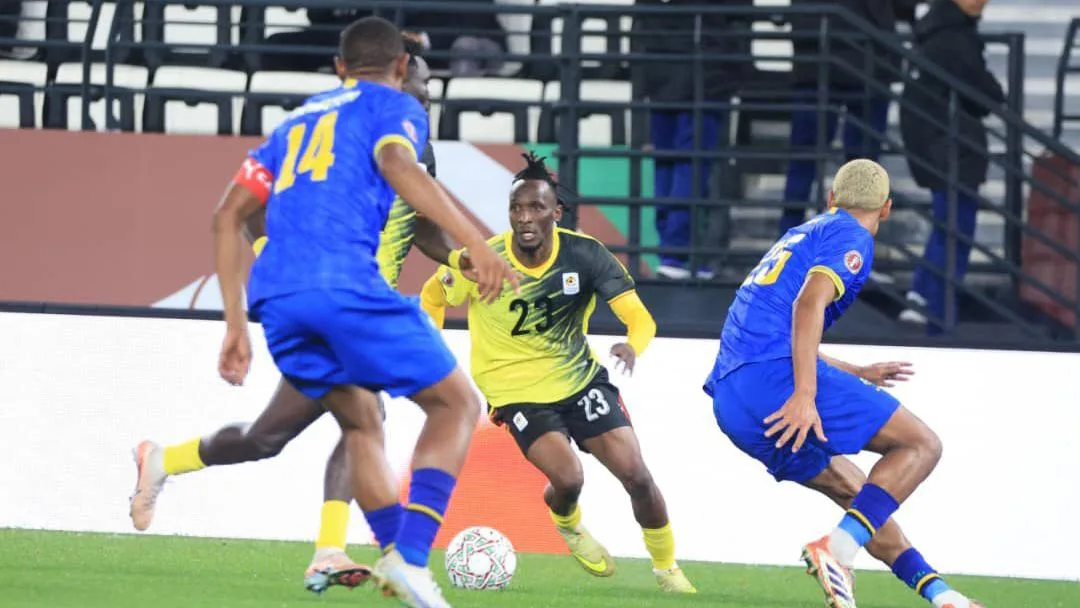
In the chill of a Moroccan December evening, beneath the floodlights of Rabat’s El Madina Stadium, two East African rivals played a football match that transcended the ninety minutes on the pitch. Uganda and Tanzania, neighbours with a shared history but distinct footballing destinies, faced off in a critical Group C encounter at the 2025 Africa Cup of Nations.
For both nations, the match represented more than a derby; it was a desperate fight for survival in the tournament after each suffered defeats in their opening fixtures. What unfolded was a tense, dramatic affair that ultimately crowned one team with hope and left the other staring into the abyss of elimination.
The backdrop to this high-stakes clash was one of adversity and familiar disappointment. Uganda, the Uganda Cranes, arrived wounded from a 3-1 defeat to Tunisia. That loss extended a worrying pattern, being their 17th defeat in 24 AFCON finals matches and their third consecutive loss in the tournament.
Their goal, a late consolation from Denis Omedi, had ended a staggering 376-minute scoring drought at the continental showcase, a stark statistic highlighting their offensive struggles.
Tanzania, the Taifa Stars, arrived with a similar sense of what-could-have-been, having put up a spirited fight in a 2-1 loss to heavyweight Nigeria. Despite a fine equalizer from Charles M’Mombwa, they conceded again just two minutes later, a lapse in concentration that captain Mbwana Samatta identified as their undoing.
For Tanzania, the loss was their seventh in ten AFCON finals matches, part of an unfortunate record that saw them join Benin and Mozambique as teams yet to win any of their first ten tournament games.
The weight of history and immediate pressure created a palpable tension as the match kicked off. While these East African neighbours had met 61 times before across all competitions, with Uganda holding a commanding historical advantage of 33 wins to Tanzania’s 12, they had never before collided on the AFCON stage.
This novelty added an extra layer of intrigue to an already must-win encounter. The conditions in Morocco had been a story in themselves, with heavy rainfall testing the infrastructure.
However, as reported in the lead-up, the state-of-the-art SubAir drainage systems beneath the pitches, a first for African stadiums, ensured the playing surface at El Madina Stadium remained impeccable, allowing the football to take centre stage despite the weather.
From the opening whistle, it was clear this would be a battle fought as much in the mind as with the feet. Uganda’s Belgian coach, Paul Put, had been unequivocal in his assessment before the game, labelling it “the most important game of the tournament” and demanding aggression from his side.
His Tanzanian counterpart, Miguel Gamondi, could rely on the confidence of a performance that pushed Nigeria, knowing his team was in Morocco “to compete and not just to participate”. The match began at a frantic pace, with both teams understanding the catastrophic consequence of a loss.
Uganda, seeking to defy another grim statistic, having never won their second group match at an AFCON since the group stage was introduced in 1968, pressed high. Tanzania, aiming to score in successive AFCON matches for the first time since 1980, looked to utilise the speed and creativity of players like Novatus Miroshi, who had provided the assist against Nigeria.
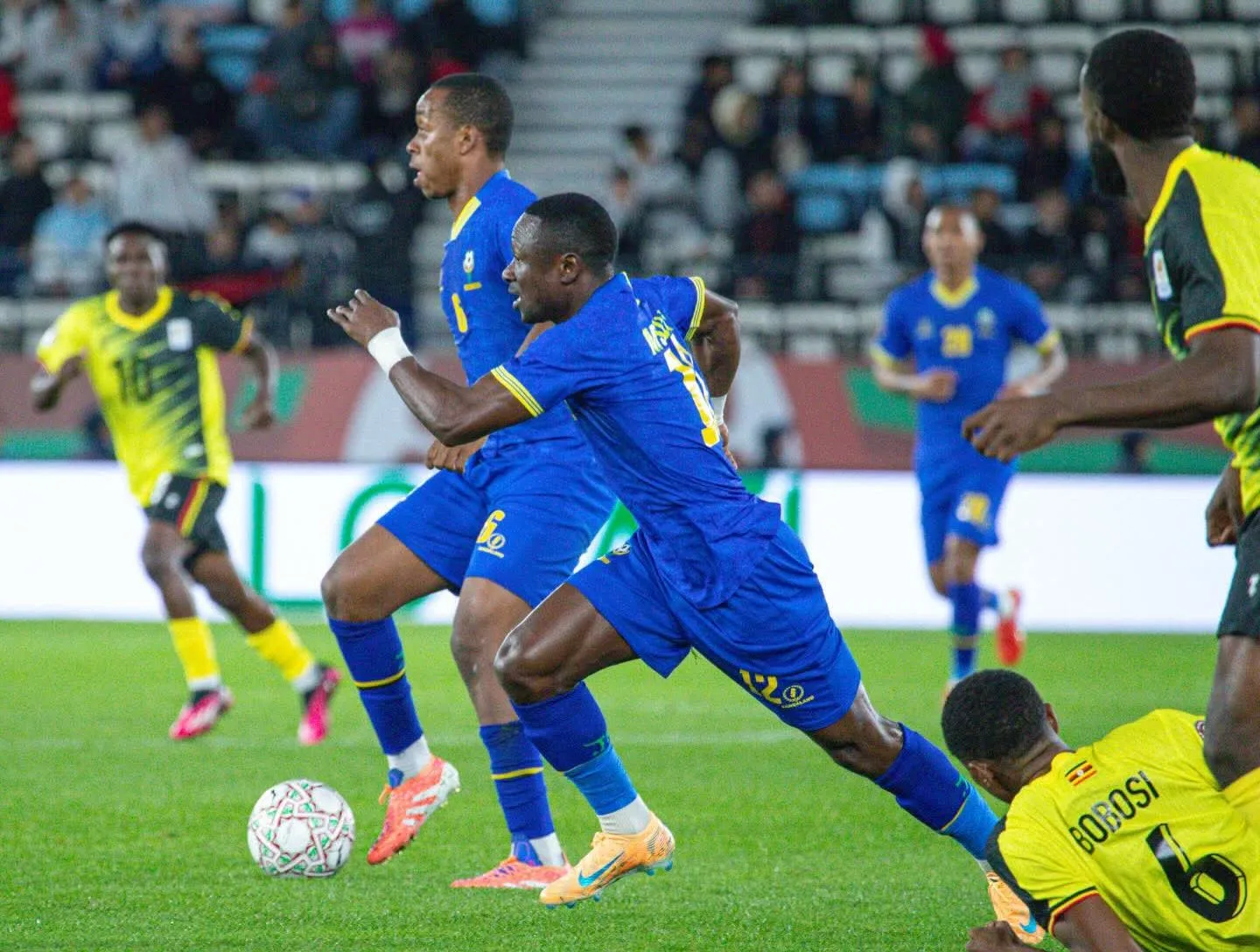
The first half was a cagey, physical affair, punctuated by moments of individual skill but largely defined by a mutual fear of making a decisive mistake. Uganda’s midfield anchor, Khalid Aucho, and forward Steven Mukwala, both of whom play their club football in the Tanzanian Premier League, found themselves in familiar territory against players they battle weekly.
This intimate knowledge seemed to create a stalemate, as each side neutralized the other’s known threats. The clearest chances were few and far between. Tanzania’s goalkeeper Zuberi Lukomo, who had made eight saves against Nigeria, was called into action to preserve parity, while at the other end, Uganda’s attackers struggled to break down a disciplined Tanzanian backline.
As the half-time whistle blew with the score locked at 0-0, the anxiety only grew. A draw was of little use to either team, setting the stage for a second half of increasing desperation and open play.
The breakthrough, when it finally came, sent a surge of pure elation through one set of supporters and plunged the other into despair. In the 58th minute, after sustained Ugandan pressure, a moment of precision pierced the Tanzanian resistance. A cross from the right wing found its way through a crowd of players to the feet of a Ugandan attacker inside the box.
With a calmness that belied the high-stakes context, he controlled and fired a low shot past the outstretched hand of Lukomo. The Uganda Cranes, so often goal-shy on this stage, had seized the initiative. The goal unleashed a wave of pressure from Tanzania.
Coach Gamondi made attacking substitutions, throwing on fresh legs in a bid to salvage their tournament life. The Taifa Stars, to their immense credit, responded with courage. They began to dominate possession, pinning Uganda back and creating a series of half-chances. The tension in the stadium became almost unbearable as the clock ticked towards ninety minutes.
Then, in the 83rd minute, the game was turned on its head. A swift Tanzanian counter-attack carved open the Ugandan defence. The ball was played wide to a substitute whose fresh energy proved decisive. He drove towards the byline before cutting back a perfect pass across the face of the goal.
There, arriving with perfect timing, was the veteran striker and captain, Mbwana Samatta. The experienced forward, who had vowed to let the football do the talking, made no mistake, side-footing the ball home to send the Tanzanian fans and bench into raptures. The score was level, and suddenly, it was Uganda who were clinging on.
The final minutes were a breathless, end-to-end scramble. Both teams, knowing a single goal would likely seal a priceless victory, threw caution to the wind. Ugandan midfielder Allan Okello, who had spoken before the match of the need for a good result, tried to orchestrate one final attack.
Tanzania’s M’Mombwa, full of confidence from his goal against Nigeria, drove forward with purpose. In the fifth minute of stoppage time, Uganda won a free-kick in a dangerous position. It was their last roll of the dice. The delivery was good, a curling ball into a packed penalty area.
In the ensuing melee, a Ugandan player rose highest, and his powerful header seemed destined for the net until a miraculous, goal-line clearance from a Tanzanian defender preserved the score. The final whistle blew moments later: Uganda 1, Tanzania 1.
The draw leaves both teams in a perilous position in Group C, but with distinct shades of hope. Uganda’s winless run at AFCON extends to five matches, and they now face the daunting prospect of needing a result against Nigeria in their final game to have any chance of progression.
For Tanzania, the point, earned through immense resilience, is a historic one. It is their first-ever point in a second group match at AFCON, having lost twice and drawn once before in this fixture. More importantly, it keeps their tournament alive, proving they possess the character to fight back under pressure. They will look to their final group match with a belief that was perhaps absent before.