
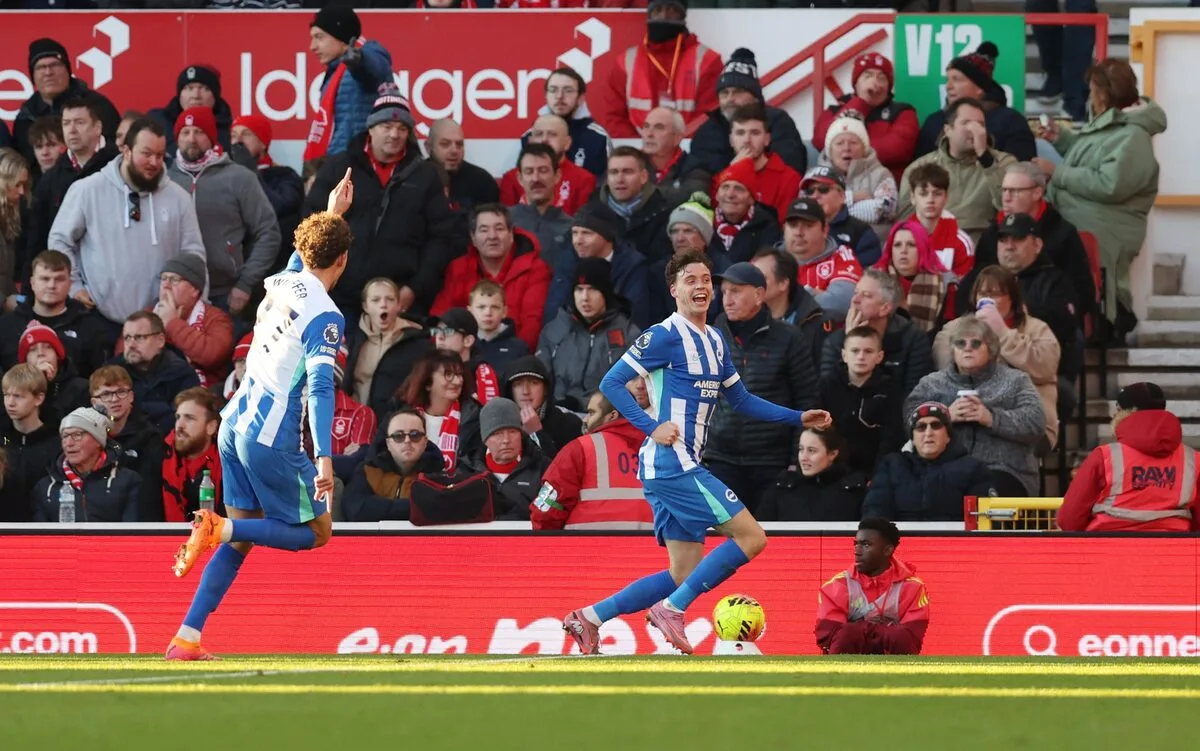
Nottingham Forest’s recent resurgence under Sean Dyche came to a disappointing halt as Brighton and Hove Albion secured a controlled and deserved 2-0 victory at the City Ground, a result that lifted the visitors into the Premier League’s top five while leaving Forest hovering precariously above the relegation zone.
It was a match defined by Brighton’s tactical discipline, Forest’s repeated defensive lapses, and a lack of sharpness in the hosts’ attacking play, all combining to hand Fabian Hürzeler’s side three valuable points on the road.
From the outset, Brighton imposed themselves on the game, dominating possession, dictating the tempo, and forcing Forest into a defensive posture that quickly exposed the home side’s vulnerabilities. Forest struggled to settle during the opening 20 minutes, with Brighton pushing them deep into their own half and circulating the ball confidently from side to side.
Much of the early danger came down Forest’s right flank, where Brighton targeted space behind the full-back and repeatedly found joy with angled runs and clever interchanges. The first half became a story of Forest hanging on while Brighton built wave after wave of pressure.
Despite Brighton’s dominance and the number of times they worked the ball into the box during the first period, clear-cut chances remained limited. Forest still managed moments of defensive resilience, and goalkeeper Matz Sels produced several solid interventions that kept the home side in the contest.
Yet the pressure Brighton applied always felt like it would lead to an inevitable breakthrough, and when it came, it arrived at the worst possible moment for Forest.
In first-half stoppage time, just seconds before the referee blew for the interval, Brighton struck the opener. Maxim De Cuyper, deployed in an advanced wide role rather than his usual deeper position, drifted into space as the ball was worked down the left.
The cross that found him carried both precision and intent, and De Cuyper timed his arrival perfectly, guiding the ball beyond Sels and into the net. It was a goal Brighton had earned through their control of the opening 45 minutes, and it left Forest heading into the break with the air sucked out of a stadium that had tried to rally its team throughout the half.
Forest emerged from the dressing room with more urgency, aware that they needed to increase their attacking threat after a passive first half. Dyche turned to his bench early, introducing Omari Hutchinson and Callum Hudson-Odoi to add pace and creativity on the flanks.
The changes briefly lifted Forest, who began to see more of the ball in Brighton’s half and attempted to play with quicker transitions. But Brighton, calm and composed under pressure, absorbed Forest’s efforts without losing their defensive structure.
Each time Forest broke into promising areas, the final pass eluded them, or Brighton’s defenders closed the space too quickly for a meaningful attempt to develop.
Sels continued to be called into action as Brighton maintained their threat on the break, and the Belgian keeper made a particularly impressive stop midway through the second half to deny what would have been a decisive second goal. Forest, meanwhile, looked increasingly frantic as time wore on.
Their build-up play lacked precision, and despite the fresh legs and the improved energy, they rarely forced Brighton goalkeeper Bart Verbruggen into serious work. Instead, the visitors managed the game with a maturity that underscored their push for European qualification this season.
The defining moment of the second half came with just two minutes of normal time remaining. With Forest committing players forward in search of an equaliser, a sloppy and ill-timed error from Morato gifted Brighton a golden opportunity.
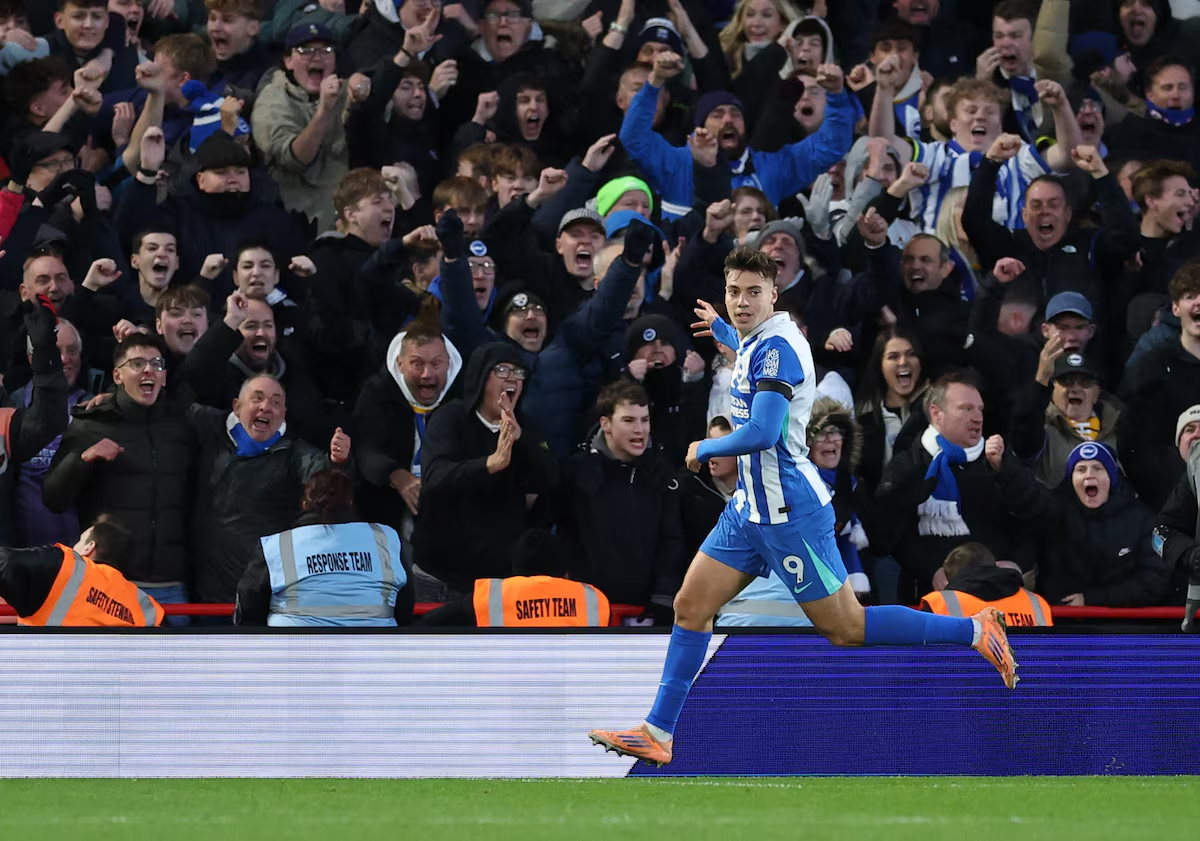
Substitute Stefanos Tzimas anticipated the mistake and seized on the loose ball, driving into the box before calmly placing his finish into the bottom corner. It was a punishing blow for Forest, who had been growing increasingly stretched and disjointed as they pushed forward, and the goal ended any lingering hope of a late recovery.
Brighton’s 2-0 victory was not just the product of sharp finishing; it was built on a disciplined tactical plan, assertive midfield control, and clever exploitation of Forest’s weaknesses. The decision to push De Cuyper further forward proved inspired, giving Brighton an edge in wide areas and forcing Forest constantly onto the back foot.
Hürzeler’s team executed their approach with intelligence and efficiency, ensuring they protected their lead before striking late to end the contest.
For Forest, the result felt like a sobering reminder of the challenges that remain despite their recent unbeaten stretch. Dyche’s arrival had brought defensive cohesion and a more structured approach, but Brighton exposed areas that still require urgent improvement.
Forest’s struggle to maintain composure under sustained pressure, their vulnerability to wide overloads, and their persistent issues in the final third were all evident throughout the afternoon. Although they fought harder in the second half, the lack of clear creativity and the absence of a clinical edge undermined any potential comeback.
This defeat also carries psychological weight. Forest had been building momentum, and their crowd had begun to believe in a slow, steady climb away from danger.
Brighton, however, left the City Ground with renewed belief and momentum. The win not only elevated them into fifth place but also showcased their ability to manage difficult away fixtures with confidence.