

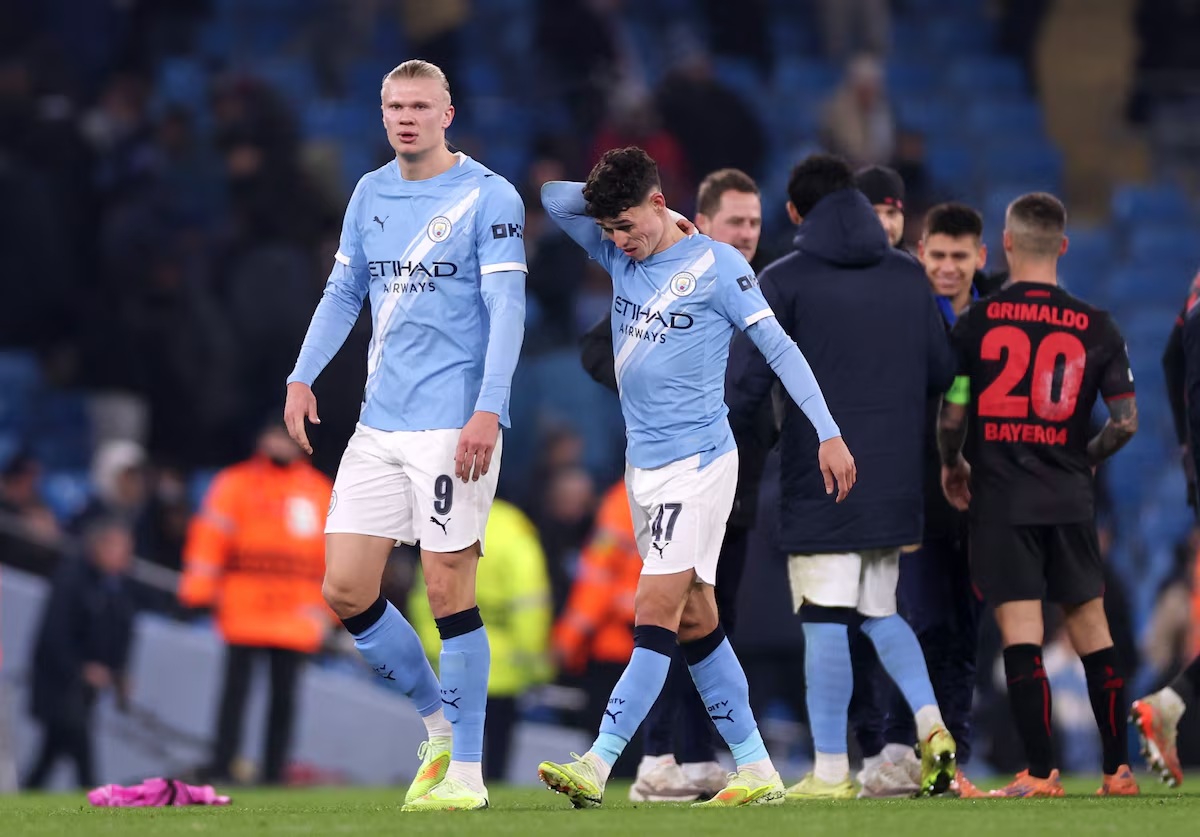
Manchester City fell to a shock 2-0 defeat against Bayer Leverkusen at the Etihad Stadium, bringing an abrupt end to their long-standing unbeaten home record in the Champions League group stage.
On a night that was meant to mark Pep Guardiola’s 100th European game in charge of the club, City instead produced one of their most lacklustre displays of the season, leaving fans stunned and Leverkusen celebrating a famous victory.
City began the match with heavy rotation, a decision Guardiola defended before kick-off by emphasising the need to keep his squad fresh. But the changes quickly appeared costly. While City initially dominated possession, their attacks lacked purpose and penetration.
Leverkusen, by contrast, stayed compact, absorbed pressure and awaited the right moments to strike.
The breakthrough arrived in the 23rd minute and completely altered the complexion of the night. A slick Leverkusen counter-attack carved through the midfield before Christian Kofane lifted a precise cross into the box from the right wing.
Álex Grimaldo drifted into space at the far post and struck a clean, low effort across the goalkeeper to put the visitors ahead. The Etihad fell silent. That single moment exposed City’s defensive disorganisation and set the tone for the remainder of the match.
Despite going behind, City’s response was surprisingly flat. Their passing remained neat, but the tempo was slow, the movement predictable and the final ball consistently off the mark.
The only notable threat before halftime came when a low cross skidded across the six-yard area, but Mark Flekken, formerly of Brentford and now a pivotal figure in Leverkusen’s squad, reacted sharply to push the ball away. It was a warning sign that the German side were well-prepared and unfazed by the occasion.
At halftime, Guardiola made sweeping changes, introducing Phil Foden, Jérémy Doku and other regular starters in an attempt to inject urgency into City’s attacking play. Yet instead of sparking a comeback, City found themselves two goals down just nine minutes after the restart.
Ibrahim Maza whipped in a measured cross from the left, and Patrik Schick met it unmarked, nodding the ball firmly into the net. The simplicity of the goal highlighted the defensive lapses that plagued City all evening.
From that point forward, desperation seeped into City’s approach. Erling Haaland was summoned from the bench earlier than planned, prompting an instant surge of expectation inside the stadium.
He nearly delivered within minutes, racing onto a through ball from Foden and attempting to slide the ball past the advancing Flekken. But the Leverkusen goalkeeper once again timed his intervention to perfection, smothering the effort and snuffing out what would be City’s best chance of the half.
As the home side pushed forward, Leverkusen grew increasingly disciplined. Their defensive unit, led by Jarell Quansah, held an impeccably tight line, cutting passing lanes and intercepting attempted combinations with growing confidence.
The more City pressed, the more comfortable Leverkusen appeared, as if drawing energy from each successful clearance and counter.
City’s possession figures remained high, edging around 55 percent, but it was sterile dominance. Each passing sequence seemed to break down before reaching the penalty area.
Miscommunications crept in, and players otherwise reliable in tight spaces appeared hesitant. With every minute that ticked by, belief drained from the stands, and frustration magnified on the pitch.
Leverkusen, meanwhile, executed their game plan with remarkable precision. Their counter-attacks were measured rather than frantic, and their finishing clinical. Grimaldo’s opener and Schick’s header came from moments of pure efficiency rather than extended pressure.
For Manchester City, however, the loss carries ramifications beyond the night’s disappointment. The result ended a home unbeaten run in Champions League group games stretching back to 2018.