
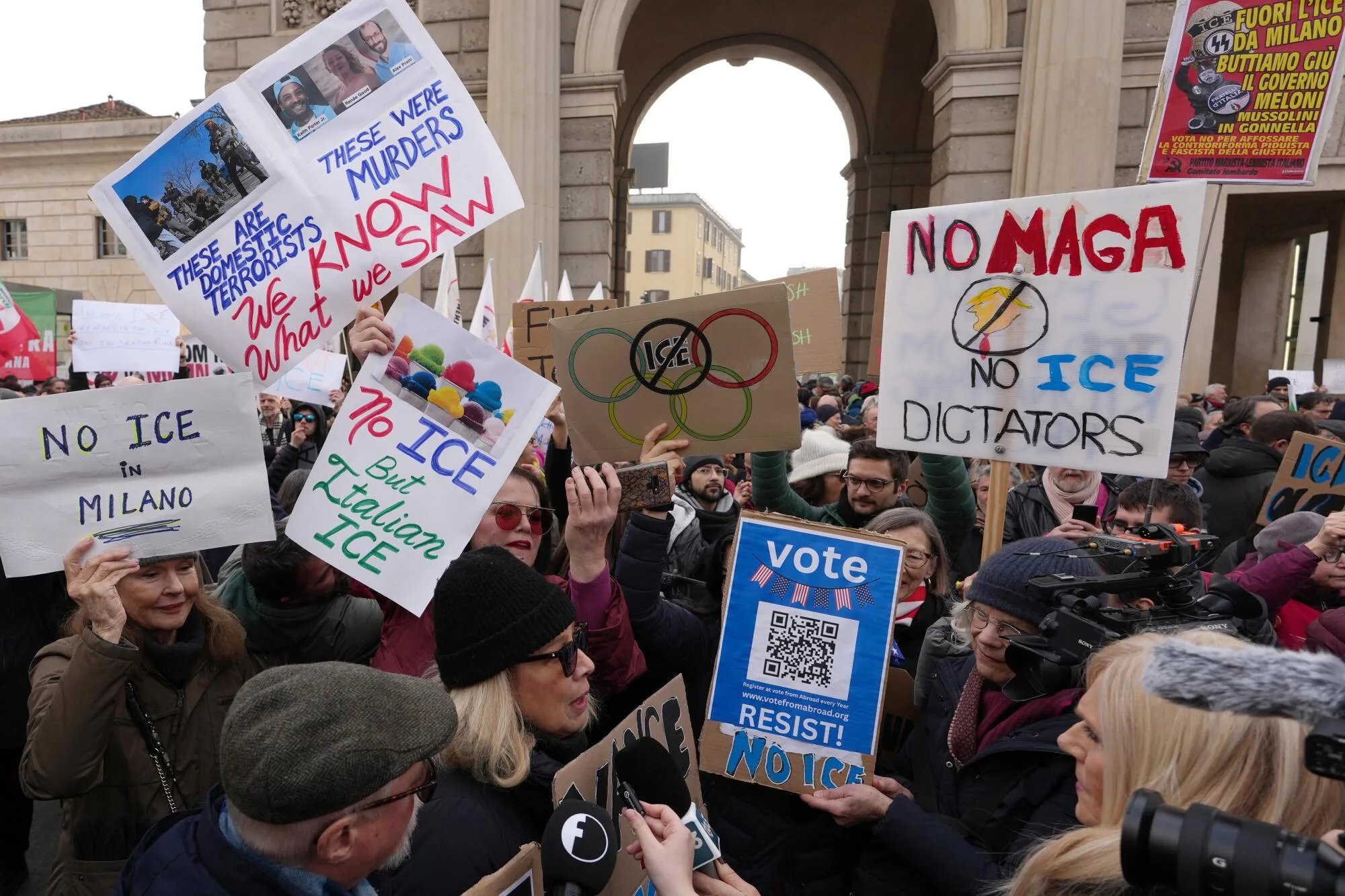
The opening of the 2026 Milan Cortina Winter Olympics was overshadowed by political protests and coordinated sabotage, creating a stark contrast to the intended celebration of sport and drawing condemnation from Italian authorities who vowed the disruptions would not “tarnish Italy’s image in the world”.
The unrest began in Milan, where the main opening ceremony was held at the San Siro Stadium.
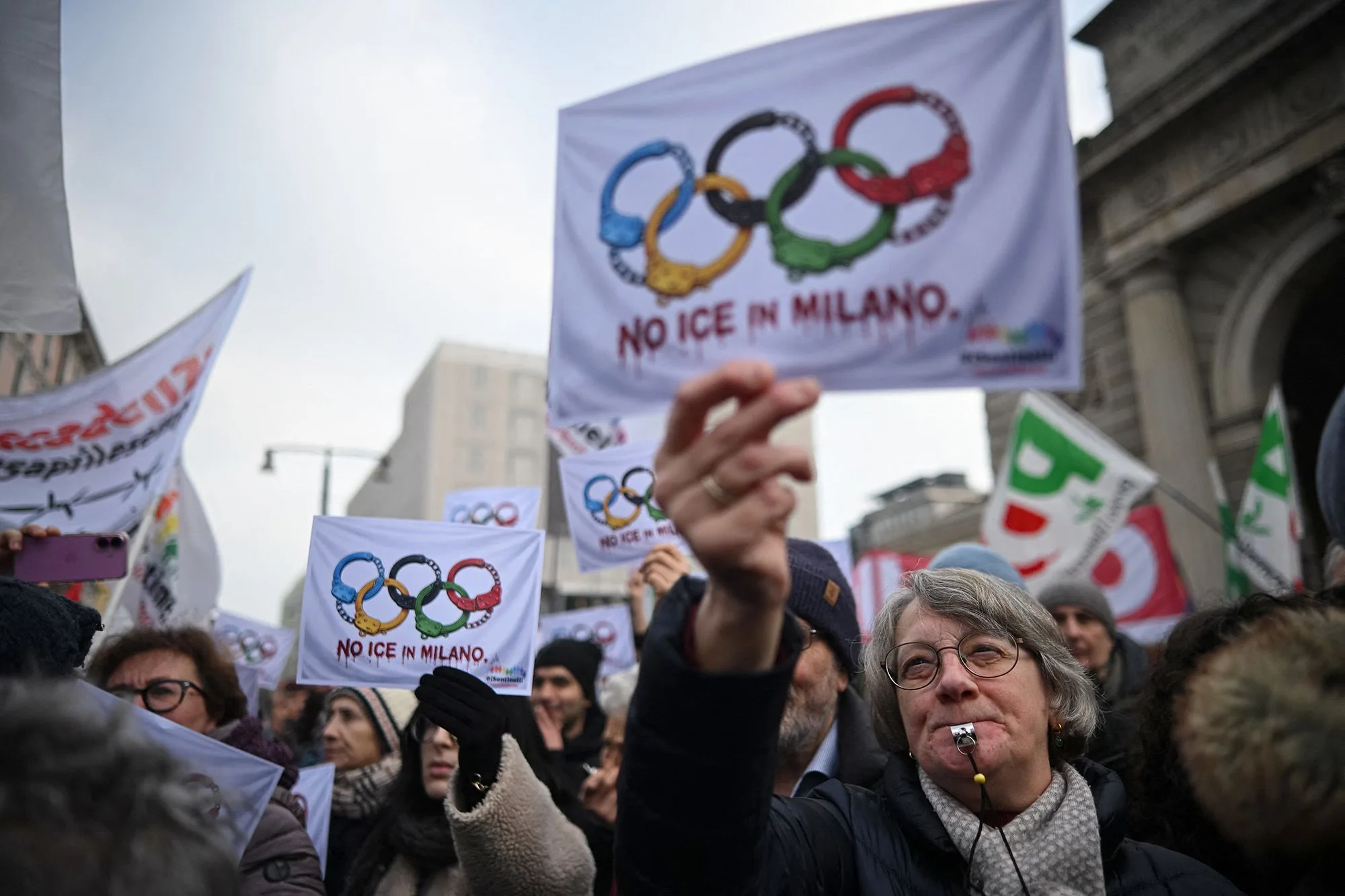
Thousands of demonstrators, including families and students, marched peacefully to voice opposition to the environmental and economic impact of the Games.

One group carried cardboard cutouts of trees to protest deforestation for Olympic construction, while banners declared the event the “Infernal Olympics”. The protest was organized by a broad coalition called the Unsustainable Olympics Committee.
A significant point of contention for many was the presence of United States Immigration and Customs Enforcement (ICE) agents, who were part of the security detail for the U.S. delegation, which included Vice President JD Vance.
Protesters carried signs reading “ICE should be in my drinks, not my city” and “Fuck ICE,” echoing the message that British-American skier Gus Kenworthy had previously scrawled in the snow at the Games.
The situation escalated as night fell when a breakaway group of masked protesters clashed with police near an Olympic venue. These individuals threw fireworks and smoke bombs and attempted to access a highway leading to an ice hockey rink.
Italian police responded with water cannons and tear gas, ultimately detaining at least six people. Prime Minister Giorgia Meloni later condemned the violent demonstrators as “the enemies of Italy and Italians” in a social media post.
Simultaneously, a separate security crisis unfolded across northern Italy’s critical rail network.
Authorities reported “serious sabotage” involving three separate incidents, including a fire on infrastructure between Bologna and Venice, severed electrical cables on a high-speed line, and the discovery of a rudimentary explosive device near tracks.
The sabotage caused severe travel delays of up to two and a half hours, affecting thousands of travelers during the opening weekend.
Transport Minister Matteo Salvini noted the attacks mirrored similar vandalism that targeted France’s rail network during the 2024 Paris Olympics. “If it is confirmed that the interruption on the high-speed line is the result of a premeditated attack, on the first day of the Olympics, let’s say that someone wishes ill upon Italy,” Salvini said.
The protests and sabotage occurred against the backdrop of an Olympics that has struggled to generate a unified festive atmosphere, particularly in its co-host city of Milan.
While the mountain resort of Cortina d’Ampezzo was described by athletes as having an “electric” atmosphere, Milan presented a different scene. Some locals and visitors noted a lack of Olympic spirit, with one Milan resident describing the Games more as an “inconvenience” due to road closures.
Despite the disruptions, Italian officials remained defiant. Deputy Prime Minister Salvini asserted that the acts of sabotage “do not in any way tarnish Italy’s image in the world”.