

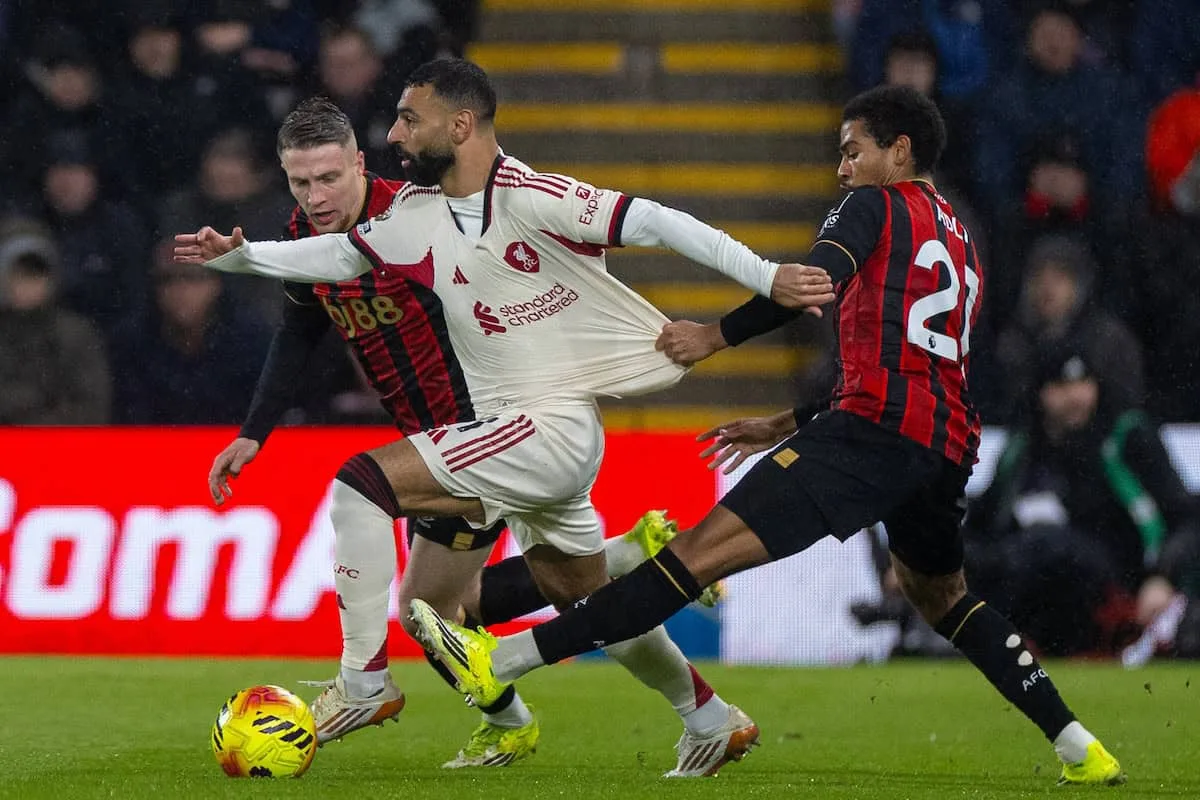
Mohamed Salah, Liverpool’s modern talisman, has stumbled into a piece of dismal club history, finding himself on the losing side in seven of his last eight Premier League starts. This equates the unwanted record set by former fan favorite Dirk Kuyt in 2012, a period symbolic of the club’s previous era of frustration.
The statistic casts a stark shadow over Anfield, particularly as it follows Salah’s recent return from international duty at the Africa Cup of Nations. His reintegration into the starting lineup was meant to reignite Liverpool’s stuttering campaign under manager Arne Slot.
Instead, the 3-2 defeat to Bournemouth that sealed this record has highlighted a deepening crisis . For a player who has defined an era of relentless success, being mentioned alongside the struggling 2012 side is a jarring indicator of how far standards have slipped in recent months.

The parallel with Dirk Kuyt is poignant. The Dutch workhorse, revered as a “Working Class Hero” on the Kop for his tireless effort and crucial goals, endured his painful run during the twilight of his Liverpool career under Kenny Dalglish. That 2011/12 season was one of profound confusion, the team won the League Cup but capitulated in the league, finishing a dismal eighth.
Kuyt’s struggles were later revealed to have been compounded by personal grief following the death of his father, a factor that deeply affected his performances. His record, now matched by Salah, was a symptom of a team that could not win three games in a row all season and failed to secure back-to-back victories in the entire calendar year of 2012.
Salah’s current situation is inflamed by factors beyond the pitch. Before departing for the Africa Cup of Nations, his relationship with head coach Arne Slot reached a very public breaking point.
In a remarkable interview, Salah claimed he had “no relationship” with the Dutchman after being benched and accused the club of “throwing him under the bus” . This rift, followed by the team’s continued poor results upon his return, presents Slot with a monumental dilemma.
The manager must now reconcile the reintegration of a legendary but out-of-form attacker with the team’s glaring collective issues, which include a defensive injury crisis and a pattern of fragility.
The contrast with Salah’s own recent past could not be more severe. Just over a year ago, he was the driving force behind a Liverpool side that surged eight points clear at the top of the table, setting records for goal contributions and being hailed by Slot as potentially “the best player in the world”.
That the same player now holds a record synonymous with a fallen era underscores the volatile nature of football and the rapid shift in fortunes at Anfield. As the club sits sixth and outside the Champions League places, the challenge is no longer about chasing records for greatness, but about dismantling an unwanted one that echoes from a darker time in the club’s recent history .