
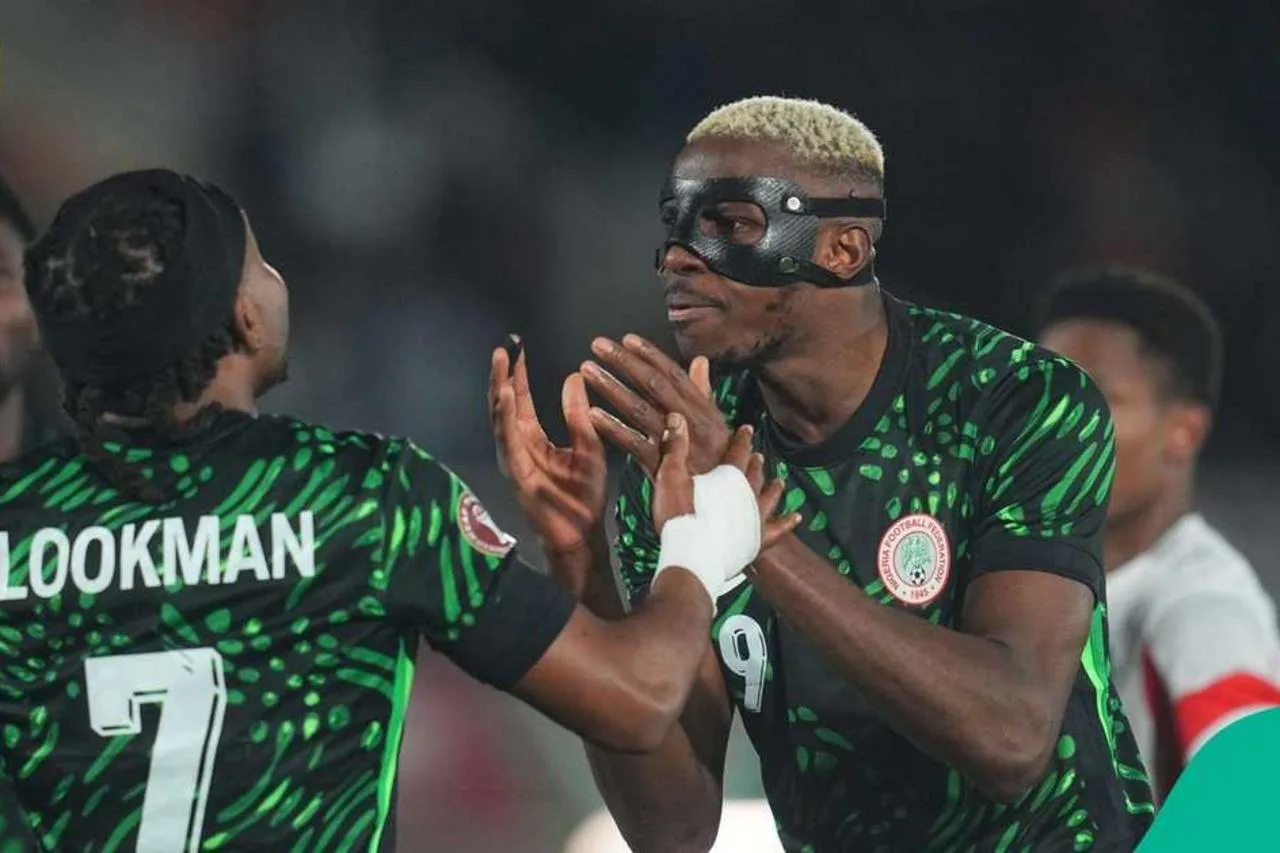
In a commanding 4-0 victory that should have been a pure celebration of Nigeria’s arrival as serious Africa Cup of Nations contenders, a moment of fiery confrontation between two of the team’s brightest stars has instead captured the continent’s attention, raising urgent questions about chemistry and composure at the tournament’s most critical stage.
The incident occurred in the 63rd minute of Nigeria’s Round of 16 match against Mozambique at the Complexe Sportif de Fes. With the Super Eagles already comfortably ahead, winger Ademola Lookman, who had already assisted two of Victor Osimhen’s goals, found himself with the ball in an advanced position. Instead of feeding the ball to Osimhen, who was positioned for a potential hat-trick, Lookman attempted to take on a defender himself.
The decision ignited an immediate and public outburst from the star striker. Video from the match shows an incensed Osimhen confronting his teammate, with reports indicating he shouted, “It’s a team game, pass the ball”.
The clash escalated to the point where captain Wilfred Ndidi stepped in to mediate, only to be reportedly pushed aside by the furious Osimhen. Following the exchange, Osimhen’s body language turned noticeably passive; he appeared reluctant to make attacking runs when Lookman was in possession.
Just five minutes later, coach Eric Chelle made the decisive decision to substitute Osimhen off the pitch.
The post-match scene did little to quell concerns. While his teammates celebrated the comprehensive victory and a spot in the quarter-finals, Osimhen headed directly down the tunnel, bypassing any joint celebrations. Officials were reportedly seen preventing other players from approaching him, painting a picture of a star player isolated in his frustration.
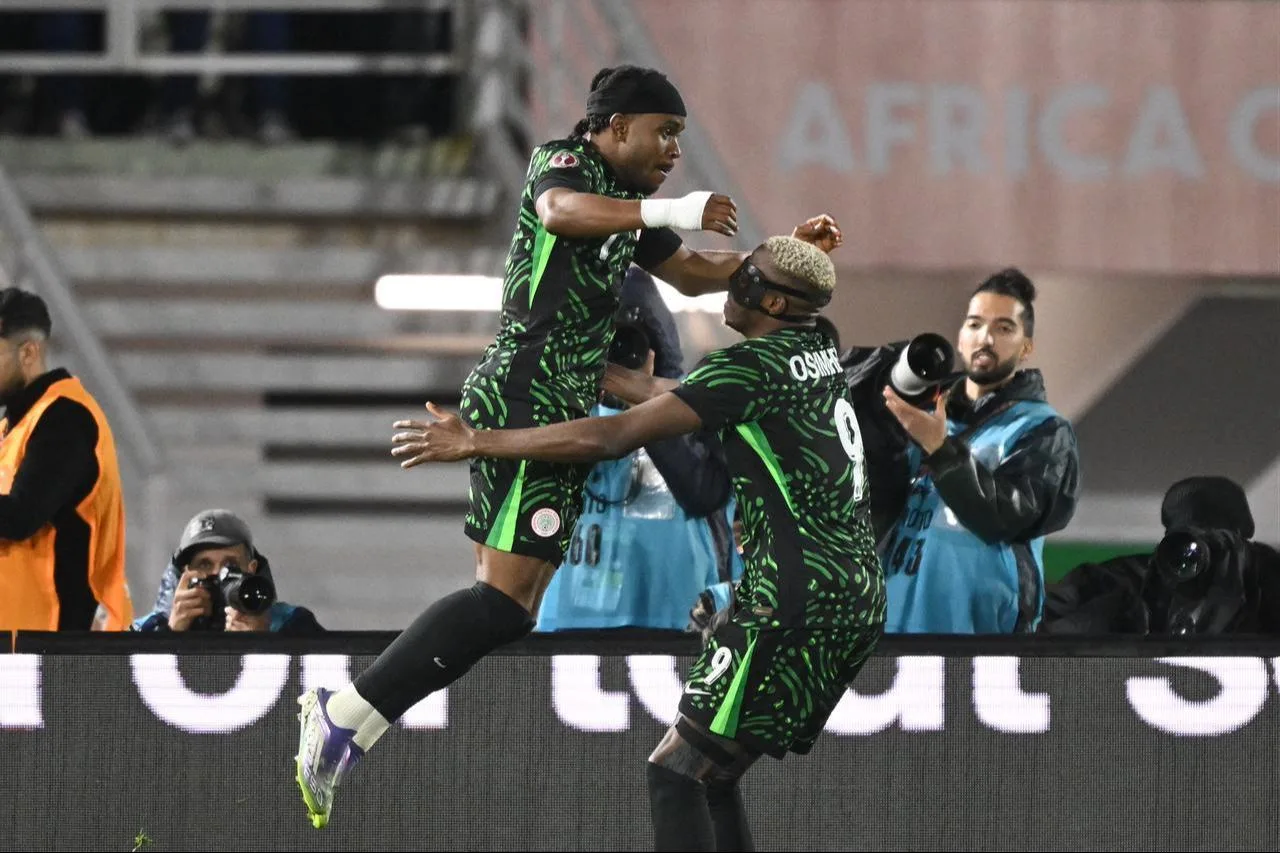
In sharp contrast, Lookman adopted a diplomatic stance when facing the media. “Nothing happened, just a discussion on the pitch, that is it. I do not know what the big issue is,” he stated, deliberately downplaying the conflict. He further attempted to defuse the narrative, praising Osimhen as the team’s “number one guy” and a “top striker,” emphasizing that the team’s collective goal far outweighed any individual moment.
Coach Eric Chelle echoed this stance of internal resolution, refusing to divulge details. “What happened on the pitch will stay in the group,” Chelle stated, asserting his managerial prerogative to handle the matter privately.
This on-field tension arrives at a complex juncture in the careers of both players, adding a layer of personal professional pressure to the national team dynamic. Both Osimhen and Lookman have recently navigated tumultuous periods with their Italian club sides, experiences that may be simmering beneath the surface.
Lookman, the reigning African Footballer of the Year, is currently embroiled in a contentious transfer saga with Atalanta. He has publicly accused the club of reneging on a promise to allow him to leave, submitting a formal transfer request after seeing a potential move to Inter Milan collapse.
Similarly, Osimhen’s acrimonious exit from Napoli in 2024, following a social media controversy and a breakdown in relations with the club’s leadership, is still a fresh memory. These parallel experiences of feeling undervalued or mistreated by their clubs have created a shared backdrop of professional frustration that they carry onto the international stage.