
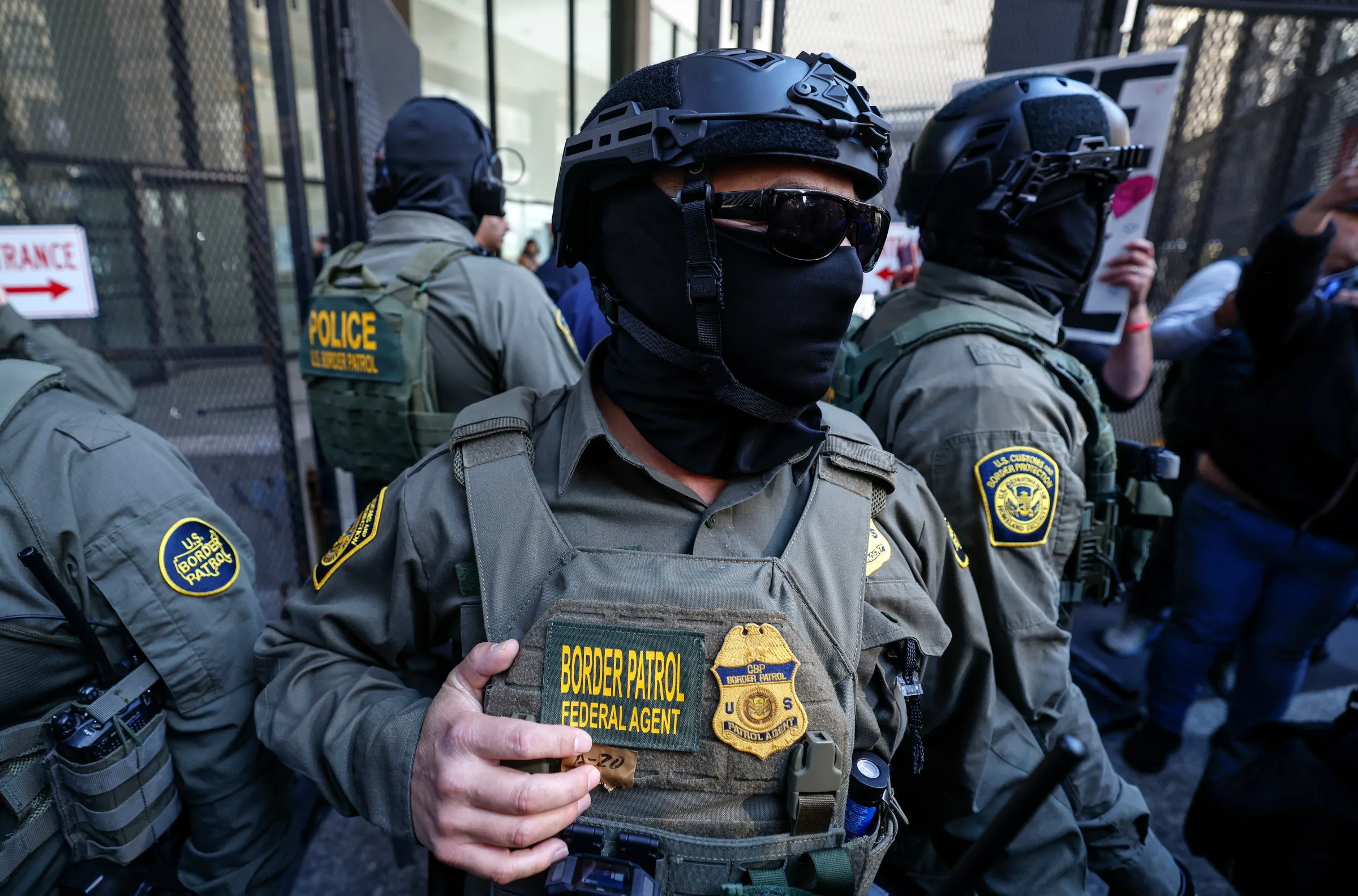
In an announcement that has cast a political shadow over the nation’s biggest sporting event, the Department of Homeland Security has confirmed U.S. Immigration and Customs Enforcement agents will conduct enforcement operations at Super Bowl LX in Santa Clara, California, on February 8.
The news, which has stirred controversy and protest, frames this year’s championship game between the New England Patriots and Seattle Seahawks as a flashpoint for the nation’s immigration debate.
According to DHS officials, the agency’s mission at major events remains consistent. “DHS is committed to working with our local and federal partners to ensure the Super Bowl is safe for everyone involved, as we do with every major sporting event, including the World Cup,” said Tricia McLaughlin Yoho, Assistant Secretary for Public Affairs for the DHS.
She emphasized that security would involve a “whole of government response” and that “those who are here legally and are not breaking other laws have nothing to fear”.
This follows a long precedent of federal security support for large-scale events; ICE previously played a significant role at Super Bowl LI in Houston, where its Homeland Security Investigations unit focused on tasks like vetting credentials, combating counterfeit merchandise, and investigating human trafficking.
However, the context for this year’s operations is markedly different. DHS adviser Corey Lewandowski has framed the enforcement as a pointed political directive, stating it is a “directive from the president” and will not be paused for the game.
In a stark warning on a podcast last October, Lewandowski said, “There is nowhere you can provide safe haven to people who are in this country illegally. Not the Super Bowl and nowhere else. We will find and deport you. That is a very real situation”.
This stance is juxtaposed against President Donald Trump’s announced boycott of the game, which he has attributed to distance while simultaneously criticizing the NFL’s entertainment choices.
The planned enforcement has generated significant pushback from activists and local officials, particularly in the aftermath of recent fatal incidents involving federal immigration agents in Minneapolis.
A growing “No ICE at Super Bowl” movement has collected over 150,000 petition signatures asking the NFL to bar agents from the stadium. San Francisco Mayor Daniel Lurie, whose city will host many related events, sought to reassure the public by distancing local law enforcement from the federal operation.
“We will continue to uphold San Francisco’s long-standing policies that keep local law enforcement focused on keeping our city safe, not federal immigration enforcement,” Lurie stated.
The controversy is further entangled with the event’s entertainment. Halftime performer Bad Bunny, the globally popular Puerto Rican artist, previously canceled U.S. tour dates over fears of ICE raids. “But there was the issue of, like, f—ing ICE could be outside [my concert]. And it’s something that we were talking about and very concerned about,” he told an interviewer last year.
NFL Commissioner Roger Goodell defended the selection process, noting, “It’s carefully thought through,” and praised Bad Bunny as “one of the leading and most popular entertainers in the world”.
The NFL has not commented on how the ICE presence will impact stadium entry protocols. Meanwhile, local rapid response networks in the Bay Area are mobilizing to provide legal resources for attendees.
As the Patriots and Seahawks arrive for the title game, fans and residents are preparing for an event where the drama will extend far beyond the field, underscored by a federal promise of heightened vigilance and a community bracing for its impact.