
Everton Football Club has expressed profound frustration after their appeal against Michael Keane’s controversial red card was rejected by a Football Association panel, with the defender now set to serve a three-match suspension for violent conduct.
The decision, announced on Friday, has ignited a fierce debate over the application of the rules and the consistency of officiating in the Premier League.
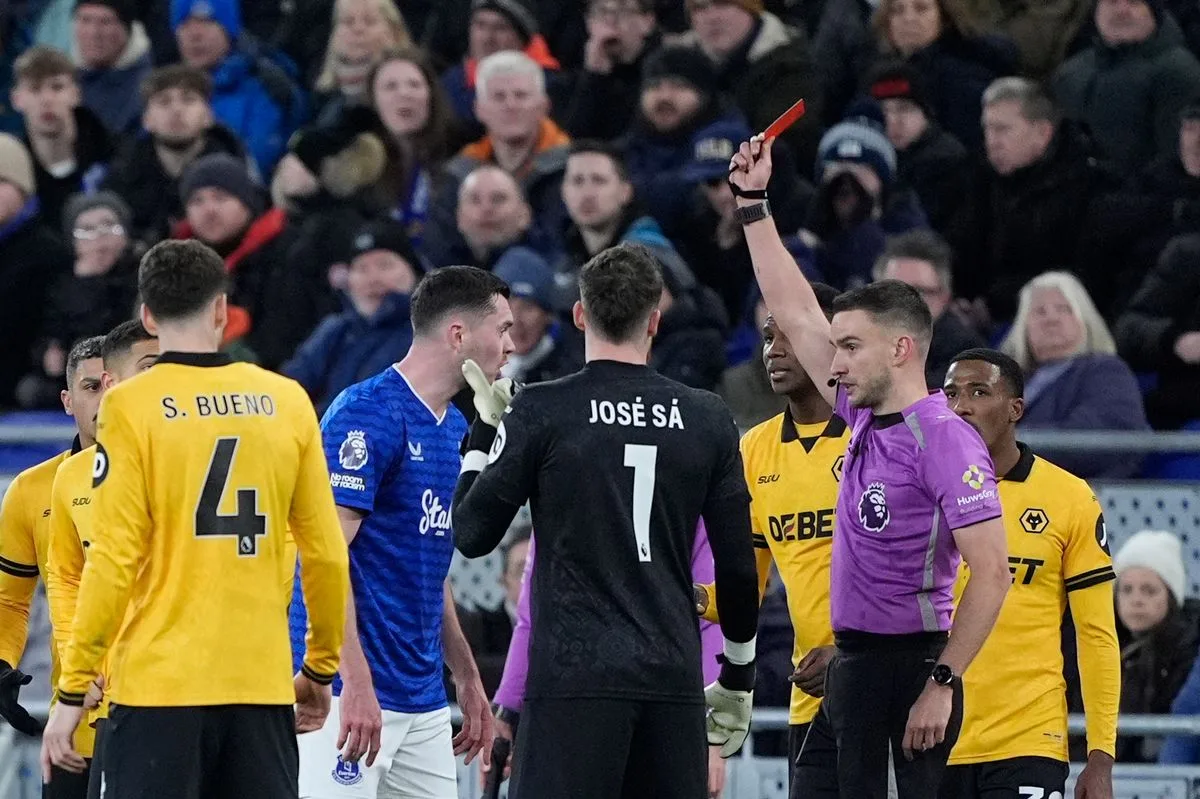
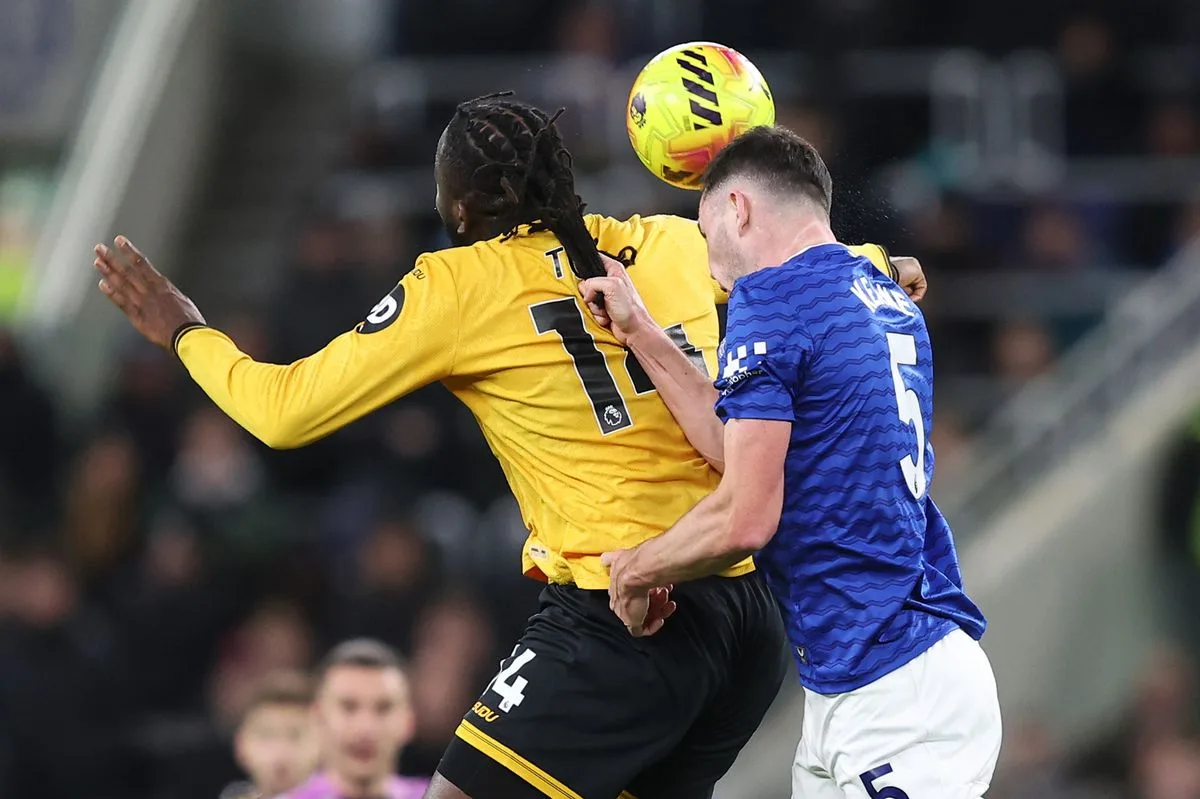
The incident occurred in the 83rd minute of Everton’s 1-1 draw with Wolverhampton Wanderers on Wednesday. As both players challenged for an aerial ball, Keane’s hand made contact with and pulled the ponytail of Wolves striker Tolu Arokodare.
Initially unpunished, the action was reviewed by the Video Assistant Referee (VAR), Chris Kavanagh, who recommended an on-field review by referee Tom Kirk. After viewing the monitor, Kirk overturned his initial decision and issued a straight red card to Keane.
In an official statement, Everton declared themselves “surprised and disappointed” by the panel’s ruling to uphold both the dismissal and the automatic three-game ban. The club argued the incident “did not meet the threshold for violent conduct” as defined by the rules, insisting Keane’s action during the aerial duel was “neither forceful nor intentional”.
The statement also defended the character of the 32-year-old centre-back, a player who “plays the game with the highest ethical standards” and had never before been dismissed for violent conduct in his career.
Manager David Moyes’s reaction was one of unvarnished anger, directed both at the FA panel and the VAR system. “I’m hugely disappointed. I’m probably more angry with the panel who thought that was the case,” Moyes stated. He reserved particular criticism for the decision to involve VAR in what he deemed a minor incident, calling it “embarrassing” for the officials involved.
Moyes argued that a young referee in only his third or fourth Premier League game was given “a terrible decision” by the VAR team, who he claimed were “looking to find the smallest things”.
The Everton manager further railed against what he perceives as a severe inconsistency in disciplinary measures. He pointed to other recent incidents, including an Arsenal player throwing the ball at an injured opponent, which went unpunished, to question the proportionality of Keane’s three-match ban.
“We saw last night that it’s OK to throw a ball at somebody, it’s OK to push and pick up someone with a bad injury. But that a little pull of someone’s hair, accidentally, means a three-game ban is quite extraordinary for me,” Moyes said.
However, the club’s appeal faced a significant legal hurdle. While not explicitly named in the Laws of the Game, hair-pulling is categorically defined as violent conduct by the sport’s rule-making body, the International Football Association Board (IFAB).
The crucial distinction in such cases is whether the action can be considered a natural part of challenging for the ball. The official Premier League rulebook states a player “will be sent off if they make a clear action to pull the hair of an opponent… with force,” a standard the FA panel determined Keane met.
This interpretation aligns with precedent, most notably the sending off of Paris Saint-Germain’s Joao Neves for pulling an opponent’s hair in last summer’s Club World Cup final.
The rejection of the appeal carries immediate sporting consequences for an Everton squad already facing selection headaches. Keane will miss the FA Cup third-round tie against Sunderland on Saturday as well as pivotal Premier League fixtures against Aston Villa and Leeds United.
His absence is compounded by an injury to fellow defender Jarrad Branthwaite and the suspension of Jack Grealish, who was sent off for two yellow cards for dissent in the aftermath of Keane’s dismissal against Wolves. Grealish has since compounded the club’s issues by publicly criticising the FA’s decision as “embarrassing” on social media, an outburst that could land the player in further disciplinary trouble.
With the FA panel’s decision final, the matter is closed from a regulatory standpoint. Yet, the fallout continues, highlighting enduring tensions between clubs and governing bodies over the subjective interpretation of violent conduct and the perceived overreach of video technology in the modern game.