
In the intense aftermath of Algeria’s narrow 1-0 victory over the Democratic Republic of Congo in the Africa Cup of Nations quarter-finals, a moment of on-field celebration has ignited a continent-wide conversation about history, respect, and the enduring symbols of African liberation.
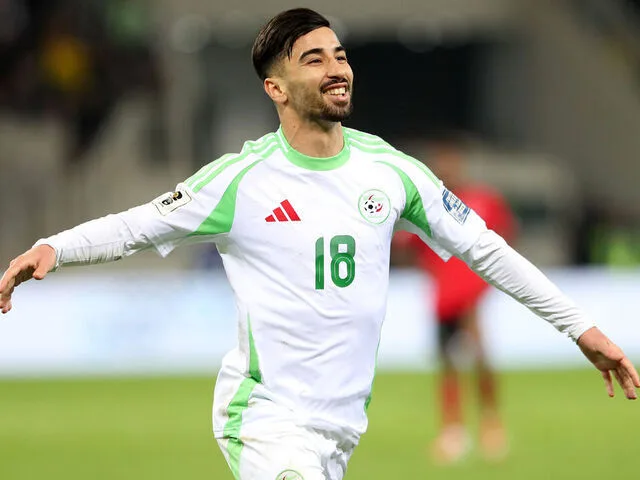
Algerian forward Mohamed Amoura has now issued a heartfelt apology for his actions, which were widely perceived as mocking a Congolese superfan paying tribute to the assassinated independence hero Patrice Lumumba.
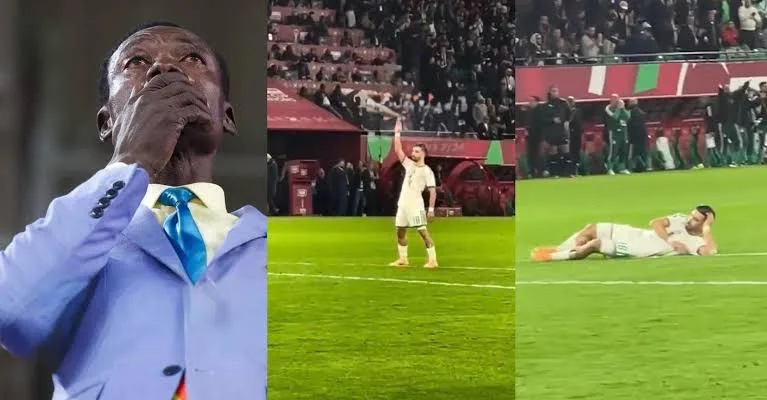
The incident occurred immediately after Adil Boulbina’s extra-time winner secured Algeria’s progression. Amoura turned toward the stands where Michel Nkuka Mboladinga, a fan who has captivated audiences by standing motionless throughout matches in a precise imitation of a statue of Lumumba, was watching.
The player raised his arm to mimic the fan’s iconic pose before dropping to the turf. While likely intended as spontaneous celebration, the gesture struck a deep chord of disapproval online and among observers, given Lumumba’s towering historical significance.
The backlash was swift and crossed national lines. On social media platform X, one Congolese user expressed a tempered view, suggesting, “Amoura is a young man who doesn’t really know Lumumba’s history or his struggle… Perhaps in a few days’ time, he’ll realise it was a mistake and offer his apologies”.
Others were less forgiving, with another commentator writing, “Great respect to this supporter. Disappointed by Amoura’s idiotic behavior”. The controversy was further compounded when prominent Algerian journalist Khadija Benguenna faced separate backlash for a since-deleted post that used the word “creature” to describe the same fan, a term criticized as dehumanizing.
In his apology, Amoura clarified that his actions stemmed from ignorance, not malice. “It was never about disrespect, it was a lack of knowledge,” he stated, admitting he did not initially recognize the profound significance of the figure Mboladinga was honoring. This explanation resonated with some who had called for context.
Egyptian journalist Eslam Magdy, who had criticized the act, earlier highlighted the historical irony, noting, “The Algerian struggle’s relationship with the Congolese struggle is deeply intertwined… Patrice Lumumba strongly supported Algerian independence from France”. Lumumba, the first Prime Minister of the independent Congo, was a seminal Pan-African leader whose ideals helped lay the foundation for the Organization of African Unity, the precursor to the African Union.
The episode underscores the powerful intersection of sport, memory, and politics in Africa. Mboladinga’s silent vigil was universally interpreted as more than fandom; it was a “powerful nod to Africa’s fight for independence”. As one Facebook commenter noted, the fan was “sending a code to Africa about neocolonialism”.
Consequently, Amoura’s mimicry was seen by many not as teasing an individual, but as disrespecting a sacred symbol of continental resistance. The player’s apology has been met with a mix of acceptance and continued debate.
As Algerian football fans now turn their attention to a semi-final clash with Nigeria, the incident serves as a poignant reminder of the historical threads that connect African nations and the respectful dialogue that major sporting tournaments can both challenge and foster.