
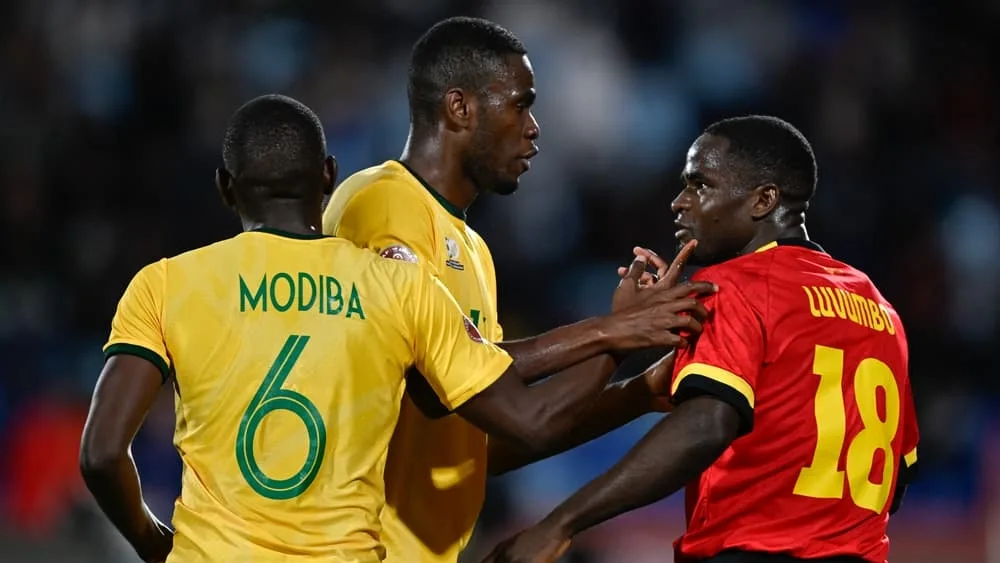
In a pivotal opening match of the Africa Cup of Nations Group B, South Africa’s national team, Bafana Bafana, secured a dramatic 2-1 victory over Angola at the Stade de Marrakech, a win that broke a two-decade-long curse in tournament openers and set a determined tone for their campaign.
The match, played on Monday evening before a sparse crowd in the 42,000-seat stadium, was ultimately decided by a moment of pure class from striker Lyle Foster, whose 79th-minute curling strike from the edge of the area sealed a hard-fought three points for the 2023 bronze medalists.
The victory represents a significant mental hurdle cleared for Hugo Broos’s side, marking their first win in an AFCON opener since they defeated Benin in 2004. In the six subsequent tournaments, South Africa had managed only two draws and suffered four losses in their initial match, a statistic that had weighed heavily on a squad aiming to prove their third-place finish in the previous edition was no fluke.
Coming into the match on an impressive 26-match unbeaten run, the team had projected confidence, yet acknowledged the heightened pressure of a tournament where every detail is magnified. Captain Ronwen Williams had noted in the build-up that the continental level had risen dramatically, and that his team would need to give even more to succeed.
They faced an Angolan side, the Palancas Negras, that was itself buoyant after a run to the quarter-finals in 2023 and carried a psychological edge, having been unbeaten in their last six encounters with South Africa, including a 3-0 win in the COSAFA Cup final just six months prior.
The context of the win was made all the more notable by South Africa’s chaotic pre-match preparations. The squad endured a grueling 26-hour journey to Morocco, a trip that included layovers in Dubai and Casablanca and was compounded by logistical headaches like lost luggage, including the suitcase of coach Hugo Broos himself.
While Broos dismissed these challenges as excuses, emphasizing the need to perform regardless, the disrupted build-up stood in stark contrast to the composed, workmanlike performance his team would need to deliver on the pitch. Angola, under the guidance of French coach Patrice Beaumelle, presented a formidable and organized obstacle.
Beaumelle had shown respect for South Africa’s formidable unbeaten streak but had also instilled a belief in his squad that they were capable of troubling any opponent, pointing to their previous performance against giants like Argentina as evidence of their resilience. Their captain, Fredy Ribeiro, had stressed the paramount importance of a strong start in the tournament’s grueling format.
The opening phase of the match belonged to South Africa, who translated their early pressure into a lead in the 21st minute. The goal originated from the right flank, where Khuliso Mudau delivered a cross into a congested penalty area.
After a slight touch from Sipho Mbule and then Lyle Foster, the ball fell to the feet of winger Oswin Appollis. Showing quick feet and composure, Appollis navigated past two Angolan defenders before side-footing a low shot across the goalkeeper and into the bottom corner of the net.
The early advantage seemed to settle Bafana Bafana, but the momentum of the match shifted decisively as the first half progressed. Angola, refusing to be rattled, began to assert control in midfield and carved out several clear opportunities.
Their veteran goalkeeper, Ronwen Williams, who had been a hero in the 2023 tournament, was called upon to make two crucial saves: first pushing away a shot from Angolan captain Fredy, and then producing a spectacular point-blank stop to deny a powerful header from striker Gelson Dala.
Angola’s growing dominance was justly rewarded in the 35th minute. A foul by South Africa’s Siyabonga Ngezana on the edge of the box gave the Palancas Negras a dangerous set-piece opportunity. Fredy stepped up and drove a low, hard free-kick toward the near post.
In a flash of inventive skill, midfielder Show, celebrating his 50th cap for his country, managed to get a deft touch on the ball with the back of his heel, redirecting it past a wrong-footed Williams and into the net for a spectacular equalizer. The goal ignited Angola’s belief and tempered South Africa’s early confidence, with the teams heading to the break level, leaving French coach Patrice Beaumelle arguably the more satisfied of the two managers.
The interval proved to be a critical turning point, with South African coach Hugo Broos making a tactical substitution that would alter the game’s dynamic. He introduced Tshepang Moremi, whose injection of pace and direct running on the wing immediately began to stretch the Angolan defense.
The impact was almost instantaneous. Just six minutes into the second half, Moremi showcased his threat, turning his marker inside out before firing a low shot that beat goalkeeper Hugo Marques. The South African celebrations, however, were abruptly cut short after a VAR review intervened.
The technology showed that Lyle Foster, positioned in an offside place during the build-up, was deemed to be interfering with play, and the goal was chalked off.
Undeterred, South Africa continued to press. They came agonizingly close again when defender Mbekezeli Mbokazi, venturing forward, unleashed a thunderous 35-yard drive that beat Marques but cannoned back off the crossbar.
As the match entered its final quarter-hour, the tension mounted with both teams aware of the colossal value of three points in a group containing heavyweights like Egypt. The decisive moment arrived from South Africa’s premier attacking talent.
A swift counter-attack found Moremi, whose substitution had persistently troubled Angola. He used his speed to burst forward before laying the ball back into the path of the onrushing Lyle Foster.
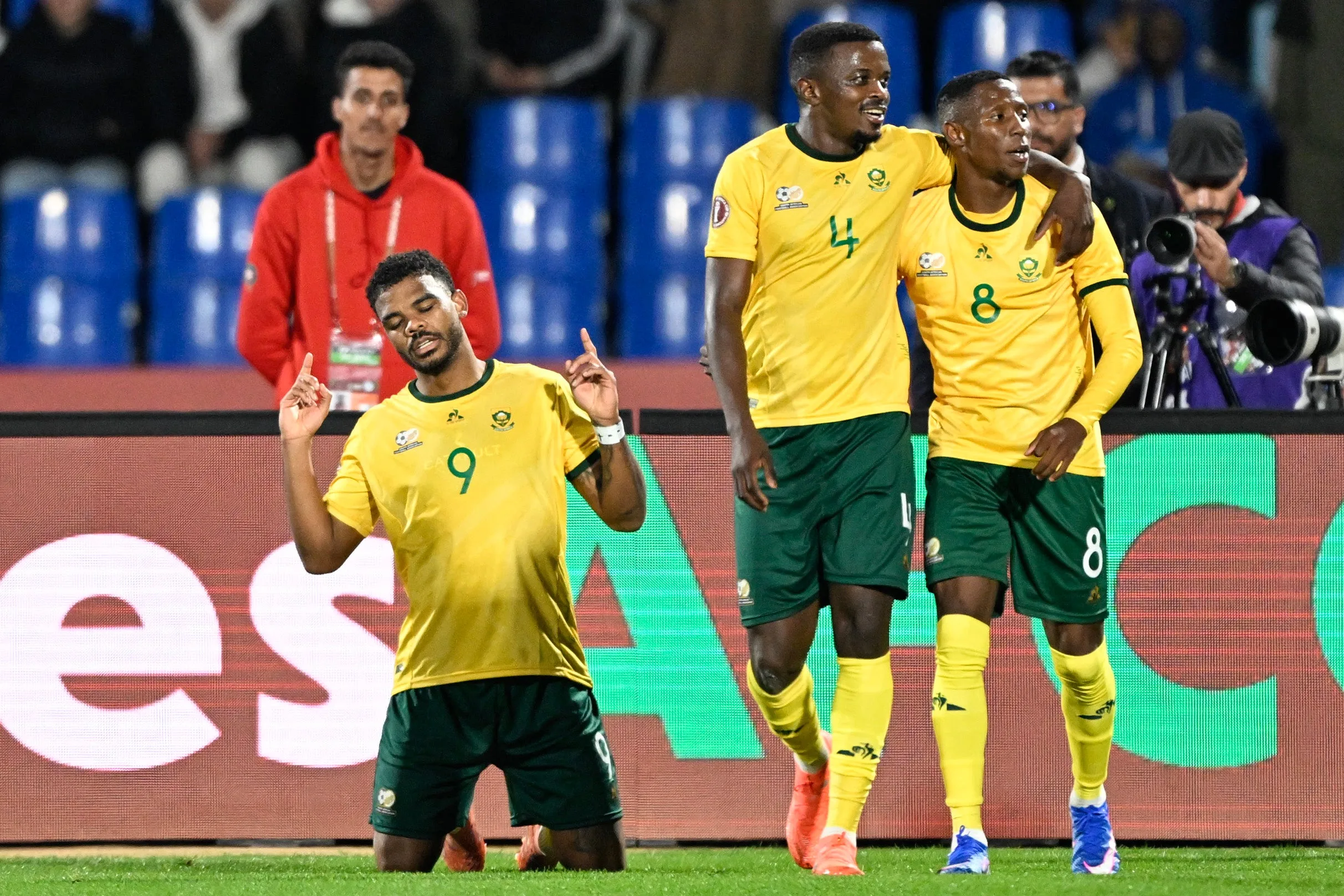
The Burnley striker, South Africa’s sole representative in Europe’s top-five leagues, took one touch to set himself about 20 yards from goal. With flawless technique, he curled a beautiful, arcing shot that flew beyond the despairing dive of Marques and nestled into the top corner of the net.
The 79th-minute strike was a fitting winner, a moment of individual quality that broke the stubborn resistance of a well-drilled Angolan side.
For Angola, the defeat was a bitter pill to swallow after a performance that showcased both their resilience and their capacity to compete. They had matched South Africa for large periods, with the statistics reflecting an even contest: both teams managed four shots on target from ten attempts.
Angola had even dominated in certain aspects, winning nine corner kicks to South Africa’s one. Coach Patrice Beaumelle’s game plan had largely worked, frustrating South Africa for long stretches and exploiting their defensive lapses.
However, the clinical finishing of Foster proved to be the ultimate difference, a reminder of the fine margins that define tournament football.
The combination of Ronwen Williams’s security at the back, the growing influence of players like Appollis and Moremi, and the match-winning prowess of Lyle Foster provides a solid foundation. Their next encounter against Egypt, who narrowly defeated Zimbabwe thanks to a late Mohamed Salah winner in their opener, now looms as a potential showdown for top spot in the group.
For Angola, the path to the knockout stages has become significantly steeper, requiring a positive result against one of the group’s favored teams in their remaining matches.