
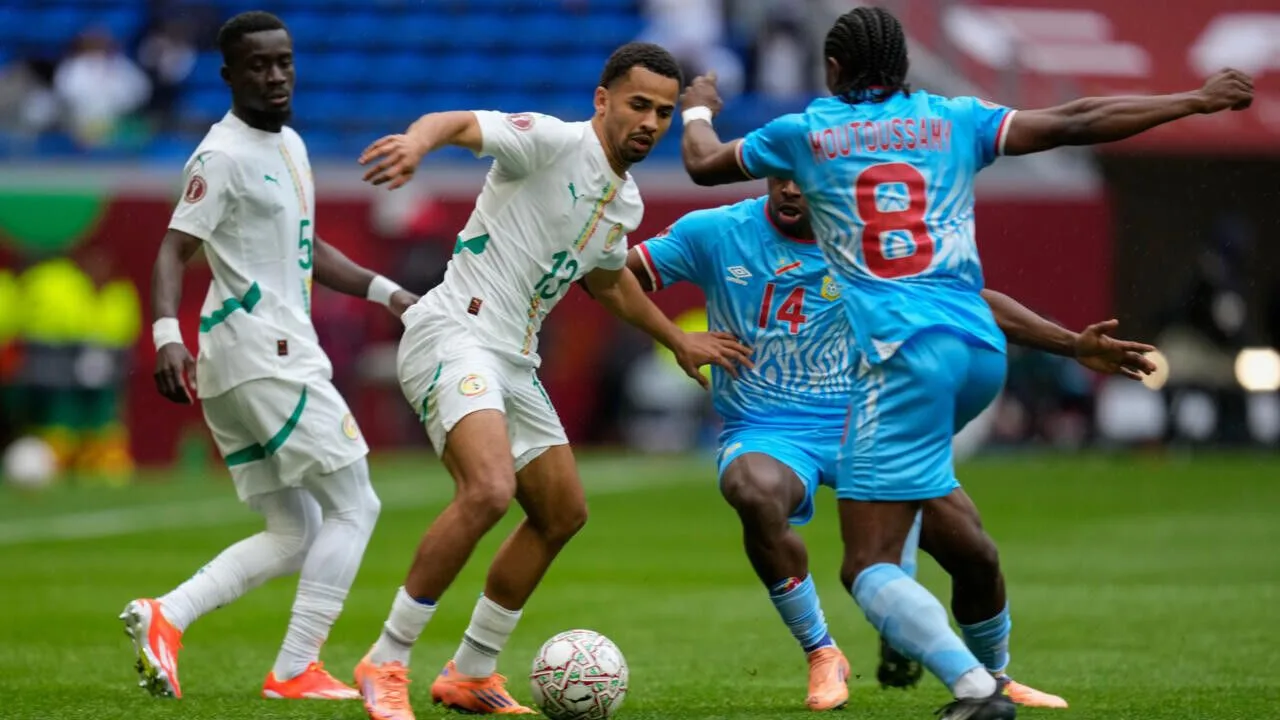
In a heavyweight clash between two African football giants, defending champions Senegal and the determined Democratic Republic of Congo battled to a gripping 1-1 draw at the Grand Stade de Tanger on Saturday, a result that leaves both teams on the cusp of qualification for the knockout stages of the 2025 Africa Cup of Nations.
In a match rich with historical precedent and narrative, it was the enduring class of Sadio Mané that salvaged a point for the Teranga Lions, canceling out a lead given by Cédric Bakambu and ensuring Senegal retains top spot in Group D.
From the outset, the encounter carried the weight of a compelling rivalry. The most recent chapter was written just three months prior in Kinshasa, during 2026 FIFA World Cup qualifying, where Senegal staged a stunning comeback from two goals down to win 3-2, a victory that sealed their passage to the global tournament and left DR Congo facing a playoff route.
That memory of a surrendered lead undoubtedly fueled the Leopards, while Senegal, having dismantled Botswana 3-0 in their opener, sought to affirm their status as tournament favorites. The historical ledger added further intrigue; across all competitions, Senegal held a commanding unbeaten streak of eight matches against their Central African opponents, a run stretching back over half a century.
Yet, in the AFCON arena itself, the record was split, with DR Congo claiming a group-stage win in 1968, the year they lifted the trophy, and Senegal taking a quarter-final victory in 2002 en route to their first final.
The first half in Tangier unfolded as a story of Senegalese dominance without the crucial final act. Amidst a vibrant, drum-filled atmosphere, the Teranga Lions controlled proceedings, pinning DR Congo back and creating a series of promising opportunities.
Nicolas Jackson, brimming with confidence after a brace against Botswana, side-footed an effort narrowly wide, while Pape Gueye tested Congolese goalkeeper Lionel Mpasi with a long-range drive that required a scrambling save. The most significant moment for Sebastien Desabre’s side was a brief celebration turned sour, as Aaron Wan-Bissaka’s finish was correctly ruled out for an offside in the build-up.
Senegal’s pressure was underscored by the statistics: they fired nine shots toward the DR Congo goal before the break, but a combination of poor finishing and resilient defending kept the scoresheet blank.
Emerging from the interval, DR Congo displayed a markedly increased purpose and vigor. They began to ask questions of the Senegalese defense, with Noah Sadiki forcing Edouard Mendy into a save. The breakthrough, when it arrived in the 61st minute, stemmed from a moment of opportunism.
Theo Bongonda, the hero from the opening win against Benin, found space and unleashed a low effort that Mendy could only parry. Lurking with a striker’s instinct was the experienced Cédric Bakambu, who reacted first to prod the loose ball home from close range, sending the Congolese supporters into raptures.
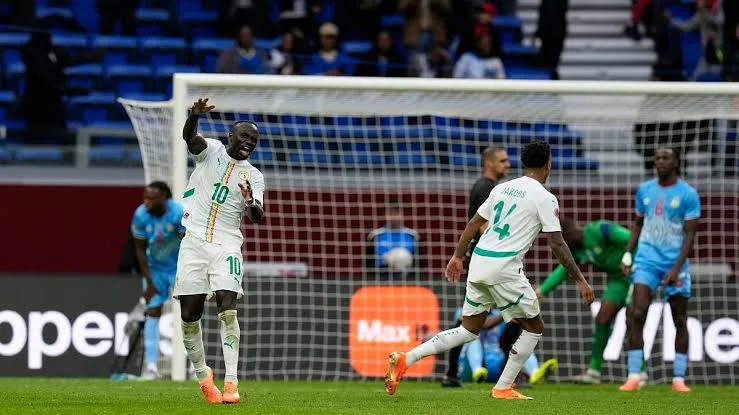
The goal was a reward for a much-improved second-half display and set the stage for a tense finale.
Senegal’s response, however, was swift and underscored the depth of quality within their squad. Coach Pape Thiaw, who was an unused substitute in that 2002 quarter-final win over the same opponents, turned to his bench, introducing 17-year-old Paris Saint-Germain winger Ibrahim Mbaye.
The teenage prodigy, who recently committed his international future to Senegal, made an immediate and electrifying impact. Just eight minutes after falling behind, Mbaye announced himself on the continental stage with a breathtaking, penetrating run down the right flank.
He exploded past Arthur Masuaku, who appeared to injure himself in the attempt to tackle, and drove into the penalty area. His subsequent shot was blocked by the outstretched leg of Mpasi, but the rebound fell perfectly for the waiting Sadio Mané.
With the composure of a veteran appearing in his sixth AFCON tournament, Mané calmly slotted the ball past the covering Wan-Bissaka on the line. It was a landmark tenth AFCON goal for the former Liverpool star, a testament to his longevity and enduring importance to the Senegalese cause.
The final twenty minutes saw both teams grapple with the tension of the stalemate, each aware that a point would serve their primary objective of progression. The frantic energy that produced two goals in eight minutes subsided, and the match settled into a tactical stalemate, with neither side willing to overcommit and risk a potentially catastrophic defeat.
When the final whistle sounded, the 1-1 draw was a fair reflection of a contest that saw Senegal control large periods but DR Congo demonstrate admirable resilience and tactical discipline.
The result leaves the Group D table finely poised yet decisively tilted in favor of the two heavyweights. Senegal sits atop the group with four points and a superior goal difference of +3, followed closely by DR Congo, also on four points but with a +1 difference.
Benin, 1-0 victors over Botswana earlier on Saturday, keep their hopes alive in third place with three points, while Botswana is eliminated. The final round of fixtures on Tuesday now presents clear tasks. Senegal will remain in Tangier to face Benin, knowing that a draw will guarantee them first place in the group and the likely advantageous knockout-round matchup against a third-placed finisher.
DR Congo returns to Rabat to play the already-eliminated Botswana, where a victory would secure their advancement and put pressure on Senegal for the top spot. Realistically, with four points already secured, both Senegal and DR Congo are in a commanding position to advance to the last sixteen, a fate their performances over the first two matches have richly deserved.