
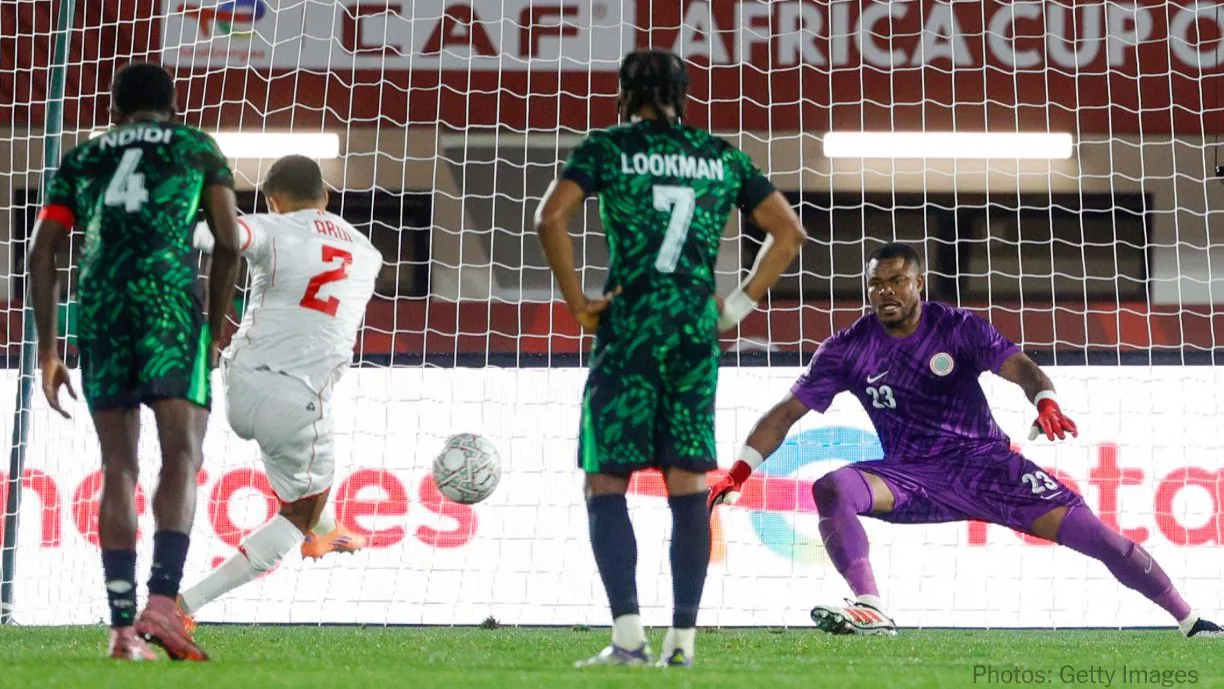
In a contest that encapsulated the exhilarating highs and nerve-shredding tension of tournament football, the Super Eagles of Nigeria secured their passage to the Africa Cup of Nations (AFCON) 2025 knockout stages, but not before surviving a ferocious and dramatic late assault from Tunisia.
A match that for seventy minutes showcased Nigeria’s formidable attacking credentials concluded with a breathless, chaotic finale, as a commanding 3-0 lead was whittled down to a precarious 3-2 victory in the Group C showdown at the Fez Stadium.
From the outset, Nigeria, still smarting from the bitter disappointment of failing to qualify for the 2026 FIFA World Cup, played with a point to prove. They swarmed over their North African opponents, with the attacking trio of Victor Osimhen, Ademola Lookman, and Alex Iwobi creating a succession of early chances.
Osimhen, in particular, seemed determined to shake off a frustrating opening game and improve his modest AFCON goal-scoring record. He saw one early effort soar over the bar and had a goal correctly ruled out for offside, a continuation of his misfortune in front of goal in Morocco.
Despite the dominance, a combination of wayward finishing and resilient Tunisian defending kept the scoreline level, threatening to frustrate the Super Eagles as the first half drew to a close.
The breakthrough, when it finally arrived, came at the perfect moment, a minute before the halftime whistle. It was a product of Nigeria’s most potent partnership on the day.
Ademola Lookman, a constant menace on the left flank, delivered a beautiful, inviting cross towards the back post. There, Victor Osimhen timed his run to perfection, soaring between two defenders to power a header past goalkeeper Mouez Dahmen and finally break his AFCON 2025 duck.
The goal was Osimhen’s 32nd for his country, edging him closer to Rashidi Yekini’s all-time scoring record and sending Nigeria into the break with a deserved lead and a significant psychological boost.
Any hope Tunisia harbored of regrouping during the interval was extinguished within five minutes of the restart. Once again, Lookman was the architect. His inswinging corner from the left was met with a thunderous, commanding header by captain Wilfred Ndidi, who rose highest to double Nigeria’s advantage.
The goal was a historic moment for the veteran midfielder, marking his first-ever goal for the national team in his 73rd appearance, and his celebration reflected the sheer joy and release of the milestone. With a two-goal cushion, Nigeria began to play with a swagger and confidence that had been missing in their scrappy opening win over Tanzania.
The game seemed to be put beyond all doubt in the 67th minute. A fluid team move found Osimhen driving into the right side of the Tunisian penalty area. Demonstrating remarkable selflessness, the striker unselfishly squared the ball across the face of goal, bypassing the goalkeeper and leaving Ademola Lookman with a simple finish into an empty net.
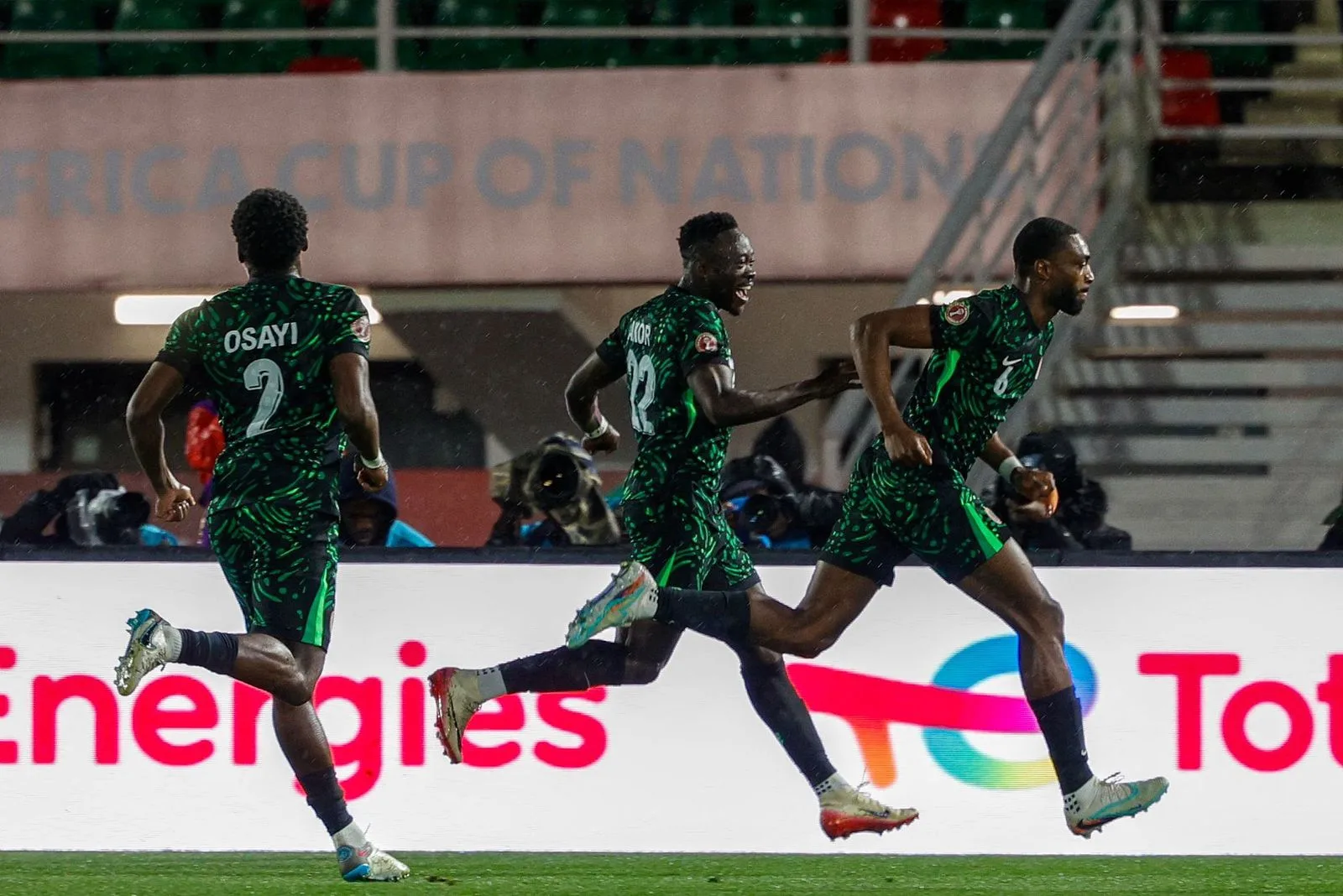
Lookman’s goal, which came off the post, capped a magnificent individual performance where he provided assists for the first two goals before adding the third himself, a contribution that rightly earned him the Player of the Match award.
At 3-0, the contest appeared to be a routine, statement victory for Nigeria, a demonstration of why they are considered genuine contenders for the title. However, the dismissal of complacency proved premature. In the 74th minute, Tunisia found a lifeline. A precisely delivered free-kick from Hannibal Mejbri found the head of defender Montassar Talbi, whose effort found the bottom corner, with Nigerian goalkeeper Stanley Nwabali perhaps at fault as he slipped in his attempt to save.
The goal transformed the atmosphere inside the Fez Stadium. Galvanized, and with the strong support of the North African crowd now roaring them on, the Carthage Eagles poured forward. Nigeria, who had been fluid and assured, suddenly looked vulnerable and uncertain, inviting pressure onto themselves.
The match then descended into high controversy with just five minutes of regular time remaining. A looping cross into the Nigerian box was headed by defender Bright Osayi-Samuel, with the ball subsequently striking his own arm.
After a lengthy delay, Malian referee Boubou Traore was advised by the Video Assistant Referee (VAR) to review the incident on the pitchside monitor. To the disbelief of the Nigerian players and coaching staff, he deemed it a handball and pointed to the penalty spot. Defender Ali Abdi stepped up and smashed the penalty into the roof of the net, setting up a frenetic, nerve-shredding finale.
What followed was pure, unadulterated tension. Tunisia, believing a remarkable comeback was within their grasp, threw every player forward. Nigeria, their earlier confidence evaporated, were now engaged in a desperate rearguard action simply to see out the match. Deep into stoppage time, Tunisia came agonizingly close to completing the unthinkable.
Captain Ferjani Sassi met a cross with a header that looped over a stranded Nwabali, only to drop inches wide of the far post, leaving the Nigerian goal leading a charmed life. There was still time for one more Tunisian volley to bobble harmlessly past the post before the final whistle finally sounded, granting immense relief to the Super Eagles and their supporters.
The final whistle confirmed Nigeria as Group C winners with a perfect six points from two games, joining Egypt as the second team to officially qualify for the last 16. They are now guaranteed to face one of the best third-place finishers in the knockout round, a theoretically favorable draw.
For manager Eric Chelle, the result is a monumental success, but the performance will offer a complex mix of pride and concern. In the same match, his team displayed the explosive, star-powered attacking quality that makes them a threat to any side on the continent, yet also revealed a concerning propensity to switch off and surrender control, a weakness that famously cost them a World Cup place.
Tunisia, meanwhile, will be left to rue a timid approach for the first seventy minutes that left them with too steep a mountain to climb. Their late bravery, however, ensures their destiny remains in their own hands; a draw in their final group game against Tanzania will be enough to secure second place and progression to the next round.
The other Group C encounter between Tanzania and Uganda ended in a 1-1 draw, a result that leaves both East African nations with a single point and an uphill battle to qualify as one of the best third-placed teams.