
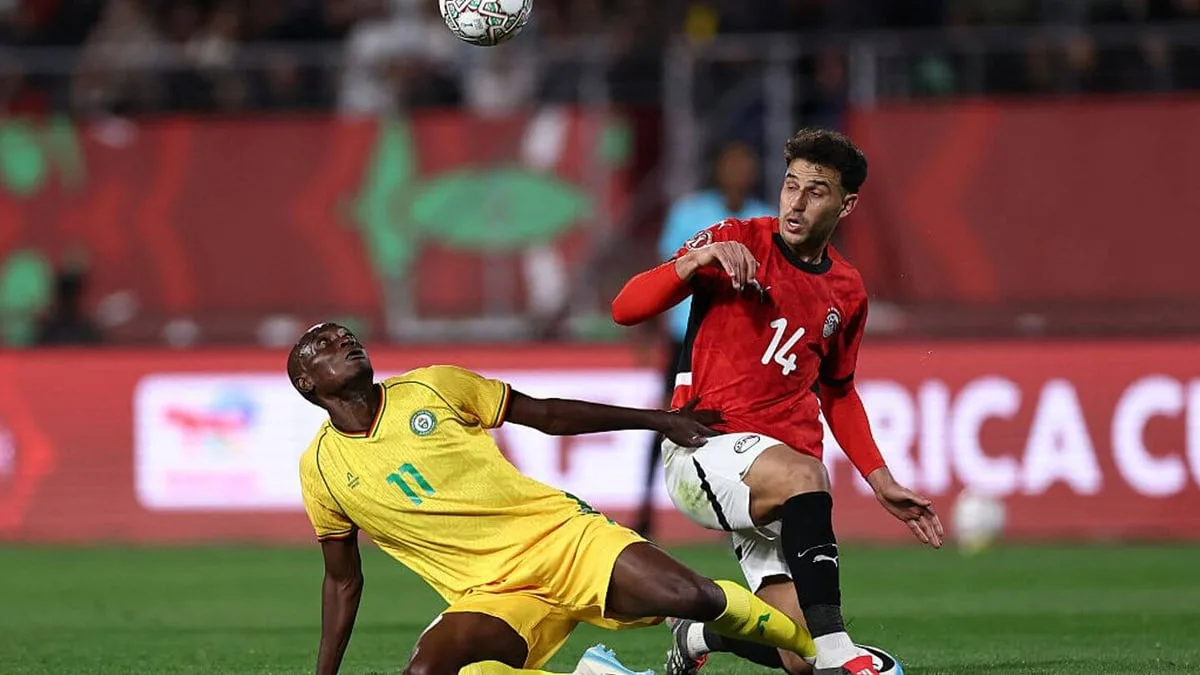
In the soft evening light of Agadir, where the Atlas Mountains meet the Atlantic, the beautiful game wrote another dramatic and unforgettable chapter. At the Le Grand Stade d’Agadir, the seven-time champions of Africa, Egypt, staged a tense and hard-fought comeback to defeat a valiant Zimbabwe side 2-1 in their opening match of the 2025 Africa Cup of Nations.
The final scoreline, secured by a Mohamed Salah winner in the first minute of injury time, tells a story of persistence over panic, of individual brilliance salvaging a performance that, for long periods, was marred by frustration and profligacy.
From the opening whistle, the narrative seemed pre-written. Egypt, boasting their talismanic captain Mohamed Salah, imposed their will with an authority that bordered on dominance.
The Pharaohs’ strategy was clear: utilize Salah’s gravitational pull on the right flank, switch play with precision, and overwhelm the Zimbabwean defence. For the first quarter of an hour, the game unfolded as a siege.
Salah himself was instrumental, creating two golden opportunities in quick succession. A lofted cross found Mahmoud Hassan “Trezeguet” at the back post, only for his header to be miraculously palmed away by Zimbabwe’s veteran goalkeeper, Washington Arubi.
Moments later, Salah cut inside and saw a driven shot bravely blocked. The pressure was unrelenting, with midfielder Emam Ashour also spurning a clear chance, slashing a volley wide from another dangerous Salah delivery.
Egypt’s formation, with Ashour granted creative freedom as a number ten, was generating chances at will, yet the final touch was agonisingly absent. The statistics would later paint a staggering picture of this one-way traffic: Egypt amassed 35 shots to Zimbabwe’s 8, with 11 on target. Yet, as the clock ticked past the 20-minute mark, the scoreboard remained stubbornly blank.
Then, against the relentless run of play, football delivered its classic twist. Zimbabwe, nicknamed the Warriors for a reason, had weathered the early storm through disciplined, dogged defending.
In the 20th minute, they offered their first meaningful response. Seizing on a rare foray forward, the ball broke to attacker Prince Dube inside the Egyptian penalty area.
With a moment of composure that belied the occasion, Dube executed a wonderful turn to create space and, from the edge of the box, slid a low shot past the experienced goalkeeper Mohamed El Shenawy and into the bottom corner. The stadium, which had begun the match sparsely populated but was filling steadily, erupted in a mixture of shock and delight.
The Warriors had not just scored with their first shot on target, they had taken a lead that felt scarcely believable. For Egypt, a team burdened by the expectation of winning an eighth continental crown, a trophy that has eluded them since 2010, the goal was a psychological blow as much as a tactical one.
The early wastefulness had come home to roost, and the familiar spectre of an AFCON upset began to loom large.
The remainder of the first half was a study in Egyptian anxiety. The coach, acknowledging his team’s disjointed play and lack of a cohesive final product, made a bold tactical switch in the 34th minute, replacing the ineffective Ashour with the towering striker Mostafa Mohamed.
The aim was to add a direct focal point to an attack that had become predictable and individualistic. However, Zimbabwe, emboldened by their lead, retreated into a compact, resilient defensive block, frustrating the Pharaohs and denying them the space to operate.
As the halftime whistle blew, the chatter was not of Egyptian supremacy but of a potential giant-killing, a narrative fueled by Zimbabwe’s clear sense of identity and purpose. As has been articulated before, the Warriors carry more than just sporting ambition; they step onto the pitch as a symbol of hope and unity for their nation. Their resilience was a testament to that spirit.
The second half commenced with Egypt in a state of urgent, if not entirely controlled, rebellion. They continued to monopolize possession, but their play was often characterised by haste and a lack of coordination between midfield and attack.
The precision of the opening minutes had evaporated, replaced by a frantic search for an equaliser. Time and again, promising moves broke down on the edge of the Zimbabwean box.
Arubi, the veteran guardian of Zimbabwe’s dream, grew in stature, making a series of crucial saves that seemed destined to secure a historic result for his team. He would finish the match with nine stops, a testament to both Egypt’s volume of shots and his own enduring quality.
The breakthrough, when it finally arrived, was born not from an intricate team move, but from a moment of sublime individual quality. In the 64th minute, forward Omar Marmoush collected the ball on the left flank.
With immaculate control, he raced away from his marker, driving into the Zimbabwean penalty area. From a seemingly impossible angle, Marmoush unleashed a powerful, rising shot that flew past Arubi and crashed into the roof of the net.
It was a strike of pure class, a necessary spark to ignite Egypt’s campaign. The relief that washed over the Egyptian players and their supporters was palpable; the remontada, or comeback, was now truly in motion.
Emboldened by the equaliser, the Egyptian coach made further attacking changes, introducing fresh legs to inject fresh energy. Egypt poured forward in search of a winner, but again, they were frustrated. A key player himself missed two further chances, one of which was crafted by Salah.
As the match ticked into its final moments, it appeared Zimbabwe’s heroic resistance would earn them a memorable point. The Warriors, representing a nation eager to see its pride reflected on the continental stage, had battled with incredible heart. However, in tournaments of this magnitude, legends are defined by seizing the fleeting moments that decide destinies.
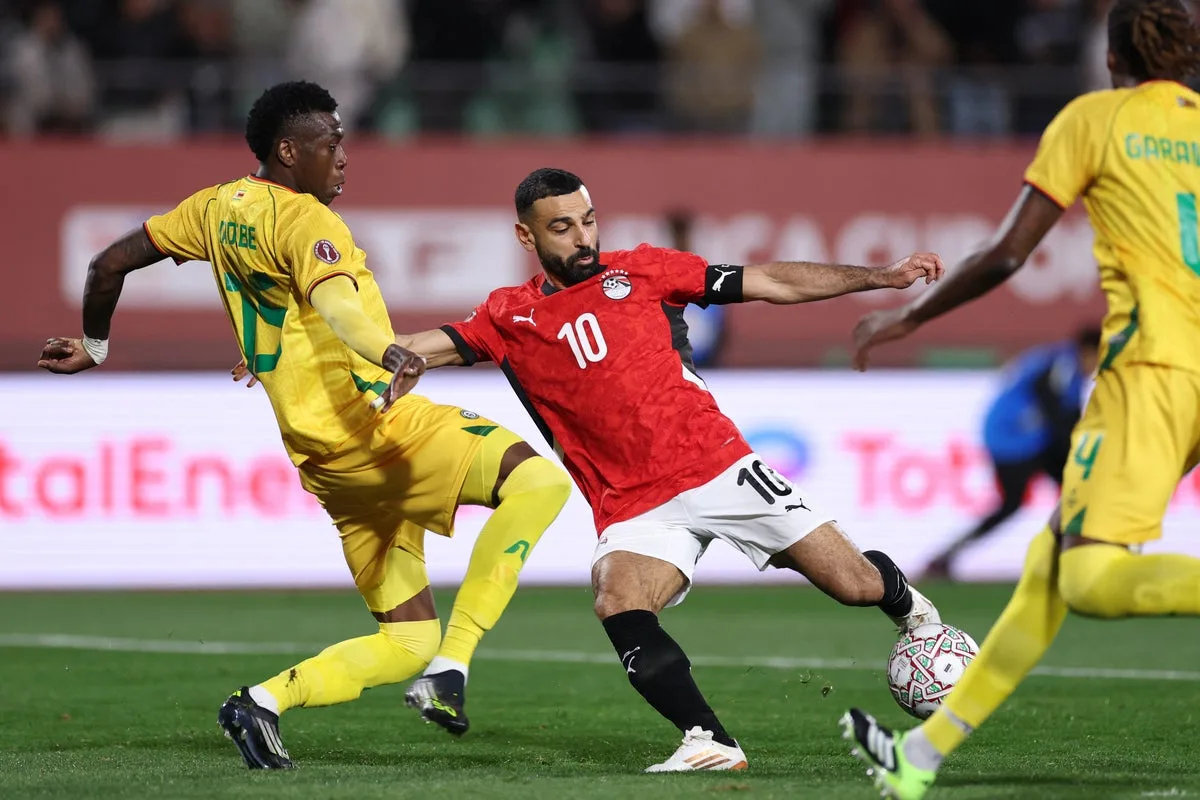
That moment arrived in the first minute of added time. In the penalty area, amidst a scramble of bodies, the ball fell to Mohamed Salah. The superstar, who has shouldered the hopes of a nation for a decade and whose legacy is curiously incomplete without an AFCON winner’s medal, demonstrated the instinct that has made him a global icon.
He swivelled and, with a somewhat scuffed left-footed half-volley, sent the ball bobbling past the despairing dive of Washington Arubi and into the net. It was not his cleanest strike, but it was undoubtedly his most important in recent memory for his country.
The Egyptian bench erupted, while the Zimbabwean players sank to their knees, devastated at having come so close to a monumental result.
When the final whistle blew shortly after, the contrast in emotions was stark. Egypt’s players celebrated a victory that felt more like a liberation, having secured three vital points from a position of grave peril.
For Salah, this was a personal redemption of sorts. In contrast to a previous AFCON tournament, where circumstances led to intense scrutiny, his decisive contribution here reaffirmed his central role in the national team’s quest. The faith in him was justified.
For Zimbabwe, the result was a cruel lesson in the fine margins of top-level football. They had played with honour, discipline, and courage, embodying the warrior spirit their nickname promises. Prince Dube’s wonderful goal and Washington Arubi’s goalkeeping heroics will be remembered, but ultimately, they were undone by two moments of exceptional quality from Egypt’s premier attacking talents.