
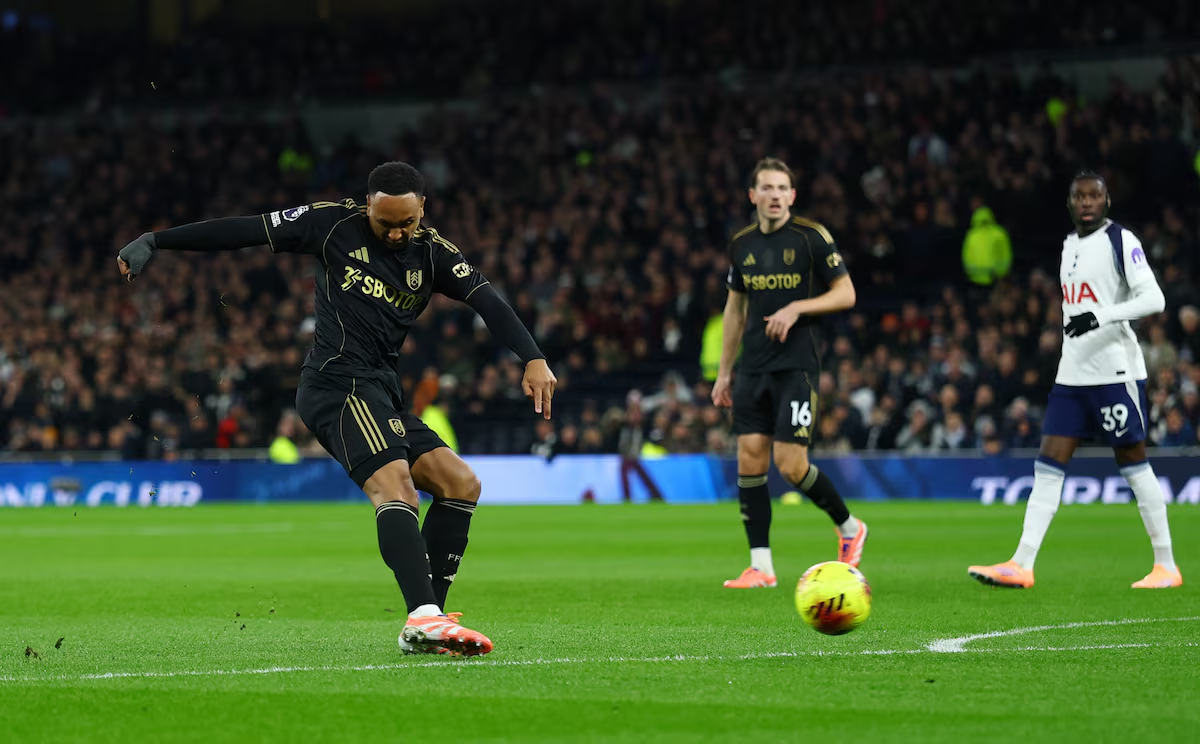
Tottenham Hotspur’s turbulent home form continued as they fell 2-1 to Fulham in a dramatic and bruising London derby defined by defensive errors, early chaos, and an unconvincing Spurs performance that sparked frustration across the stadium.
It was a night that began disastrously for the hosts and never truly recovered, despite a spirited second-half push that briefly threatened to rewrite the story. Instead, Tottenham were left facing another painful reminder that their home ground, once considered among the Premier League’s most difficult places for visitors, has become anything but a fortress.
The match had barely settled into rhythm when Fulham took control with ruthless efficiency. Tottenham, who entered the derby under pressure to stabilise their inconsistent league campaign, looked uncharacteristically disorganised from the opening whistle.
Fulham sensed that vulnerability and attacked with immediate intent, turning their first meaningful move into the game’s opening goal. Within just four minutes, Kenny Tete unleashed a strike that took a deflection and wrong-footed goalkeeper Guglielmo Vicario.
It was the kind of early punch that stuns a crowd, and for Spurs, it foreshadowed the trouble to come.
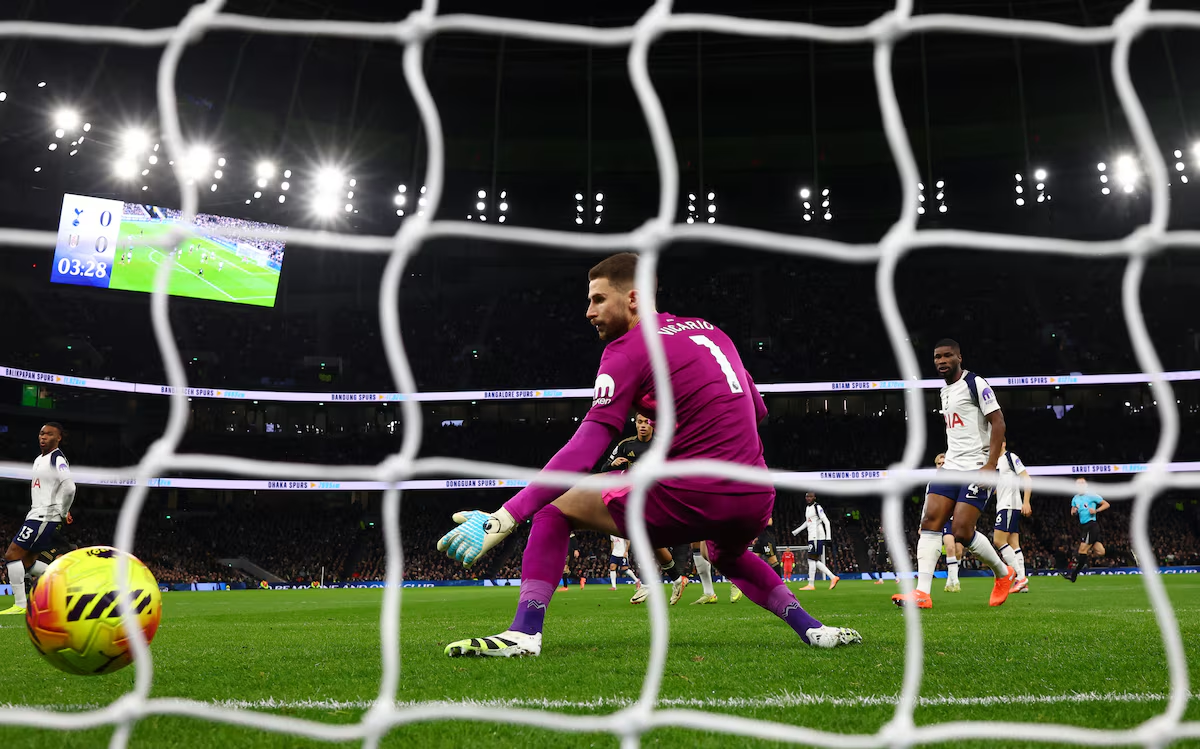
Before Tottenham had time to regroup, Fulham struck again. A mix-up at the back between defender and goalkeeper resulted in a poor clearance that landed kindly for Harry Wilson, who wasted no time rifling a sensational long-range finish into the net.
The second goal, scored only two minutes after the opener, silenced the home supporters and left the Tottenham bench frozen in disbelief. Two goals down inside six minutes at home, Spurs were witnessing a collapse that felt both shocking and eerily familiar given recent performances.
From that moment on, Tottenham were forced into chase mode. Their attempts to find rhythm in possession were laboured, their defensive transitions remained shaky, and Fulham’s confidence grew with every successful tackle and interception.
The visitors nearly added a third goal before halftime when Samuel Chukwueze fired against the woodwork, a reminder that Tottenham’s back line had not yet steadied. Had the shot bounced a few inches lower, the match could have spiralled into humiliation before the break.
While Fulham played with structure and purpose, Tottenham’s first-half display lacked the urgency expected in a derby of this magnitude. Crosses into the box repeatedly met the first defender, through-balls were overhit, and the midfield struggled to control tempo or build meaningful passage of play.
When the halftime whistle blew, a chorus of displeasure rang out across the stands. Some of the loudest disapproval appeared aimed at Vicario, whose early mistake contributed to the second goal.
Tottenham’s manager later voiced his frustration at supporters who chose to boo the goalkeeper, calling the reaction unhelpful and undeserved, but in the heat of the moment, tension was unavoidable.
The second half brought a different Tottenham – more aggressive, more direct, and finally playing with the intensity expected of a team fighting to salvage pride and points. The manager introduced fresh legs, adding energy and movement, and Spurs pushed higher up the pitch in an effort to pin Fulham back.
Their pressure soon paid off. In the 59th minute, Mohammed Kudus produced a moment of real quality, smashing a fierce low volley into the bottom corner.
It was the kind of strike that ignites a comeback narrative, and suddenly the stadium, subdued for much of the night, came alive with renewed hope.
From then on, Tottenham threw themselves forward with determination. They controlled possession, launched wave after wave of attacks, and looked far more threatening than at any point in the first half.
Kudus continued to probe, Dejan Kulusevski made intelligent runs, and Richarlison tried to occupy Fulham’s defenders, but while Spurs showed heart, they lacked composure in the final third. Several promising moves fizzled out due to poor touches or rushed decisions, and Fulham’s back line remained impressively organised under pressure.
Fulham, for their part, demonstrated the discipline and resilience that had given them their early advantage. Their defensive shape rarely broke down, and goalkeeper Bernd Leno produced several important interventions. Even as Tottenham camped in the attacking half, Fulham never panicked.
The defeat is a damaging one for Spurs on multiple fronts. It marked their tenth home loss in the 2025 calendar year, equalling their worst record in club history.
Meanwhile, Fulham’s victory carried significant symbolic weight. It was their first away league win of the season and came on the manager’s 200th game in charge, adding an extra touch of sweetness to a memorable performance.