
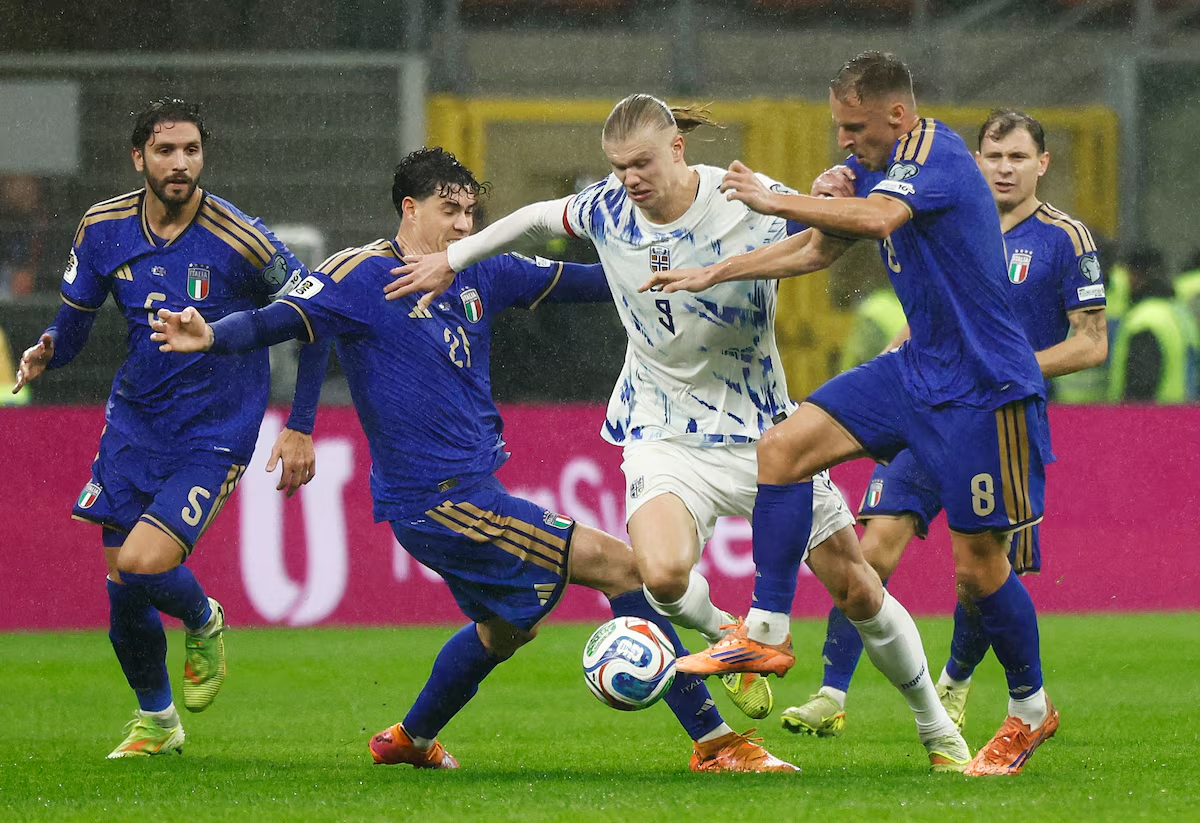
Norway has officially secured their place at the 2026 FIFA World Cup, ending a long wait of nearly three decades and marking a historic night for Norwegian football. Their commanding 4-1 victory over Italy in Rome sealed an extraordinary qualification campaign that saw the Scandinavian side finish at the top of Group I with a perfect record.
For a nation that has endured countless near-misses and heartbreaks since their last appearance at the 1998 World Cup, this moment represents both redemption and the beginning of a new footballing era.
The decisive match started with tension as Italy struck first through an early goal from Francesco Pio Esposito. For a moment, Norwegian supporters feared another painful chapter in their World Cup qualifying story.
But Norway, composed and confident under pressure, refused to be rattled. The response came in the second half when Antonio Nusa calmly slotted in the equalizer in the 63rd minute, restoring belief and momentum to the visitors.
From there, Erling Haaland took full control of the match, producing a sensational performance befitting his status as one of the world’s premier forwards. In the 78th minute, he fired home a clinical finish to give Norway the lead.
Just one minute later, he struck again, completing a rapid brace that stunned the home crowd and effectively extinguished Italy’s hopes. As the match entered stoppage time, Jørgen Strand Larsen added a fourth goal, sealing a night of triumph that Norwegian fans will remember for generations.
For captain Martin Ødegaard, the magnitude of the achievement was difficult to put into words. In an emotional reflection after the match, he said, “It is indescribable. It is completely unreal. This is what we have dreamed of and worked for over such a long time. We have stood in so much rubbish, so many setbacks. To be here together in this moment means everything. We have had absolute belief and now we are getting the reward.”
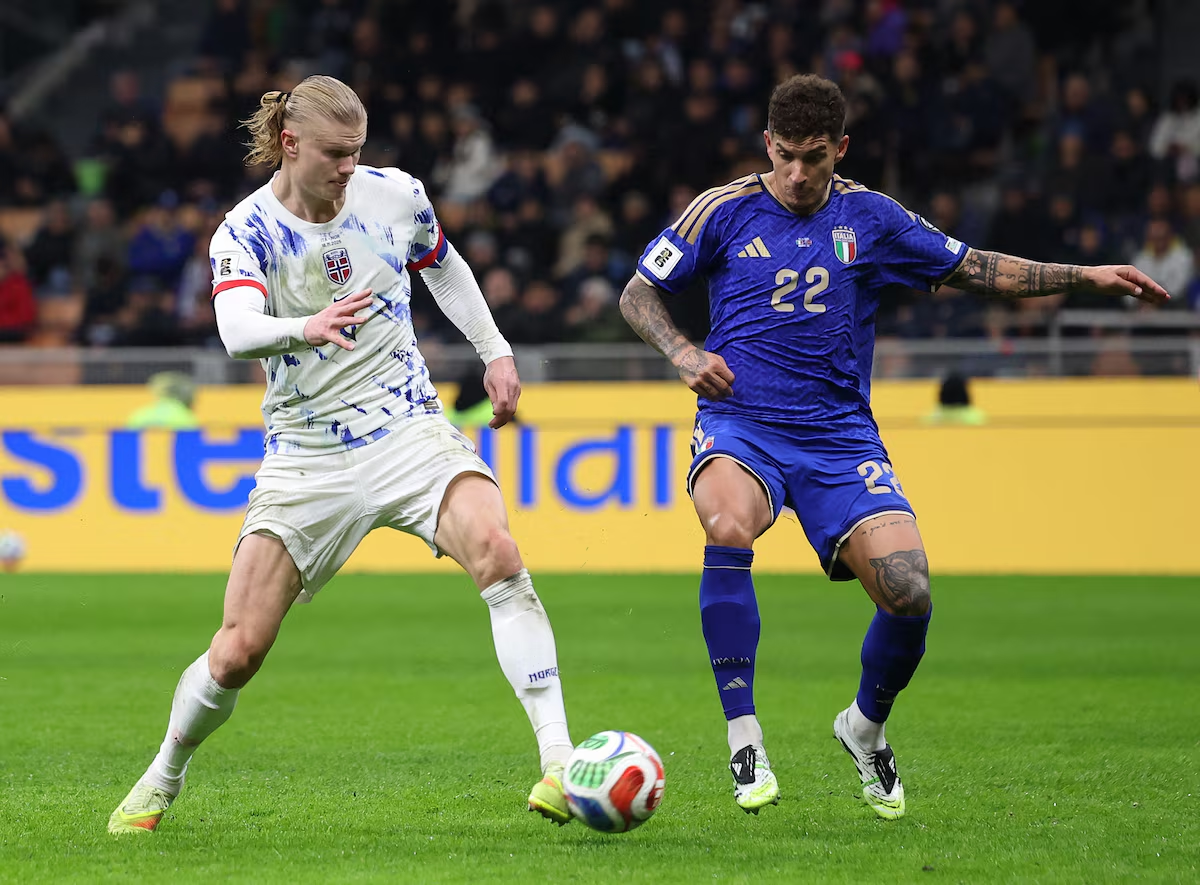
Norway’s qualification campaign was remarkable in its dominance. They won all eight of their matches, finishing six points ahead of Italy. Their attacking power was unmatched in the group, and their defensive structure remained disciplined and consistent throughout the journey.
Erling Haaland ended the qualifiers with an astounding 16 goals in just eight matches, cementing his position as the driving force behind Norway’s resurgence on the international stage.
But while Haaland’s contributions were essential, Norway’s journey was far from a one-man show. Against Estonia in their second-to-last qualifier, Alexander Sørloth scored twice, while Haaland added two more in a commanding performance that positioned Norway on the verge of qualification.
The midfield, marshalled by the composed and intelligent Ødegaard, provided balance and creativity, while the defensive unit maintained stability even in high-pressure moments.
Midfielder Morten Thorsby emphasized the team’s unity and the impact of their leaders, saying that Haaland and Ødegaard had “gained a better understanding of the influence they have on the rest of us,” noting that their professionalism and character resonated throughout the squad.
There were moments earlier in the qualifying process when doubts lingered. Norway had experienced years of frustration, often falling just short in previous attempts to reach major tournaments.
Their comeback victory over Italy was the clearest sign yet that this team has evolved. Italy applied early pressure, took the lead, and tried to dictate the tempo.
But Norway remained patient, regrouped at halftime, and emerged for the second period with unwavering belief. Their second-half performance was clinical, composed, and ruthless, exactly the qualities needed to excel on the global stage.
The implications of this qualification extend beyond the immediate celebrations. Norwegian football has entered a new era, powered by a generation of players who combine talent, ambition, and leadership. With core players like Haaland, Ødegaard, Nusa, Sørloth, Strand Larsen, and others all at key points in their careers, analysts have already begun labeling Norway as potential dark horses for the 2026 World Cup.
Meanwhile, Italy now faces the uncertainty of the playoff route, a situation that mirrors their missed qualifications in recent tournaments. The pressure on the Italians will be immense as they attempt to salvage their place at the World Cup through the high-stakes secondary path.