
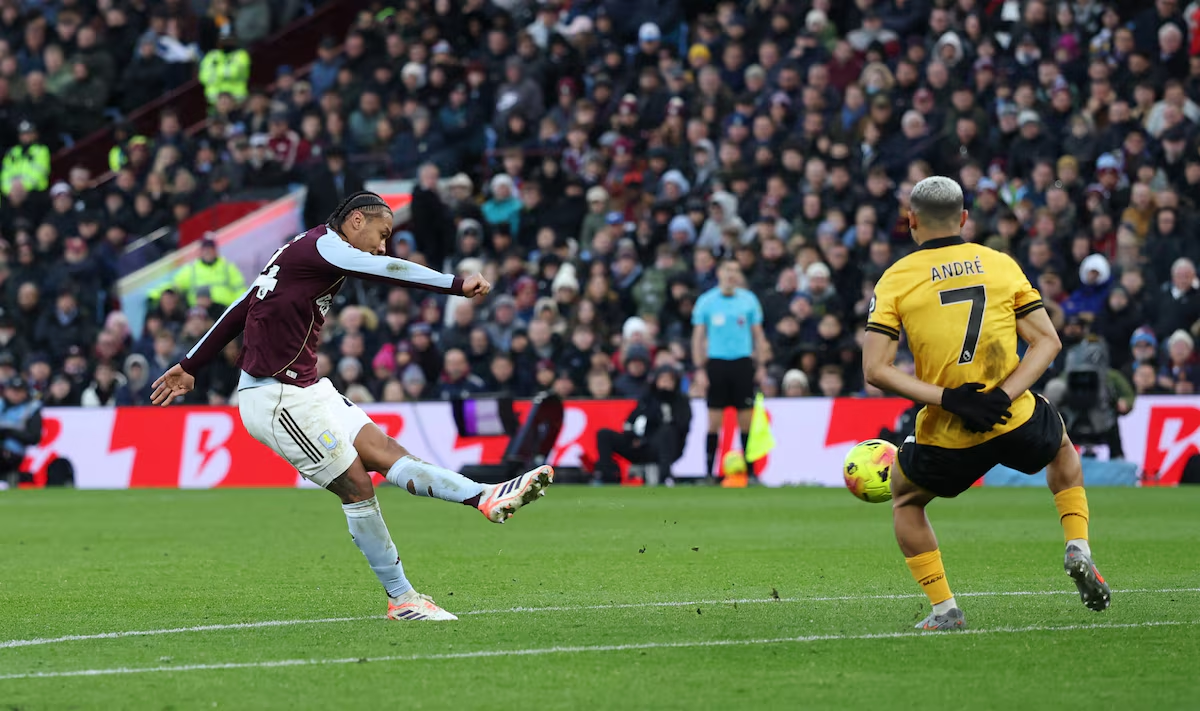
Aston Villa claimed a vital derby victory with a hard-fought 1-0 win over Wolverhampton Wanderers at Villa Park, a result sealed by a spectacular second-half strike from Boubacar Kamara in a match defined by intensity, narrow margins, and long stretches of tactical discipline from both sides.
The West Midlands clash, played before a packed and electric home crowd, delivered all the emotional weight expected of the rivalry, even though the scoreline remained slim.
The match began at a frantic pace, with Aston Villa eager to impose themselves early. Unai Emery’s side attempted to stretch Wolves from the first whistle, using quick combinations in wide areas and committing midfielders forward to overload the final third.
Villa struck the crossbar inside the opening stages with a well-constructed move that sent the supporters surging to their feet. It was the first sign that the home side intended to attack with purpose.
Wolves, however, showed they had arrived with their own plan. Although pressured early, they grew steadily into the contest. Their midfield began to settle, their defensive line pushed slightly higher, and their transitions became sharper.
One of their brightest early moments arrived when Jørgen Strand Larsen put the ball into the net, only for the effort to be ruled out for offside. It was a warning for Villa that Wolves, despite their league struggles, possessed the ability to threaten when given pockets of space.
As the first half progressed, Wolves found additional rhythm and confidence. Their best opportunity came shortly before halftime when Yerson Mosquera met a corner with a towering header that crashed off the underside of the crossbar.
Many in the stadium believed it might have crossed the line, but the officials determined it had not, and the score remained level. That moment could have changed the complexion of the match entirely.
Aston Villa owed just as much to Emiliano Martínez, who produced a crucial fingertip save to divert Mosquera’s header upward before it struck the bar. The Argentine goalkeeper, known for his big-game interventions, showed exquisite reflexes that kept Villa from falling behind.
It was one of several moments when Martinez’s composure under pressure prevented Wolves from capitalising on their growing momentum.

Halftime arrived with Wolves arguably the more confident of the two sides. Their physicality, speed on the break, and aerial threat had clearly unsettled the Villa defence at times. Villa, meanwhile, knew they needed to regain control of the midfield and reduce the spaces Wolves were exploiting between the lines.
The second half began with Wolves continuing their attempt to seize control. They pressed higher, won second balls in midfield, and kept Villa’s defenders busy with quick combinations aimed at drawing them out of shape.
Yet for all their endeavour, they lacked precision in the final third. Their attacks broke down either through a heavy touch, a misplaced pass, or a lack of support when it mattered most.
As Wolves pushed forward, they left themselves more vulnerable to Villa counters. Slowly but decisively, Villa regained their rhythm.
Their midfielders began to dictate play again, recycling possession more calmly and committing numbers forward with greater confidence. It was during this period of regained composure that the breakthrough finally arrived.
In the 67th minute, a sweeping move allowed John McGinn to receive the ball wide on the right. The Villa captain cut the ball back toward the edge of the box, where Boubacar Kamara had drifted into space. Kamara controlled the ball with his first touch, lifting it slightly off the turf.
His second touch will live long in Villa Park memory: a vicious left-footed strike that flew into the top-right corner, unstoppable and executed with a level of precision that stunned even his teammates. The stadium erupted as the midfielder wheeled away in celebration.
After a tense and cagey hour, Villa had produced a moment of brilliance to seize control of the derby.
The goal shifted the atmosphere instantly. Wolves, who had felt they were edging closer to scoring, suddenly found themselves chasing the game. They attempted to respond quickly, pushing more men forward and increasing the tempo of their attacks.
Yet their earlier confidence seemed to have faded. The disallowed goal and the near-miss off the crossbar haunted them, and Kamara’s strike appeared to sap their momentum.
Aston Villa, smelling the chance to secure the result, began pressing for a second goal. They forced Wolves onto the back foot and created several half-openings, though none were converted. Wolves defended resolutely enough to ensure the deficit did not grow, but they were unable to string together meaningful attacks of their own.
As the game moved into its final minutes, Wolves’ frustrations mounted. Their passing became hurried, their movements less coordinated, and their attempts to break through Villa’s back line increasingly predictable.
Villa’s defence remained compact and disciplined, helping Martínez maintain a clean sheet without requiring further dramatic saves.