
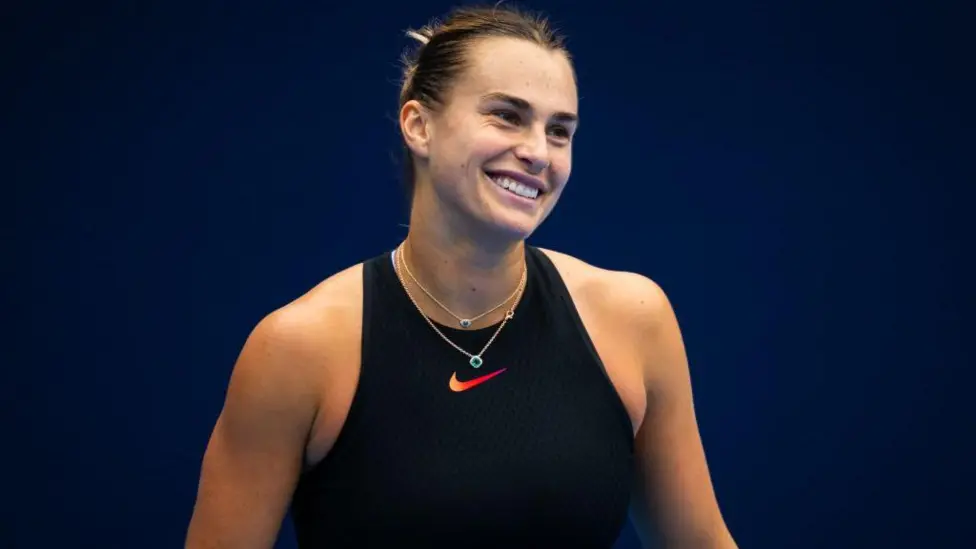
World No. 1 Aryna Sabalenka has officially withdrawn from the upcoming China Open, citing an injury sustained during her recent U.S. Open campaign. The announcement was made public by tournament officials Wednesday.
Sabalenka, fresh off her second consecutive U.S. Open title, is now focused on recuperation and ensuring full fitness for the remainder of the season.
In a statement released by the organisers, Sabalenka expressed her regret at having to miss the tournament, saying, “I am sad to announce my withdrawal from the China Open this year after sustaining a small injury after the U.S. Open.” She added that she intends to “focus on being 100% healthy for the rest of the year.”
The China Open, a WTA 1000 event scheduled to run from September 24 to October 5 at the National Tennis Centre in Beijing, had been set to feature several of the sport’s top stars. Sabalenka’s absence removes one of the event’s marquee names and shifts expectations for the draw.
Sabalenka’s surge to the top of the women’s game in recent months has been remarkable. After winning the U.S. Open — defeating Amanda Anisimova in the final — she secured her fourth career Grand Slam title. Her victory in New York added to a growing résumé that had already included strong performances throughout the 2025 season.
The injury in question, though described as “small,” comes at an unfortunate time. Throughout the season, Sabalenka has navigated several physical challenges. Earlier in 2024 she withdrew from Wimbledon after a shoulder injury and had to retire during the Berlin Ladies Open due to a right shoulder issue.
Yet, she rebounded in dominant fashion: claiming titles at Cincinnati and the U.S. Open among others, and fortified her status as one of the leading players on hard courts.
In 2024, Sabalenka had also made a deep run at the same Beijing tournament, reaching the quarter-finals of the China Open. Her absence this year will likely have ramifications in the WTA rankings race, especially with her closest rivals potentially gaining ground in Beijing while she prioritizes recovery.
American Coco Gauff, the defending champion at the China Open, now enters the tournament without having to contend with Sabalenka — a factor that could affect both seeding and matchups throughout the event.
Sabalenka’s withdrawal also underscores a broader theme in women’s tennis: the demands of the tour, particularly in a season filled with Grand Slams, WTA 1000 tournaments, and a packed schedule that tests even the most resilient athletes.
For Sabalenka, whose power game and aggressive baseline style have yielded results but exact a physical toll, the decision to rest may be as strategic as it is necessary.