
Formula 1 (F1) is a sport where precision, skill, and adherence to regulations are paramount. To ensure safety and fairness on the track, the Fédération Internationale de l’Automobile (FIA), the governing body of F1, enforces a comprehensive system of penalties, including the penalty points system. Introduced in 2014, this system monitors driver behavior over time, aiming to deter dangerous or unsportsmanlike conduct. This article delves into the intricacies of penalty points in F1, exploring their purpose, how they are applied, their consequences, and their impact on the sport.
The purpose of penalty points
The penalty points system was established to promote safer and more disciplined driving in Formula 1. Unlike immediate penalties such as time penalties or grid drops, which address infractions during a specific race weekend, penalty points serve as a long-term mechanism to track a driver’s conduct over a 12-month period. The system targets repeat offenders, ensuring that drivers who consistently engage in dangerous or rule-breaking behavior face significant consequences, such as a race ban. By attaching points to a driver’s FIA Super Licence—the mandatory credential for competing in F1—the system adds an extra layer of accountability, encouraging drivers to maintain high standards of sportsmanship and safety.
The FIA introduced this system in response to concerns about reckless driving and minor infractions accumulating without sufficient repercussions. Before 2014, penalties like fines, time penalties, or disqualifications were common, but there was no standardized method to address patterns of misconduct over time. The penalty points system fills this gap, providing a transparent framework that discourages drivers from repeatedly crossing the line, whether through dangerous maneuvers or disregard for race regulations.
How penalty points are applied
Penalty points are issued by the race stewards, a panel of officials responsible for enforcing FIA regulations during a race weekend. These points are added to a driver’s Super Licence following infractions deemed severe enough to warrant more than a race-specific penalty. The number of points issued—ranging from one to three per incident—depends on the severity and context of the offense. For example, causing a collision might result in two points, while a more dangerous act, such as ignoring double yellow flags, could lead to three points.
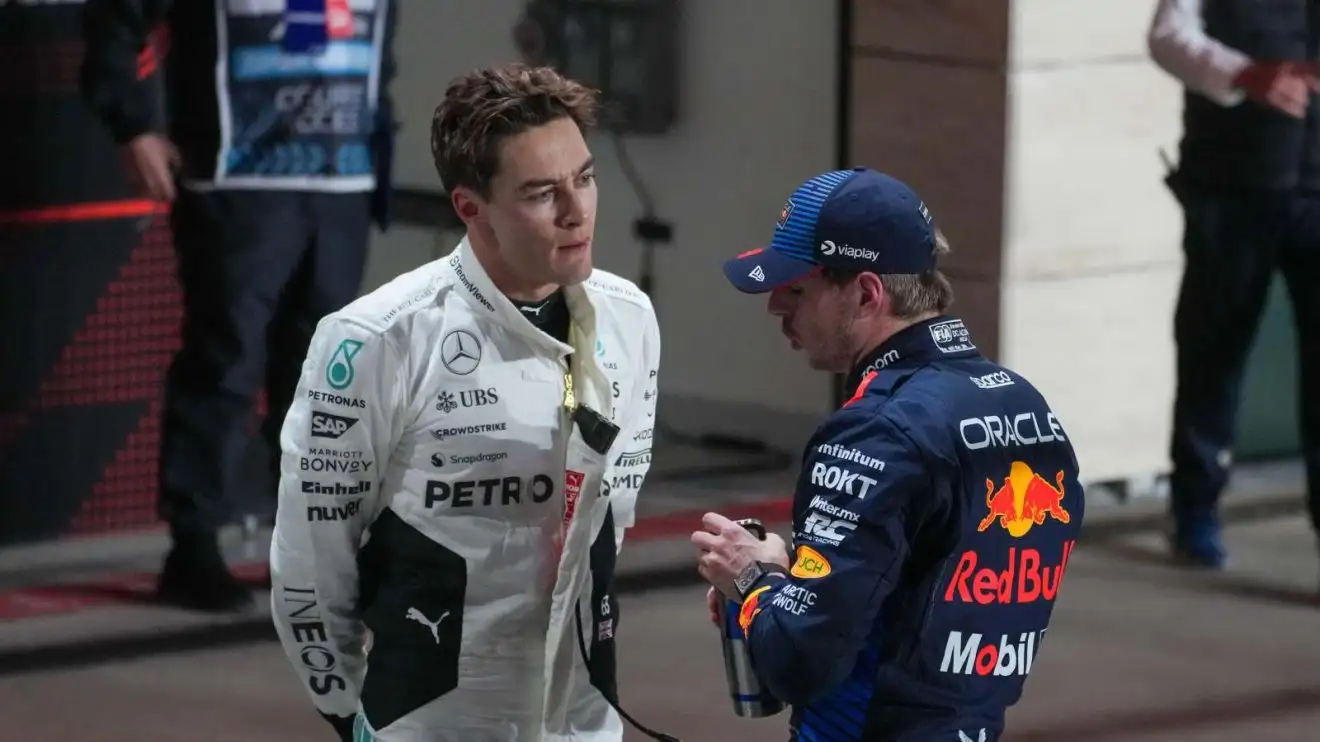
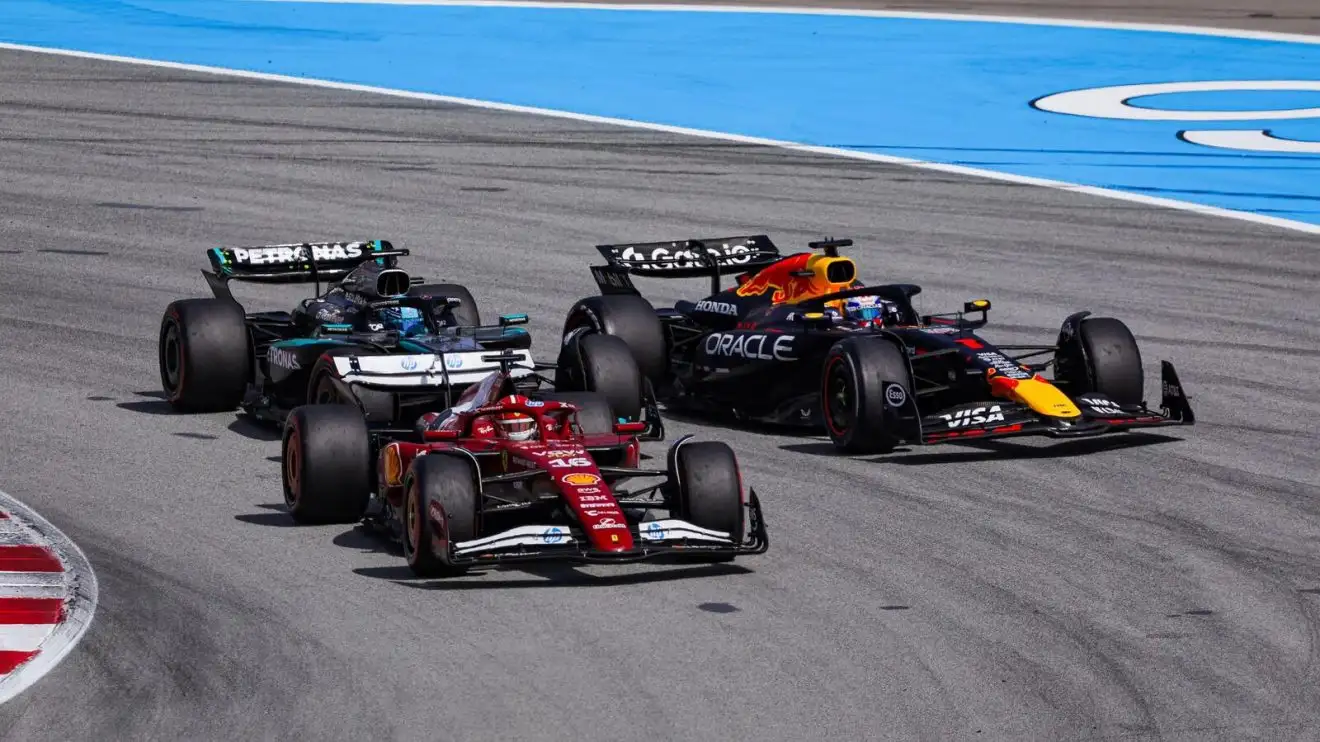
The FIA’s International Sporting Code and F1 Sporting Regulations outline a wide range of offenses that can trigger penalty points. Common infractions include causing avoidable collisions, forcing another driver off the track, ignoring flag signals (such as yellow or red flags), speeding in the pit lane, or breaching safety car procedures. Each case is evaluated individually, with stewards considering factors like intent, the impact on other drivers, and the circumstances of the incident. For instance, a minor collision due to a misjudgment might incur one point, while a deliberate act, such as Max Verstappen’s controversial collision with George Russell at the 2025 Spanish Grand Prix, resulted in three points due to its perceived intent.
Points remain on a driver’s Super Licence for 12 months from the date of the infraction. If a driver accumulates 12 points within this period, they face an automatic one-race ban, and their points total is reset to zero upon returning. This rolling 12-month window means that points expire individually, allowing drivers to reduce their tally over time if they avoid further infractions. The system’s flexibility ensures that drivers are not permanently penalized for past mistakes but must remain vigilant to avoid reaching the threshold.
Types of offenses leading to penalty points
The range of offenses that can lead to penalty points is broad, reflecting the complexity of F1 racing. Collisions are among the most common reasons, particularly when a driver is deemed wholly or predominantly at fault. For example, Kevin Magnussen accrued points for multiple collisions in 2024, ultimately leading to his race ban at the Azerbaijan Grand Prix. Other offenses include failing to adhere to safety protocols, such as not slowing sufficiently under double yellow flags, as seen with Max Verstappen’s three-point penalty at the 2024 Qatar Grand Prix.
Track limit violations, overtaking under prohibited conditions (e.g., during a safety car period or red flag), and impeding other drivers during qualifying are also frequent causes. For instance, Nico Hulkenberg earned two points for forcing Yuki Tsunoda off the track at the 2024 Italian Grand Prix, ending Tsunoda’s race. Less common but equally serious offenses include unsportsmanlike conduct or breaching technical regulations, though these are more likely to result in fines or disqualifications alongside points.
The stewards’ discretion plays a significant role in determining whether an incident warrants penalty points. In some cases, such as minor infractions, stewards may opt for a time penalty or reprimand without adding points. This approach was evident in 2023 when the FIA adjusted its penalty guidelines to avoid penalizing drivers excessively for minor offenses, following complaints from drivers like Pierre Gasly, who was on the brink of a ban with 10 points for relatively minor infractions.
Consequences of accumulating penalty points
The most severe consequence of accumulating 12 penalty points within a 12-month period is an automatic one-race ban. This punishment is significant, as it removes a driver from competition, potentially affecting their championship standings and their team’s performance in the Constructors’ Championship. The team may replace the banned driver with a reserve driver, as seen when Haas replaced Kevin Magnussen with Oliver Bearman for the 2024 Azerbaijan Grand Prix after Magnussen reached the 12-point threshold.
The only driver to have been banned under this system since its introduction in 2014 is Magnussen, highlighting its rarity but also its effectiveness as a deterrent. Other drivers, such as Max Verstappen in 2025, have come close to the limit, with Verstappen sitting on 11 points following the Spanish Grand Prix. His situation illustrates the pressure the system places on drivers to avoid further infractions, especially when points are set to expire soon, as two of Verstappen’s points were due to lapse on June 30, 2025.
Beyond race bans, penalty points can have psychological and strategic impacts. Drivers nearing the 12-point threshold may alter their racing style to avoid risky maneuvers, potentially affecting their competitiveness. Teams may also adjust strategies, such as instructing drivers to avoid aggressive overtakes, to protect their championship aspirations. The system thus influences not only individual driver behavior but also team dynamics and race tactics.
Notable cases and controversies
Since its inception, the penalty points system has sparked debate among fans, drivers, and teams. One of the most high-profile cases was Kevin Magnussen’s 2024 ban, which followed a series of incidents, including collisions with Pierre Gasly and Yuki Tsunoda at the Italian Grand Prix. Magnussen’s accumulation of 12 points underscored the system’s intent to address repeat offenses, but it also raised questions about consistency in stewarding decisions, as some argued his infractions were not uniformly severe.
Max Verstappen’s 2025 season has also drawn attention, with the four-time world champion amassing 11 points by June, primarily due to collisions with Lando Norris, Alex Albon, and George Russell, among others. His three-point penalty for the Russell incident, perceived as deliberate, fueled discussions about whether the system adequately distinguishes between intentional and accidental acts. Verstappen’s proximity to a ban—needing just one more point to trigger a suspension—highlighted the system’s ability to create drama and tension in the championship battle.
Critics of the system argue that it can be overly punitive for minor infractions or inconsistent in its application. For example, Lewis Hamilton accumulated 35 penalty points over multiple seasons, more than any other driver, yet never reached the 12-point threshold in a single year. This suggests that the system may penalize drivers differently based on the timing and frequency of incidents. Conversely, supporters argue that the system’s transparency and rolling expiration period provide a fair balance, allowing drivers to redeem themselves while maintaining accountability.
The broader impact on Formula 1
The penalty points system has undeniably shaped driver behavior and race dynamics since its introduction. By creating a tangible consequence for repeated infractions, it encourages drivers to prioritize safety and adherence to rules, reducing the likelihood of dangerous incidents. The system also adds a layer of intrigue for fans, as drivers nearing the 12-point threshold face increased scrutiny, and the possibility of a ban can alter championship narratives.
However, the system is not without flaws. The subjective nature of stewarding decisions can lead to perceptions of bias or inconsistency, as seen in cases like Fernando Alonso’s overturned penalty in Saudi Arabia in 2023, where Aston Martin successfully appealed a time penalty. Such incidents highlight the importance of clear guidelines and robust appeal processes to maintain trust in the system.
The penalty points system also interacts with other penalties, such as time penalties, grid drops, and fines, creating a multifaceted approach to discipline in F1. For instance, a driver might receive a 10-second time penalty and two penalty points for the same incident, as seen with Oscar Piastri’s collision with Liam Lawson in Brazil in 2024. This layered approach ensures that immediate consequences are paired with long-term accountability, reinforcing the FIA’s commitment to safety and fairness.