
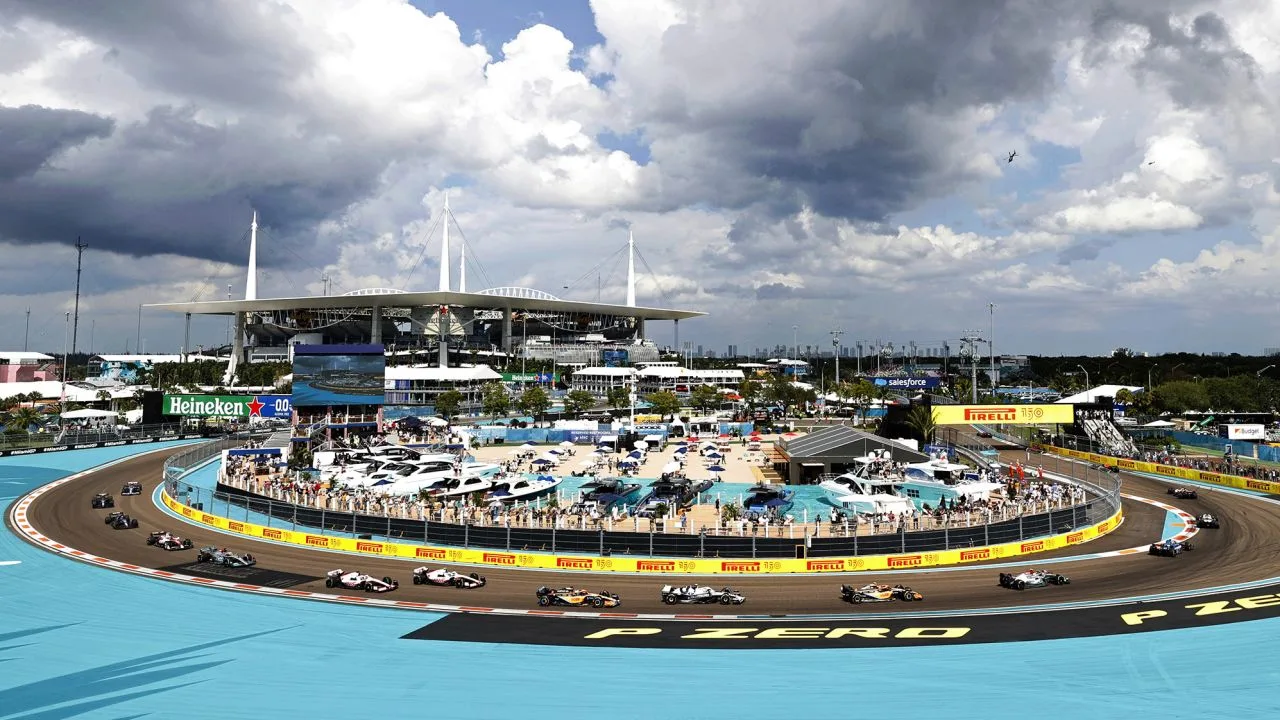
Since its debut in 2022, the Formula 1 Crypto.com Miami Grand Prix has become a vibrant addition to the Formula 1 calendar, blending high-speed racing with Miami’s unique cultural flair. Held at the Miami International Autodrome, a purpose-built temporary circuit around the Hard Rock Stadium in Miami Gardens, Florida, the event has quickly established itself as a fan favorite. With its mix of challenging track design, celebrity-packed atmosphere, and innovative features, the Miami Grand Prix offers more than just racing—it’s a spectacle that captures the essence of both Formula 1 and Miami’s vibrant energy.
Here are nine fascinating facts about the Miami Grand Prix that highlight its history, design, cultural impact, and standout moments..
1. A new chapter in U.S. Formula 1 history
The Miami Grand Prix, introduced in 2022, marked a significant milestone for Formula 1 in the United States. It became the 11th different venue in the U.S. to host a Formula 1 World Championship race since the series began in 1950. The addition of Miami to the calendar meant that 2022 was the first year since 1984 that the U.S. hosted two Formula 1 races in a single season, alongside the United States Grand Prix at Circuit of The Americas in Austin, Texas. This expansion reflects Formula 1’s growing popularity in the U.S., fueled by Liberty Media’s 2017 takeover of the sport and their strategic focus on American markets, with Miami joining Austin and later Las Vegas (introduced in 2023) as key destinations.
2. A track born from 75 designs
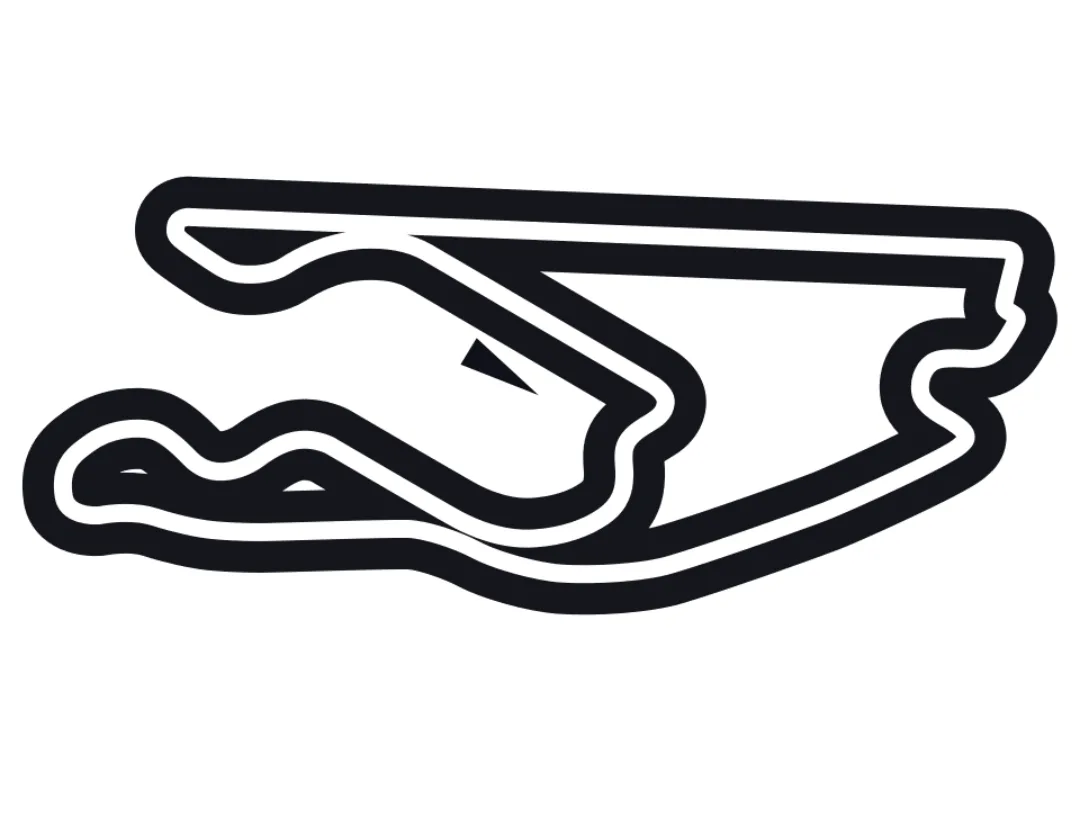
The Miami International Autodrome’s 5.412-kilometer (3.363-mile) layout is the result of an exhaustive design process. Formula 1 track designers Apex Circuit Design considered 75 different circuit layouts, with 36 of them simulated to ensure the track would deliver exciting racing while fitting around the Hard Rock Stadium complex. The final design features 19 turns, three straights (the longest being 1.28 km), and three DRS zones, allowing drivers to reach top speeds of approximately 320 km/h (199 mph). The circuit’s temporary infrastructure, including barriers and grandstands, is dismantled after each event to minimize disruption to the surrounding area, making it a unique blend of permanent and temporary elements.
3. The fake Marina
One of the Miami Grand Prix’s most distinctive and talked-about features is its fake marina, located on the inside of Turn 7. Initially, organizers hoped to create a real marina with water to evoke the glamour of Monaco’s Grand Prix, but logistical challenges led to a creative alternative: a vinyl “water” surface with real yachts displayed on top. While the faux marina sparked memes and lighthearted criticism from fans in 2022, it has since become an iconic part of the event’s brand, offering a photo-friendly spot for premium ticket holders and embodying Miami’s playful, boat-centric culture. Race president Tyler Epp has embraced the humor, noting that the marina reflects Miami’s identity without taking itself too seriously.
4. A long road to reality
Bringing the Miami Grand Prix to life was no easy feat. Plans for a Formula 1 race in Miami were first proposed in 2017, with initial ideas focusing on a downtown circuit near Biscayne Boulevard and the American Airlines Arena. However, local opposition and logistical challenges, including a scrapped idea to run the track through the Port Miami Tunnel, delayed progress. By 2019, the focus shifted to the Hard Rock Stadium in Miami Gardens, where Miami Dolphins owner Stephen Ross played a pivotal role in securing the event. After further tweaks to address community concerns—such as avoiding track activity before 3 p.m. on Fridays to minimize school disruptions—the race was confirmed for 2022 with a 10-year contract.
5. Miami’s motorsport legacy
While the Miami Grand Prix is new to Formula 1, the city has a rich motorsport history dating back to 1926, when the first Grand Prix of Miami was held on a wooden board track at the Fulford-Miami Speedway. That event, destroyed by a hurricane just seven months later, was a one-off, but Miami continued to host various racing events. From 1983, the Grand Prix of Miami returned as a sports car race in Bayfront Park, and the city later welcomed CART and IndyCar races at venues like Tamiami Park and Homestead-Miami Speedway. The 2022 Formula 1 race built on this legacy, bringing global attention to Miami’s motorsport heritage.
6. A construction marvel
The Miami International Autodrome is a logistical triumph, constructed in just over 12 months from April 2021 to May 2022. The project required 14 million pounds of steel and aluminum, 1.3 million bolts, 24,000 tons of asphalt, and 56,782 miles of fiber and cabling. Construction crews faced unique challenges, including working around the Miami Open tennis tournament, which takes place at Hard Rock Stadium just weeks before the race. Approximately 40% of the track setup is completed before the tournament, 20% during, and the final 40% in a 14-day sprint after its conclusion, involving over 1,000 workers daily. The result is a state-of-the-art circuit that tests drivers with its 19 turns and smooth, low-grip surface.
7. Max Verstappen’s dominance
The Miami Grand Prix has been dominated by Red Bull’s Max Verstappen, who won both the inaugural race in 2022 and the 2023 edition, as well as the 2024 Sprint race. Verstappen’s 2023 victory was particularly dramatic, as he started from ninth place after a compromised qualifying but charged through the field to overtake teammate Sergio Perez, who started from pole. Verstappen also holds the track record (1:26.814, set in Q2 2023) and the race lap record (1:29.708, 2023). While Lando Norris broke Verstappen’s streak by winning the 2024 Grand Prix—his first F1 victory—Verstappen’s three podiums make him the most successful driver at the circuit to date.
8. A fan and celebrity magnet
The Miami Grand Prix has quickly become one of the most attended and star-studded events on the Formula 1 calendar. The inaugural race in 2022 drew 240,000 fans over the weekend, growing to 270,000 in 2023 and over 275,000 in 2024. The event’s proximity to Miami’s vibrant arts, nightlife, and beach culture makes it a magnet for celebrities, with NFL stars like J.J. Watt, musicians, and Hollywood figures regularly spotted in the paddock. Unique fan experiences, such as the Campus Pass offering access to the team village and paddock inside Hard Rock Stadium, enhance its appeal, making it accessible to both casual fans and high-end buyers.
9. A homecoming for Logan Sargeant
The Miami Grand Prix holds special significance for American driver Logan Sargeant, who was born in nearby Fort Lauderdale. As the first American driver on the F1 grid since 2015, Sargeant made his Formula 1 home debut at the 2023 Miami Grand Prix with Williams. Remarkably, it was his first car race in North America, as his career had taken him to Europe early on to compete in karting, Formula 3, and Formula 2. The event underscores Formula 1’s growing American presence, with Sargeant representing a new generation of U.S. talent in a sport historically dominated by European drivers.