
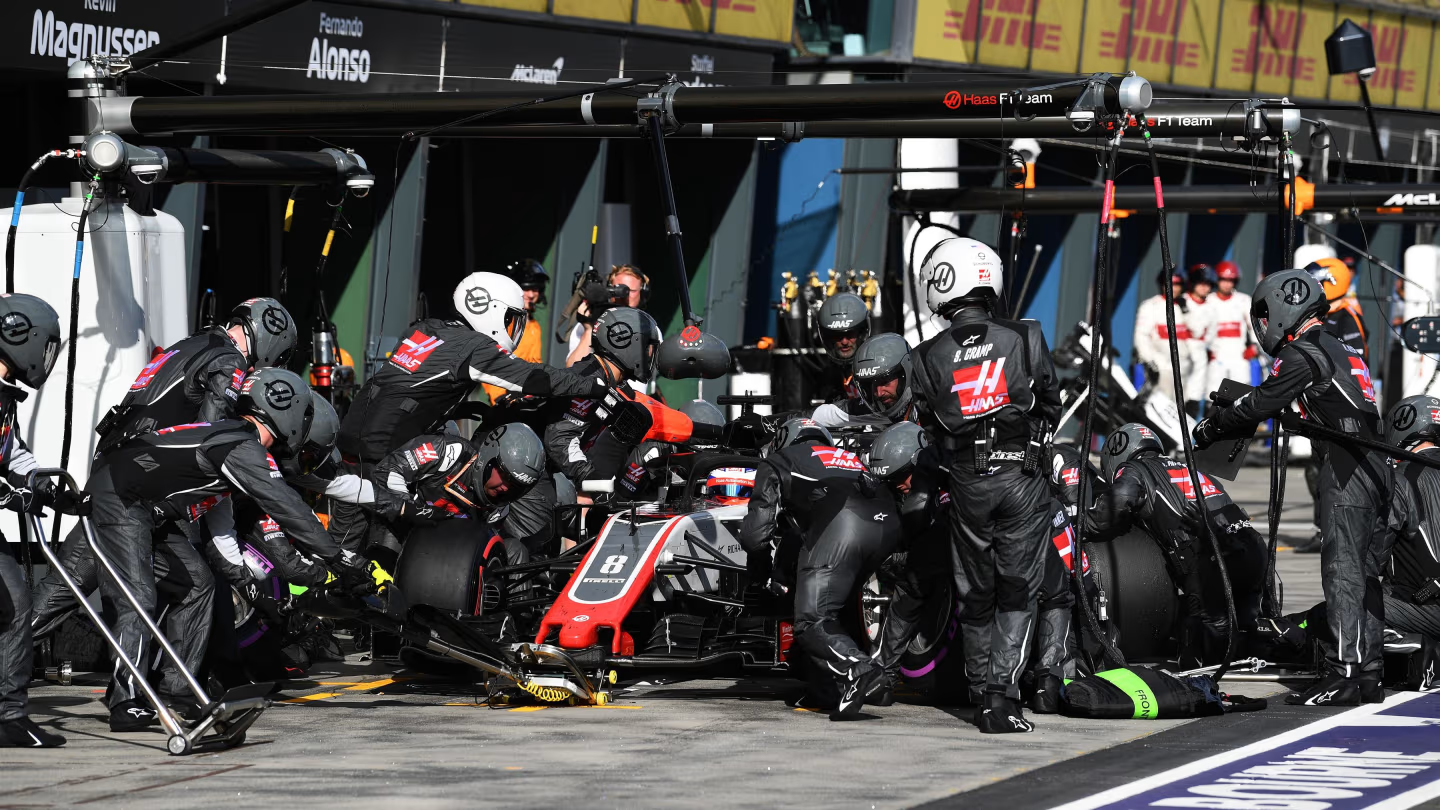
The Haas F1 Team has moved to reassure fans and stakeholders that its operations will remain unaffected by the sweeping tariffs introduced by U.S. President Donald Trump, even as its parent company, Haas Automation, implements significant changes to cope with the economic fallout. The clarification comes amid growing concerns about the broader impact of Trump’s trade policies on American motorsport and the global supply chains that support it.
On Wednesday, the American-owned Formula 1 outfit released a statement addressing speculation about how the tariffs—most notably a 104% duty on Chinese imports and a 25% levy on automobiles and parts from various countries—might disrupt its racing program. “Haas F1 Team continues to operate as normal,” the statement read. “There are no changes to our development plans, recruitment processes, or ongoing projects. We remain fully committed to our objectives in Formula 1.”
The statement follows a tumultuous week for Haas Automation, the California-based CNC machine tool manufacturer founded by team owner Gene Haas. In a separate announcement earlier this week, Haas Automation acknowledged that the tariffs “will have a significant impact” on its business, citing a “dramatic decrease in demand” for its products in recent days. The company, which supplies machinery critical to industries ranging from aerospace to automotive manufacturing, has reportedly taken drastic steps, including halting certain production lines and reevaluating its supply chain dependencies, to mitigate the financial strain.
The divergence in fortunes between the two entities underscores their operational separation, despite their shared ownership. While Haas Automation is headquartered in Oxnard, California, and relies heavily on international trade, the Haas F1 Team conducts the bulk of its car construction and race operations out of its Banbury, England, facility, with additional developmental work supported from a smaller base in Kannapolis, North Carolina. This international structure appears to shield the racing team from the immediate effects of U.S.-centric trade policies.
Motorsport analysts had speculated that the tariffs could complicate logistics for Haas F1, particularly given its reliance on parts and technology sourced from across borders. However, the team’s leadership emphasized its ability to adapt. “Our operational model is designed to navigate global challenges,” a team spokesperson told reporters. “The majority of our assembly and race preparation happens outside the U.S., which provides a buffer against these changes.”
The broader context of Trump’s tariffs has sent shockwaves through the motorsport world. With new duties affecting carmakers and suppliers worldwide, some American racing series, such as NASCAR and IndyCar, are bracing for increased costs. In Formula 1, teams like Haas, with its American roots, and potential newcomers like Cadillac, have been under scrutiny for how they might fare under the new trade regime. Ford, which is set to supply power units to Red Bull Racing from the U.K., could also face tariff-related hurdles, though Haas appears to have sidestepped these concerns for now.
Haas Automation’s struggles, however, paint a starkly different picture. Posts on X from industry observers noted the company’s candid admission of declining demand, with one user highlighting a statement on Haas Automation letterhead that warned of “significant impact” from the tariffs. If foreign countries impose retaliatory duties, as some have threatened, the cost of Haas CNC machines could rise sharply, further eroding its market position.