
Football, known as soccer in some parts of the world, is a sport steeped in passion, tradition, and fierce rivalries. Among the most intense and celebrated fixtures in the football calendar are “derbies”—matches that pit local rivals against one another. These games transcend the pursuit of points or trophies, embodying deep-seated cultural, historical, and social significance. But what exactly is a derby in football, where does the term come from, and why do these matches hold such a special place in the hearts of fans? In this article, we’ll explore the meaning of a football derby, its origins, and some of the most iconic examples from around the world.

Defining a derby in football
A football derby is a match between two teams that are geographically close to one another, often from the same city, town, or region. The term “derby” is most commonly associated with association football and is used to describe a fixture where local pride, bragging rights, and historical rivalries take center stage. Unlike a general rivalry based solely on competitive history or league standings (e.g., Manchester United vs. Liverpool), a derby is defined by its geographical proximity, making it a deeply personal and emotional affair for players, fans, and communities.
Derbies are characterized by their intensity, unpredictability, and electric atmosphere. Form and league position often go out the window, as the desire to outdo a local rival can inspire underdog teams to produce extraordinary performances. For fans, a derby is more than just a game—it’s an opportunity to assert dominance over neighbors, colleagues, and even family members who support the opposing side.
While the term “derby” is most strongly linked to football, it is also used in other sports, such as rugby, cricket, and basketball, to describe matches between local rivals. However, in football, derbies have become a global phenomenon, with some of the most famous fixtures drawing millions of viewers worldwide.
The origins of the term “derby”
The etymology of the word “derby” in the context of sports is a subject of debate, with several theories attempting to explain its origins. While the true source may never be definitively proven, the following are the most widely accepted explanations:
1. The Royal Shrovetide Football Match
One popular theory traces the term “derby” back to the Royal Shrovetide Football Match, an annual event held in Ashbourne, Derbyshire, England, since at least the 12th century. This medieval form of “mob football” pits two teams—the “Uppers” and “Downers”—from opposite sides of the town against each other. The game, which involves moving a ball across a three-mile stretch to the opposing team’s goal, is a chaotic and physical contest with few rules. Some historians argue that this traditional match, rooted in local rivalry, inspired the use of “derby” to describe competitive sporting events between nearby teams.
2. The Epsom Derby horse race
Another widely accepted theory links the term to the Epsom Derby, a prestigious horse race founded in 1780 by Edward Smith-Stanley, the 12th Earl of Derby. Held annually in Surrey, England, the race became a significant event on the British sporting calendar, drawing large crowds and fostering a competitive spirit. Over time, the term “derby” may have been adopted by other sports, including football, to describe contests between local rivals. This theory is supported by the fact that “derby” was already in use as a noun in English by the 1840s to denote any sporting contest.
3. The earl of derby and Stanley Park
A third theory connects the term to the Merseyside Derby between Everton and Liverpool, two football clubs based in Liverpool, England. The grounds of these teams—Goodison Park (Everton) and Anfield (Liverpool)—are separated by Stanley Park, which was historically owned by the Earl of Derby. One of the earliest recorded uses of the term “local derby” in print media appeared in the Daily Express in October 1914, describing a match between Everton and Liverpool. Some suggest that the association with the Earl of Derby’s land may have contributed to the term’s adoption in football.
4. Rugby league and the Knowsley Estate
Edward Stanley, the 19th Earl of Derby, has claimed that the term “local derby” originated in rugby league rather than football. According to this account, fixtures between St Helens and Wigan—two towns at opposite ends of the Stanley family’s Knowsley Estate in Lancashire—were known as “local derbies.” These matches, traditionally played at Easter, became fiercely contested events, and the term may have spread to football as the sport grew in popularity during the 19th century.
While these theories differ in their specifics, they all point to a common theme: the idea of “derby” as a contest rooted in local rivalry and competition. Over time, the term became synonymous with football matches between nearby teams, and its usage spread across the globe.
Why are derbies so special?
Derbies hold a unique place in football due to their deep emotional and cultural resonance. Several factors contribute to their significance:
1. Local pride and bragging rights
At the heart of every derby is the battle for local pride. For fans, defeating a nearby rival is often more important than winning a trophy or securing a higher league position. The outcome of a derby determines who holds bragging rights in workplaces, schools, and households until the next encounter. This sense of regional identity is particularly strong in cities or regions with multiple teams, such as London, Manchester, or Glasgow.
2. Historical context
Many derbies have roots that stretch back over a century, with rivalries fueled by historical events, social divides, or competitive encounters. For example, the Old Firm Derby between Celtic and Rangers in Glasgow, Scotland, is steeped in religious and political history, with Celtic historically associated with the Catholic community and Rangers with the Protestant community. Similarly, the Superclásico between Boca Juniors and River Plate in Buenos Aires, Argentina, reflects class divisions, with Boca representing the working class and River associated with the upper class.
3. Proximity and accessibility
The geographical closeness of derby rivals means that fans often live, work, and socialize alongside supporters of the opposing team. This proximity intensifies the rivalry, as fans encounter their counterparts daily, making the stakes feel personal. Additionally, the short distance between stadiums—sometimes just a few miles or even a few hundred meters—makes it easy for large crowds to attend, contributing to the electric atmosphere.
4. Unpredictability
Derbies are notoriously difficult to predict, as form and quality often take a backseat to passion and determination. Lower-ranked teams frequently upset their more successful rivals in these matches, driven by the desire to prove their worth. This unpredictability adds to the excitement and drama of derby day.
5. Passionate atmospheres
The atmosphere at a derby match is unrivaled, with packed stadiums, colorful displays, and deafening chants creating a cauldron of noise and energy. The passion of the fans often spills over onto the pitch, where players are acutely aware of the stakes. However, this intensity can sometimes lead to negative outcomes, such as crowd violence or hooliganism, as seen in some of the more heated derbies around the world.
Famous football derbies around the world
Derbies exist in every football-playing nation, each with its own unique flavor and history. Below are some of the most iconic examples:
1. The Merseyside derby (Everton vs. Liverpool, England)
Location: Liverpool, England
First played: 1894
Significance: Known as the “friendly derby” due to the lack of fan segregation (a rarity among major derbies), this fixture pits two of England’s most historic clubs against each other. The teams’ stadiums, Goodison Park and Anfield, are less than a mile apart, separated by Stanley Park. Liverpool has historically dominated the fixture, but Everton has produced memorable victories, such as their 2-0 win in April 2024, their first home victory over Liverpool in 14 years.
Notable fact: The Merseyside Derby holds the record for the most red cards in Premier League history (20).
2. The Old Firm Derby (Celtic vs. Rangers, Scotland)
Location: Glasgow, Scotland
First played: 1888
Significance: One of the fiercest and most famous derbies in the world, the Old Firm Derby is rooted in religious and political divisions. Celtic represents the Catholic community, while Rangers is associated with Protestantism. The rivalry has often been marred by violence and sectarian tensions, but it remains a cornerstone of Scottish football. The two clubs have dominated the Scottish league, with the last non-Old Firm title won by Aberdeen in 1984-85.
Notable fact: The term “Old Firm” is believed to have originated from a description of the clubs as “old, firm friends,” though the rivalry is anything but friendly today.
3. The Superclásico (Boca Juniors vs. River Plate, Argentina)
Location: Buenos Aires, Argentina
First played: 1913
Significance: Widely regarded as the most intense derby in world football, the Superclásico pits Boca Juniors, the club of the working-class La Boca neighborhood, against River Plate, historically associated with the wealthier northern suburbs. The matches are known for their passionate crowds, colorful tifos, and occasional violence, such as the 2015 incident when a Boca fan attacked River players with pepper spray.
Notable fact: The Superclásico has been described as a “must-see” event by football enthusiasts and media outlets worldwide.
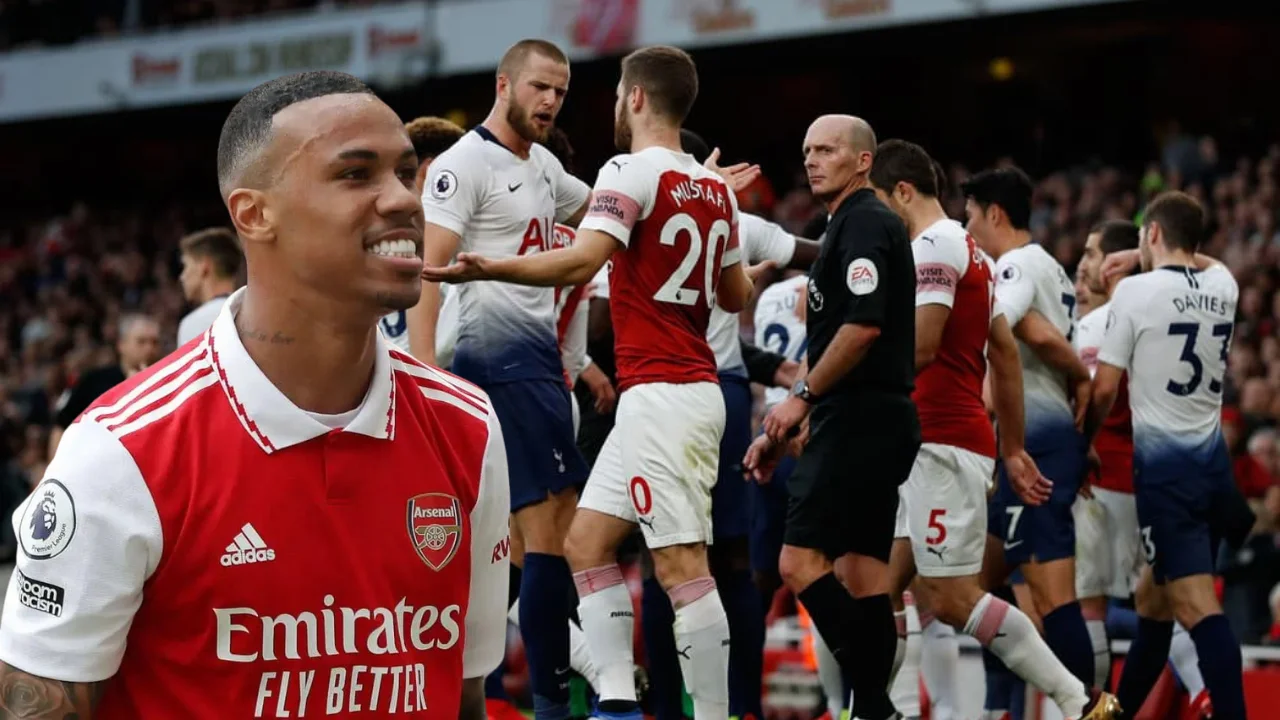
4. The North London derby (Arsenal vs. Tottenham Hotspur, England)
Location: London, England
First played: 1909
Significance: One of the most hotly contested derbies in English football, the North London Derby pits Arsenal and Tottenham Hotspur, two clubs just four miles apart, against each other. The rivalry intensified after Arsenal’s move to Highbury in 1913 and their promotion to the First Division in 1919. Matches are characterized by fierce competition and passionate support.
Notable fact: Arsenal and Tottenham have faced each other over 200 times, making it one of the most frequently played derbies in England.
5. The Derby della Madonnina (AC Milan vs. Inter Milan, Italy)
Location: Milan, Italy
First played: 1909
Significance: Named after the statue of the Virgin Mary (Madonnina) atop Milan’s Duomo cathedral, this derby pits two of Italy’s most successful clubs, AC Milan and Inter Milan, against each other. The teams share the San Siro stadium, adding to the unique dynamic of the fixture. The rivalry has roots in social divides, with Inter traditionally representing the working class and AC Milan the bourgeoisie.
Notable fact: The Derby della Madonnina is one of the most watched derbies globally, with both clubs boasting a rich history of domestic and European success.
6. The Manchester derby (Manchester United vs. Manchester City, England)
Location: Manchester, England
First played: 1881
Significance: The Manchester Derby has grown in prominence in recent decades, particularly since Manchester City’s rise under wealthy ownership. Historically dominated by Manchester United, the fixture has become more competitive, with City enjoying success in the Premier League era. The rivalry reflects the city’s footballing heritage and the contrasting fortunes of the two clubs.
Notable fact: The Manchester Derby has produced some of the Premier League’s most memorable moments, including dramatic late goals and controversial incidents.
7. The Tyne-Wear derby (Newcastle United vs. Sunderland, England)
Location: North East England
First played: 1888
Significance: Named after the rivers Tyne (Newcastle) and Wear (Sunderland), this derby is an example of a rivalry between two nearby cities rather than teams from the same city. Separated by just 12 miles, Newcastle and Sunderland have a long history of competition, with matches known for their intensity and passionate support.
Notable fact: The Tyne-Wear Derby has been played over 140 times, with Newcastle holding a slight edge in victories.
The global impact of derbies
Football derbies are not confined to Europe or South America; they exist wherever the sport is played. In Brazil, São Paulo state is home to multiple derbies, such as Corinthians vs. Palmeiras (the Derby Paulista). In Turkey, the Istanbul Derby between Galatasaray and Fenerbahçe is one of the most intense in the world, often marked by flares, chants, and occasional violence. In Africa, the Cairo Derby between Al Ahly and Zamalek is a fiercely contested fixture with a massive following.
These matches have a profound impact on local communities, economies, and cultures. They generate significant revenue through ticket sales, merchandise, and tourism, while also reinforcing regional identities and traditions. However, the intensity of derbies can sometimes lead to negative consequences, such as hooliganism, crowd trouble, or even broader social conflicts, as seen in the “Football War” between El Salvador and Honduras in 1969, where a World Cup qualifier exacerbated existing tensions.