

Football, often referred to as the beautiful game, is rich with unique terminology that adds color and tradition to its global culture. Among these terms, “brace” stands out as a celebrated achievement for players and a point of excitement for fans. But what exactly is a brace in football, and why does it hold such importance? In this article, we’ll dive deep into the meaning of a brace, its historical roots, its place in modern football, and some iconic examples that have defined the term.
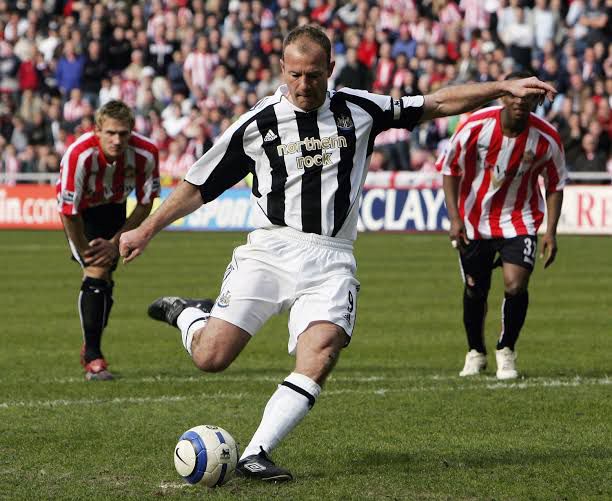
What does “brace” mean in football?
In football, a “brace” refers to a single player scoring two goals in a single match. It’s a straightforward concept: if a player finds the back of the net twice before the final whistle—whether in regular play, extra time, or stoppage time—they’ve scored a brace. The goals don’t need to be consecutive, nor do they have to occur in the same half. For example, a player could score in the 10th minute and again in the 85th, and it would still count as a brace, even if other players score in between.
The term is most commonly used in English-speaking football commentary, particularly in the United Kingdom, where it has become a staple of match analysis. Unlike a “hat-trick” (three goals by one player in a match), a brace is a slightly less rare feat but still a notable accomplishment that highlights a player’s skill, determination, and impact on the game.
Where did “brace” come from?
The word “brace” has a fascinating etymology that stretches back centuries, long before football as we know it emerged in the 19th century. Its roots lie in Old English and Anglo-French languages, where “brace” originally meant “a pair of something.” In Old English, it was often associated with hunting, where a “brace” referred to two animals—such as a brace of pheasants or rabbits—killed during a hunt. The Anglo-French term “bracchia,” meaning “arms” or “a pair of arms,” also influenced its evolution, reinforcing the idea of two items linked together.
This hunting connotation carried over into football as the sport formalized in England during the 1800s. Players on the pitch were seen as “hunters” of goals, and scoring two in a game became known as “scoring a brace of goals.” Over time, the phrase was shortened to simply “a brace,” and it stuck as a concise way to celebrate a player’s double strike. By the late 19th century, as football grew in popularity and the English Football Association codified the rules, the term became entrenched in the sport’s lexicon.
How does a brace fit into football terminology?
Football has a hierarchy of terms to describe multiple goals scored by a single player in a match, with “brace” being the entry point to this elite club:
- Brace: Two goals.
- Hat-trick: Three goals.
- Haul: Four goals (less official, but sometimes used).
- Glut: Five goals (an informal term, rarely used officially).
Beyond five goals, there’s no universally agreed-upon term, though commentators might get creative with phrases like “a handful” or simply tally the number. A brace, then, is the first step beyond a single goal and a significant milestone in its own right. It’s distinct from a hat-trick, which carries more prestige due to its rarity, but a brace remains a coveted achievement that can swing a match’s outcome or cement a player’s reputation as a key contributor.
Interestingly, a brace doesn’t come with a tangible reward like a trophy or medal. Its value lies in the prestige it brings to the player and the boost it adds to their goal-scoring statistics. For strikers and attacking players, racking up braces is a sign of consistency and clinical finishing—qualities that define the game’s greatest goal scorers.
What counts as a brace?
The criteria for a brace are simple but worth clarifying:
- Two goals, one player, one match: The player must score exactly two goals in the same game. If they score a third, it becomes a hat-trick, not a brace.
- Timing doesn’t matter: The goals can come at any point during regulation time (90 minutes plus stoppage time) or extra time in knockout competitions. They don’t need to be back-to-back or in the same half.
- Penalty shootouts don’t count: Goals scored in a post-match penalty shootout (e.g., to decide a tied cup game) are excluded. Only goals during active play count toward a brace.
- Own goals don’t apply: If a player scores two own goals (putting the ball in their own net), it’s not officially called a brace, though commentators might jokingly refer to it as a “brace of own goals.” The term is reserved for goals scored against the opposition.
For example, imagine a match ends 3-2. Player A scores their team’s first goal in the 15th minute, the opposition equalizes, and then Player A scores again in the 70th minute to secure the win. That’s a brace, even with other goals separating their two strikes.
Famous braces in football history
Some of football’s most memorable moments feature players scoring braces, often in high-stakes scenarios. Here are a few iconic examples:
Ronaldo (Brazil)
2002 World Cup final: In the 2002 FIFA World Cup final, Brazilian legend Ronaldo scored a brace against Germany (2-0), securing Brazil’s fifth title. His goals in the 67th and 79th minutes capped a remarkable comeback story after years of injury setbacks, cementing his legacy as one of the game’s greatest strikers.
Lionel Messi – Countless La Liga matches:
Lionel Messi, arguably the greatest footballer of all time, has scored over 200 braces in his career across club and country. One standout was his brace in a 2012 El Clásico against Real Madrid, helping Barcelona to a 2-2 draw and showcasing his knack for delivering in big games.
Cristiano Ronaldo – 2017 Champions League final
Ronaldo’s brace in Real Madrid’s 4-1 win over Juventus in the 2017 UEFA Champions League final was a masterclass in finishing. His two goals earned him the match’s top honors and underlined his dominance in Europe’s premier competition.
Alan Shearer – Premier League record
The Premier League’s all-time leading scorer, Alan Shearer, holds the record for the most braces in a single EPL season (10 in 1994-95). His prolific form that year included 34 goals, showcasing how braces can define a player’s campaign.
Gareth Bale – 2018 Champions League final
Bale’s brace against Liverpool, including a stunning overhead kick, clinched Real Madrid’s third consecutive Champions League title. His second goal, a long-range strike, sealed a 3-1 victory and etched his name in football folklore.
Braces in context
While scoring two goals might not sound as jaw-dropping as a hat-trick, it’s far from routine. In top-tier leagues like the Premier League, La Liga, or the Champions League, defenses are so well-organized that even the best strikers don’t score braces every week. Players like Messi and Ronaldo stand out because they’ve made it look easy, but for most, it’s a hard-earned feat. Defenders and midfielders rarely score braces due to their positional roles, making it a domain dominated by forwards and wingers.
In World Cup history, Ronaldo (the Brazilian) holds the record for the most braces with four, a testament to his brilliance on the global stage. Meanwhile, in domestic leagues, players like Sergio Agüero (36 braces in top-flight European leagues) and Luis Suárez (34) have built careers on consistent brace-scoring exploits.