
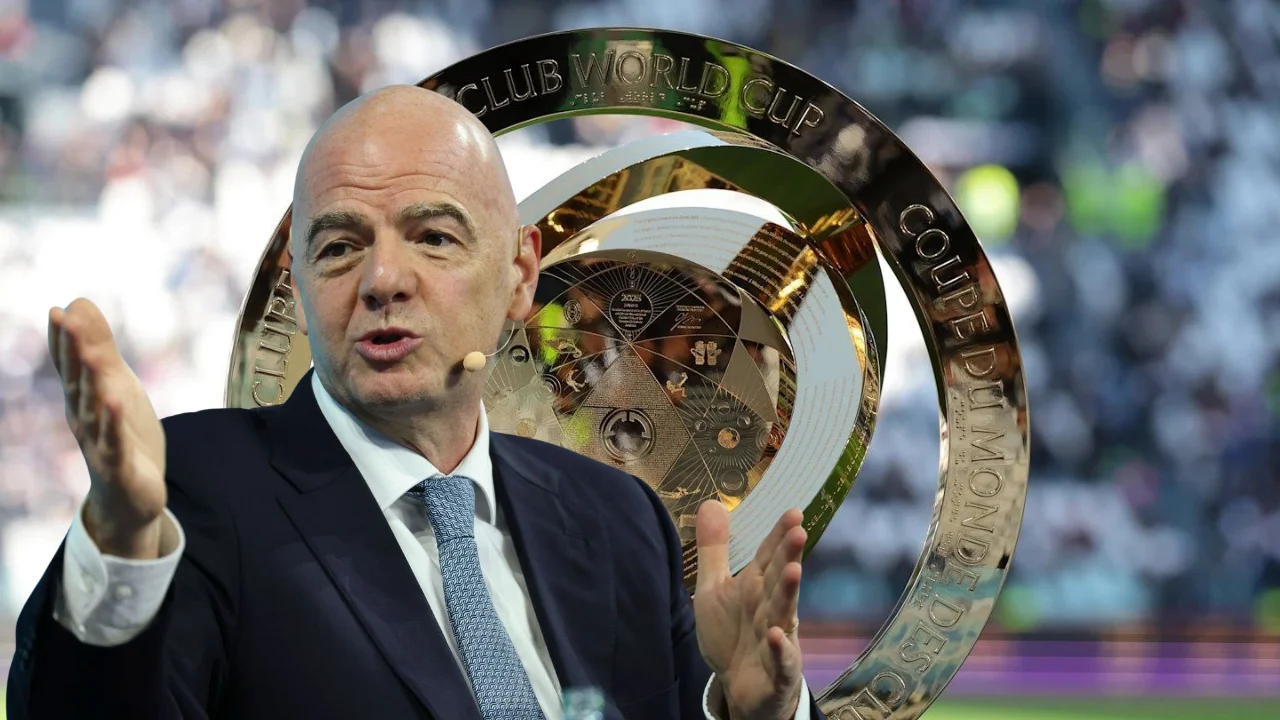
FIFA has officially announced that the winner of the newly expanded FIFA Club World Cup, set to take place in the United States this summer, will receive a staggering $125 million in prize money. The confirmation, unveiled on Wednesday, marks a significant milestone for the tournament, which will feature 32 teams for the first time in its history, signaling FIFA’s ambition to elevate the competition to new heights.
The total prize pool for the tournament is set at $1 billion, with $525 million allocated as a participation fund to be distributed among the competing clubs. The remaining $475 million will be awarded based on performance across the 63 matches, offering substantial incentives for success. Teams can earn $2 million for group stage victories, $7.5 million for reaching the round of 16, and a whopping $40 million for lifting the trophy at the final, scheduled at MetLife Stadium near New York.
European clubs, including powerhouses like Manchester City, Real Madrid, Bayern Munich, and Chelsea, are poised to benefit the most from the participation fees. Each of the 12 UEFA entrants will receive a minimum of $12.81 million, with top-tier clubs potentially earning up to $38.19 million based on a ranking system that considers sporting achievements and commercial value. FIFA has yet to fully disclose the criteria behind this ranking, but the structure ensures that elite teams are handsomely rewarded even before a ball is kicked.
Clubs from Africa, Asia, and the CONCACAF region, such as Inter Miami—featuring Lionel Messi—will each receive $9.55 million for participating, regardless of their on-field results. In a gesture of global solidarity, FIFA has also pledged $250 million to support clubs worldwide that did not qualify, further emphasizing the tournament’s broader impact on the sport.
The announcement comes after months of speculation and follows FIFA’s securing of a $1 billion global TV deal with streaming service DAZN, backed by Saudi Arabian investment, alongside sponsorships from major brands like Coca-Cola and Bank of America. FIFA President Gianni Infantino hailed the financial model as a game-changer, stating, “All revenue generated by the tournament will be reinvested into football, with not a single dollar retained by FIFA. This is a vivid demonstration of solidarity that will benefit clubs globally on an unprecedented scale.”
The revamped Club World Cup, running from June 14 to July 13, aims to rival the prestige of the UEFA Champions League, which has historically offered comparable prize money for its winners. In 2023, Manchester City earned $5 million for winning the previous seven-team iteration of the Club World Cup, a figure dwarfed by this year’s jackpot. The dramatic increase underscores FIFA’s intent to position the tournament as “the pinnacle of club football,” as Infantino described it.
However, the lucrative prize pool has not silenced all critics. Some stakeholders have expressed concerns over the packed football calendar, with players like Ballon d’Or winner Rodri previously hinting at potential strikes due to fixture congestion. Despite such challenges, the financial windfall appears to have quelled earlier resistance from European clubs, who had demanded clarity on earnings before committing to the month-long event.